Guide · 4 steps · updated 2026-11-21
Hardware finishes and plating colours
A finish is the outer coat of a piece: plated metal, a vacuum-deposited film, paint or lacquer, sometimes darkened and polished back. Each colour has trade names, but the names are not standardised, so a finish is agreed against a physical sample.
Step 01
The six plating colours
Across the collection, pieces come plated in six colours: gold, silver, rose gold, gunmetal, black and antique bronze. Each is a family rather than one shade — one supplier’s gold is bright, another’s light or champagne — so the same colour is sold under several names.
The names are not standardised: glossaries disagree, and one supplier’s gunmetal is another’s black nickel. Agree each finish against a physical sample that both sides keep, and name that sample on the order.
| Colour | Trade names | Look |
|---|---|---|
| Gold | Light gold, champagne gold, matte gold | Warm yellow, bright or matte; a colour, not a gold content |
| Silver | Nickel, pearl nickel, chrome | Bright white metal; pearl nickel is satin |
| Rose gold | Rose gold, plated or PVD | Gold with a pink cast |
| Gunmetal | Gun black; black nickel is a close neighbour | Dark grey with a metallic sheen |
| Black | Black nickel, matte black, black e-coat or paint | Black, glossy or matte |
| Antique bronze | Its family: antique brass, antique copper | Dark in the recesses, bright on the high points |
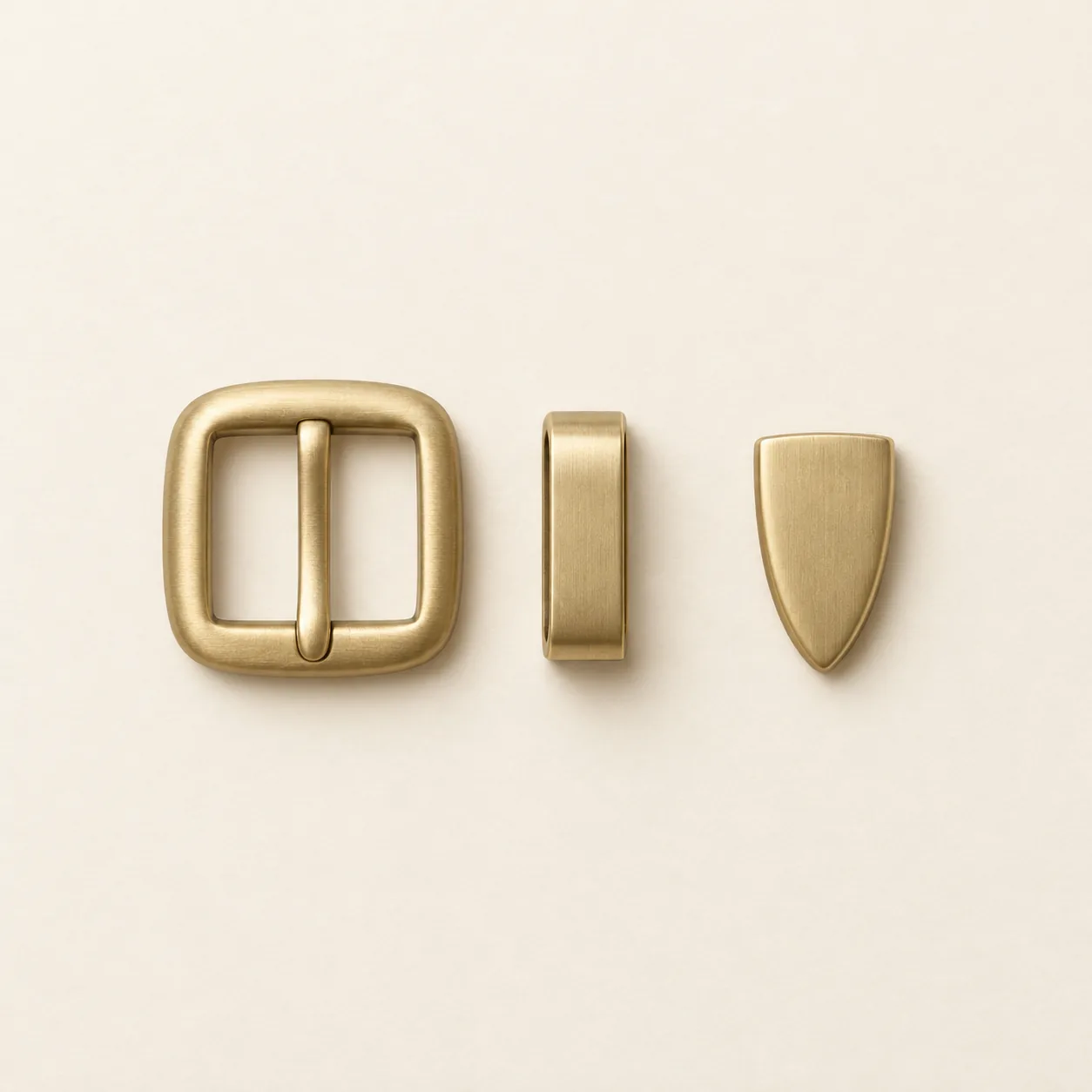
GoldA colour name, not a gold content. 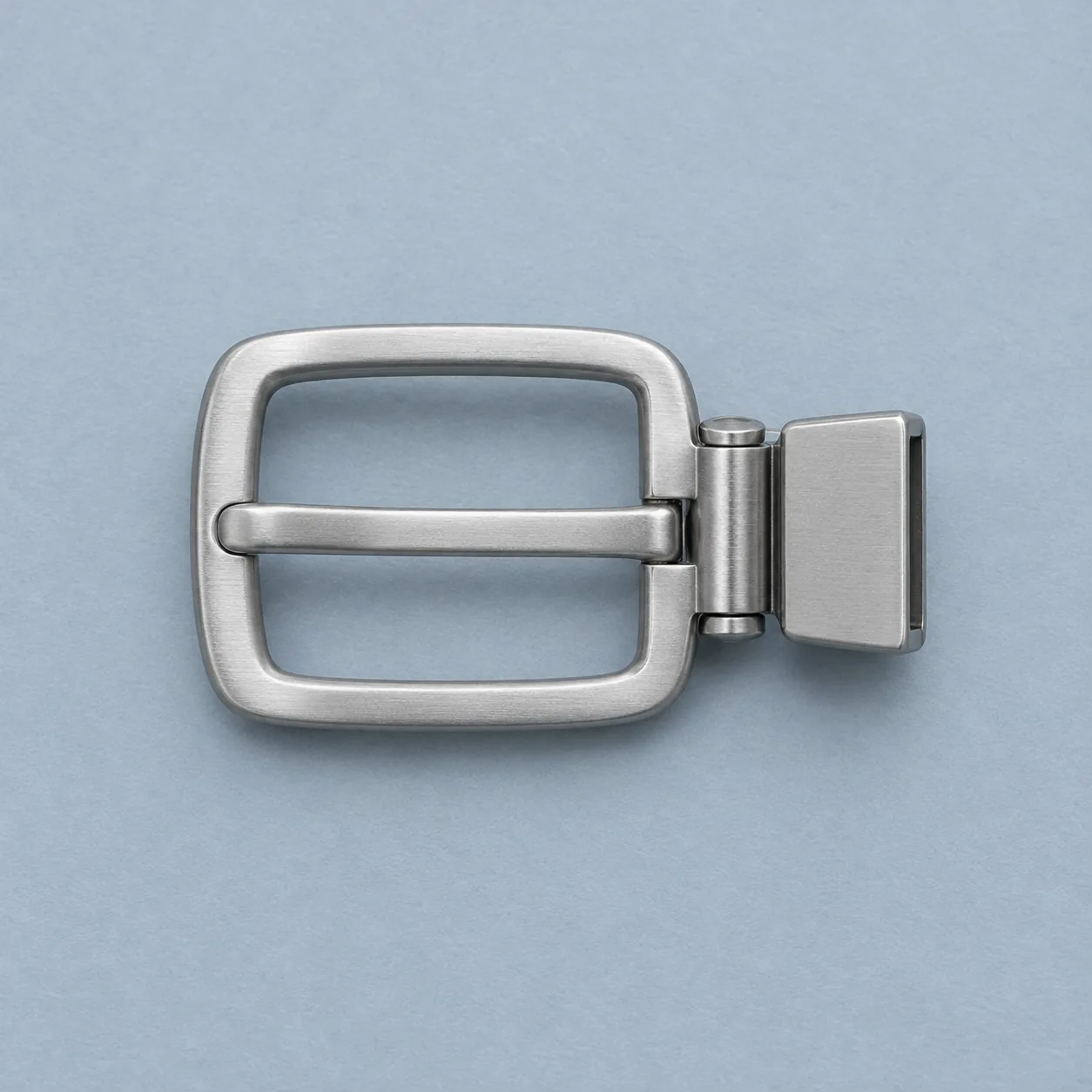
SilverBright nickel, or satin pearl nickel. 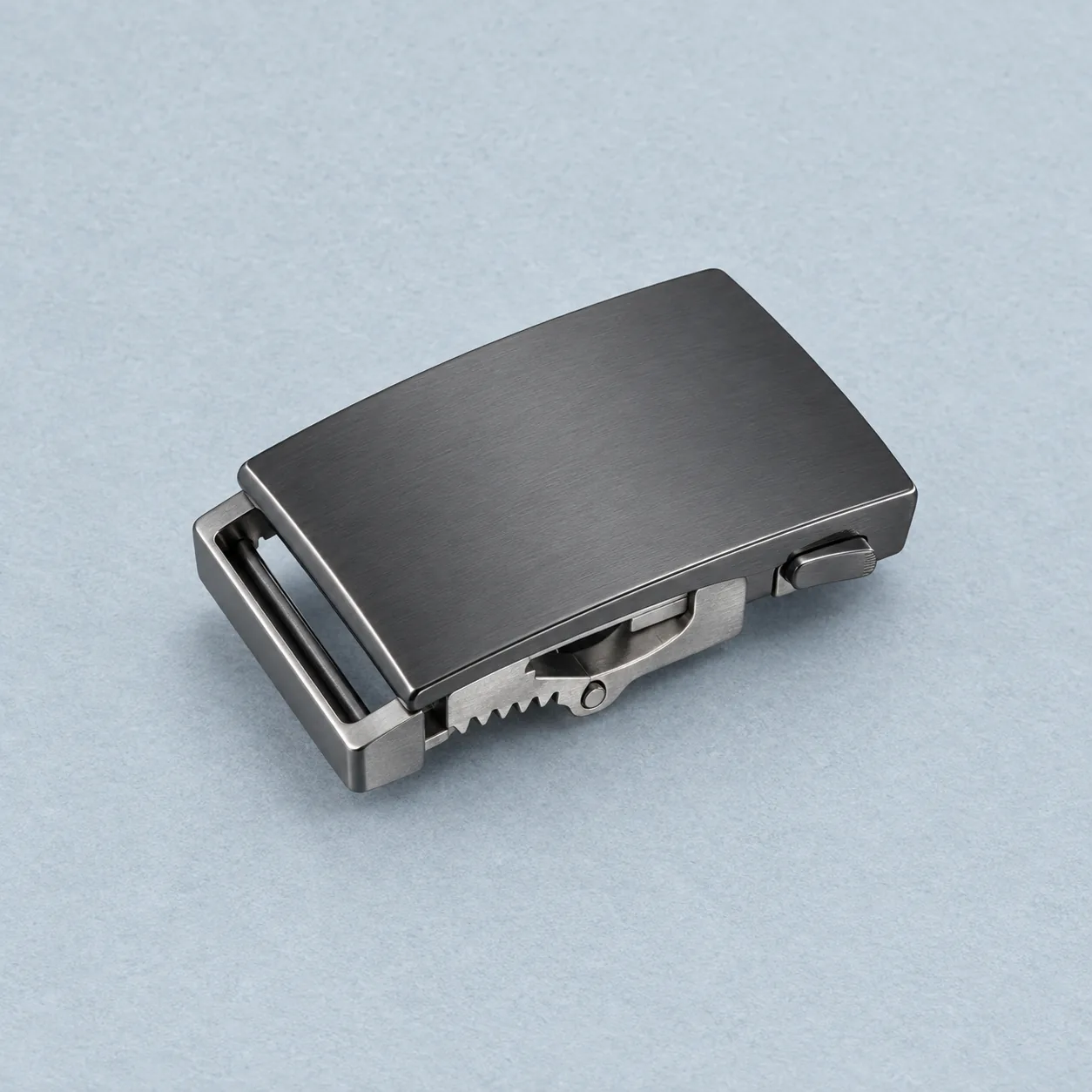
GunmetalDark grey with a metallic sheen.
Step 02
How plating is done
Most buckles and bag fittings are electroplated: the piece hangs in a bath, and an electric current deposits a thin layer of metal on it. Zinc die castings take a copper layer first — copper withstands the acid nickel bath and reaches into recesses — then nickel, then the colour.
PVD (physical vapour deposition) lays a harder, more wear-resistant film in a vacuum, often over plating. E-coat deposits paint evenly into every recess before it is oven-cured, for black or, like lacquer, as a clear coat against tarnish. Textures come first — brushed and blasted surfaces are worked into the metal, and the plating follows them — and antique finishes take three steps:
- Plate the piece in its base colour.
- Darken it all over.
- Polish the high points back to bright, leaving the recesses dark.
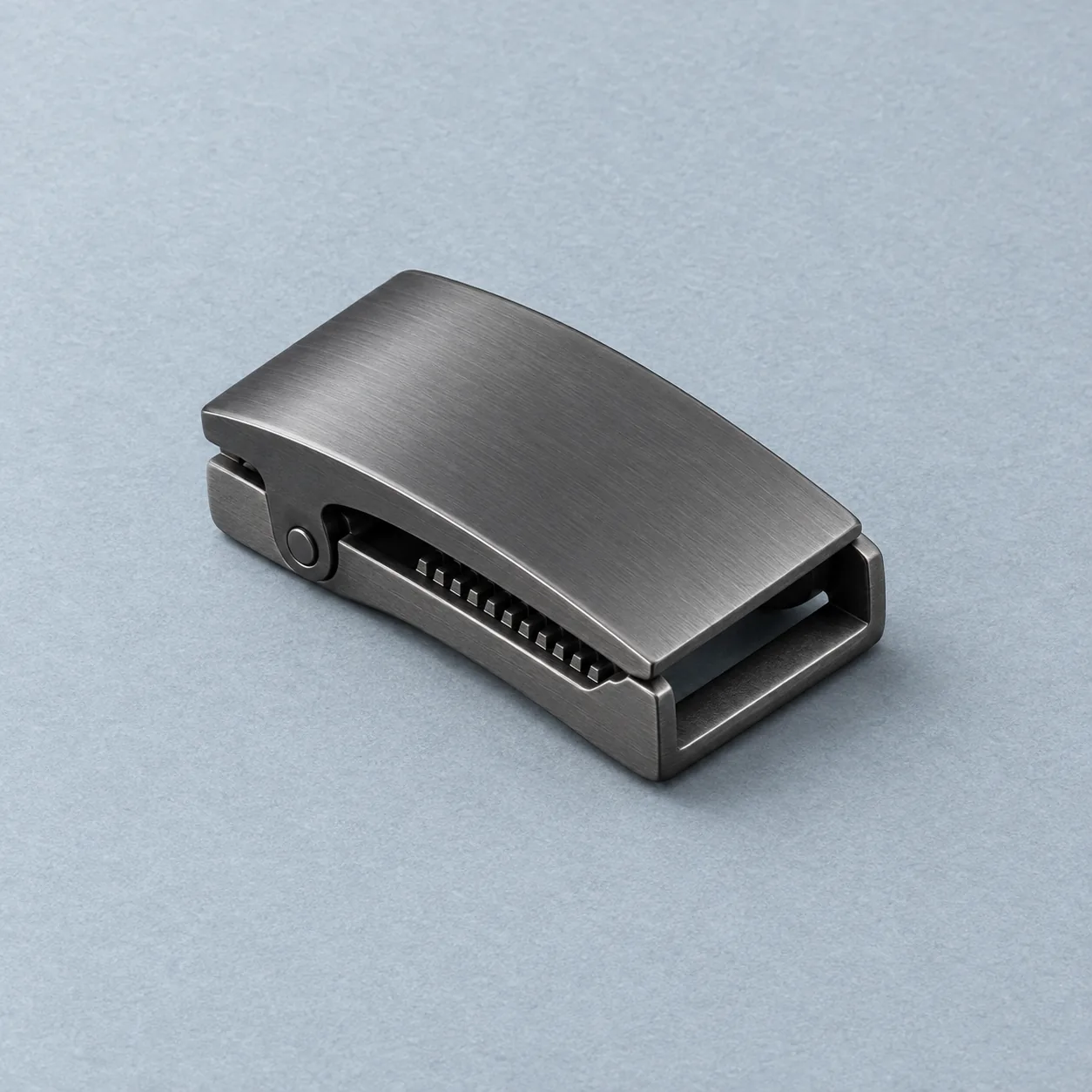
BrushedThe lines are cut first; the plating follows them. 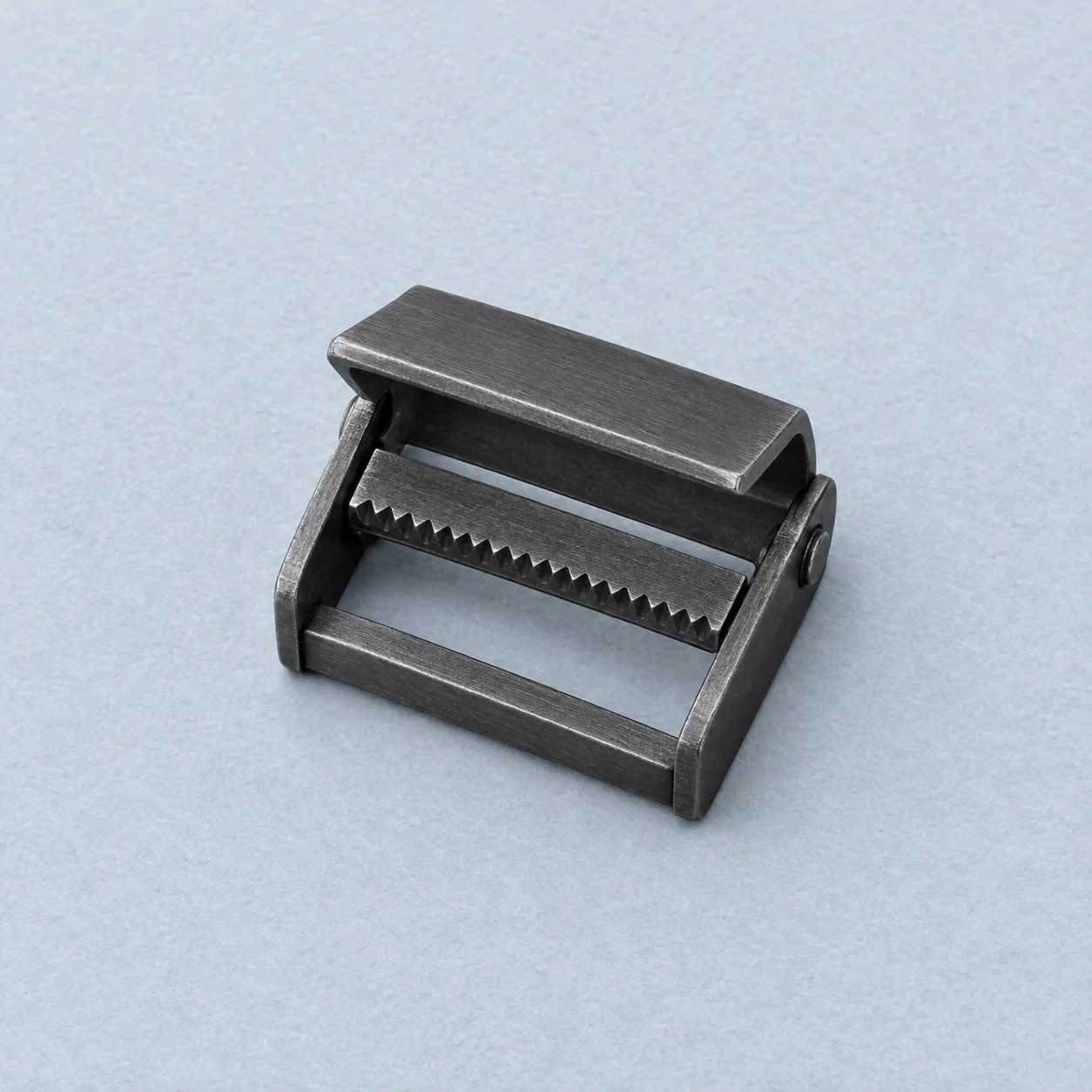
BlackBlack nickel, or paint or e-coat laid into every recess.
Step 03
Nickel and lead: what to ask a supplier for
In the EU, metal parts in direct and prolonged contact with the skin may release no more than 0.5 µg of nickel per cm² per week, measured by EN 1811; a coated piece is first worn by EN 12472, since a coating over a nickel-bearing base must hold that limit for two years of normal use. The rule’s own examples include rivet buttons, rivets, zips and metal marks on garments.
In the US, accessible parts of children’s products — for ages 12 and under — may contain no more than 100 ppm lead, and paint or surface coatings no more than 90 ppm. California’s Proposition 65 bans no chemical; it requires a warning when a product exposes people to a listed one, such as lead, above its safe-harbour level.
- Name the market and the rule: EU nickel release, US children’s lead limits, or your own restricted-substances list.
- Ask for a test report on the finished piece, in the finish you are ordering.
- Treat a nickel spot test as a screen, not as proof.
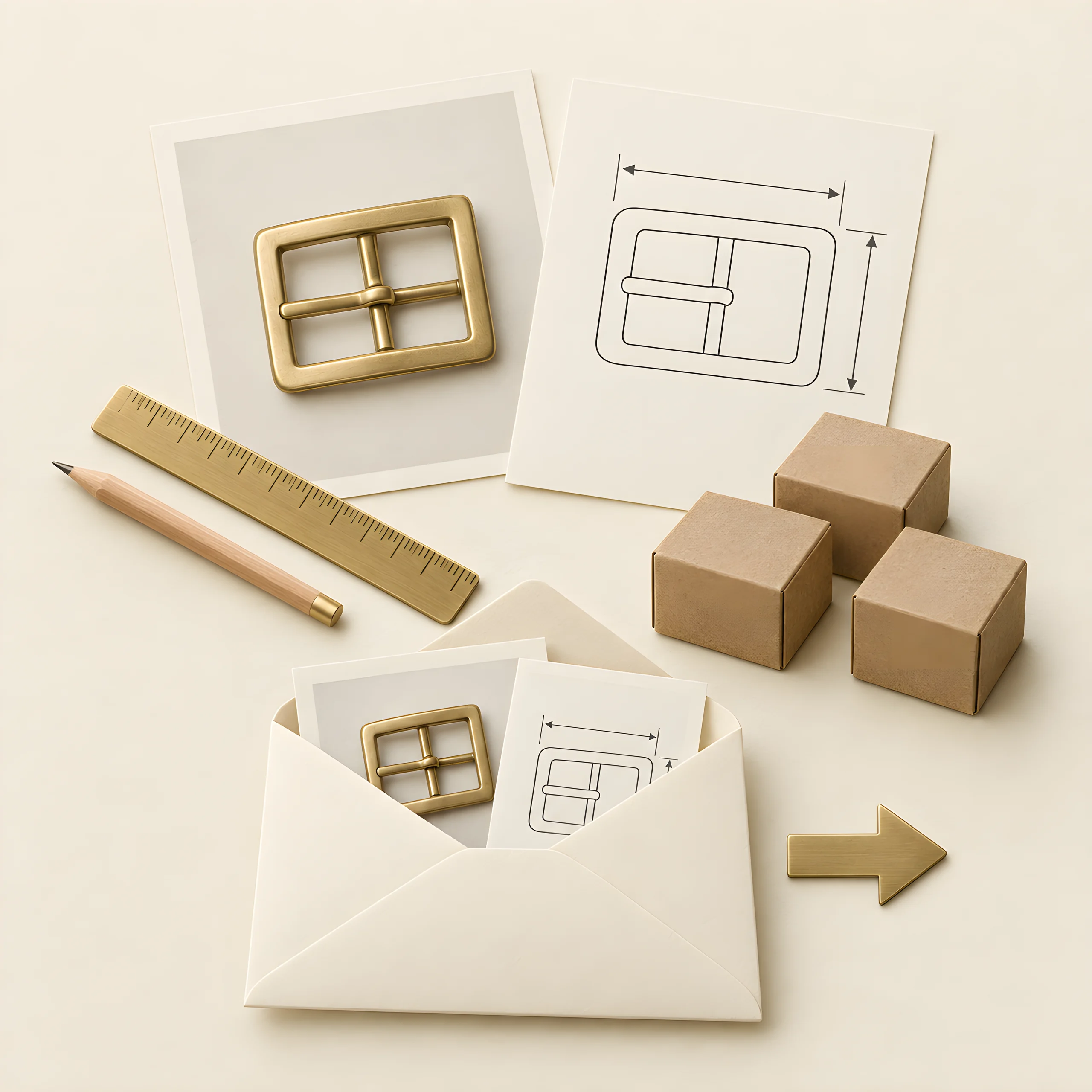
Ask with the enquiry: name the piece, its finish and the rule your market applies.
Step 04
Approving and matching a finish
Approve the finish on a physical sample, in daylight, beside the leather or fabric it will sit on, and keep the approved piece as the reference for the order. Order the hardware for one belt or bag together: a buckle, keeper and tip plated in separate batches can come out a shade apart. Your representative handles samples once you open a trade account.
Plating is thin, so it wears first where a piece rubs — a frame’s edges, a prong. On plated zinc the wear shows grey metal or a pink copper layer; unplated solid brass has no coat to lose and darkens to a patina instead. The base metals are compared in buckle materials.
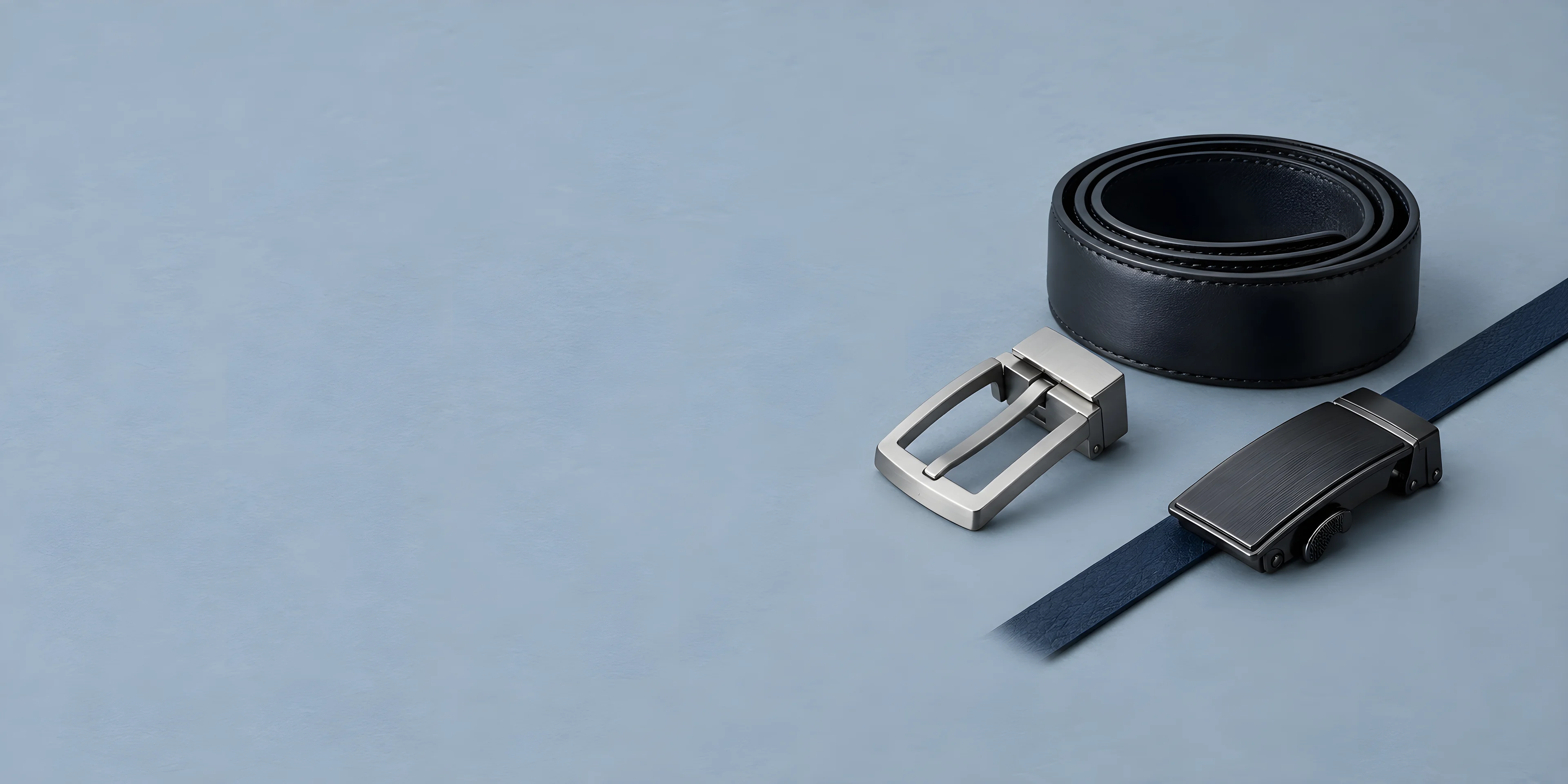
Judge finishes side by side on the material they will sit on: silver and gunmetal that look alike on a screen read differently on a strap.
Questions
Questions buyers ask
- What colour is gunmetal hardware?
- A dark grey with a metallic sheen, between silver and black; the trade also calls it gun black. It is a plated colour, usually made by tin-nickel plating or PVD — gunmetal is also the name of a bronze alloy, but the hardware colour is not made from it.
- What is the difference between antique brass and antique bronze?
- Both are antique finishes — plated, darkened, then polished back on the high points — and suppliers use the names loosely, so one tone can be sold under either. Antique brass usually reads more yellow and antique copper redder; agree the exact tone against a sample.
- Is gold-coloured hardware real gold?
- Gold names a colour, not a gold content. Real gold plate is a separate finish; ask for it by name if you need it.
- What is nickel-free plating?
- Plating built without nickel layers — for example copper, then white bronze, then palladium under the colour — for pieces that touch the skin in markets that limit nickel release. Ask for a nickel-release test report on the finished piece rather than relying on the name.
- Does plating wear off belt buckles?
- It can, where the buckle rubs — the frame’s edges and the prong. Wear on plated zinc shows grey metal or a pink copper layer; an unplated solid brass buckle has no coat to lose and darkens to a patina instead.
- What is the EU nickel release limit?
- For metal parts in direct and prolonged contact with the skin, 0.5 µg of nickel per cm² per week, tested by EN 1811. Prolonged means more than 10 minutes on three or more occasions, or more than 30 minutes once, within two weeks.
This guide explains finishes and the rules buyers ask about; it is not a compliance statement for any piece. Whether a finished piece meets a limit is shown only by a test report on that piece, in that finish.
Try it
Ready with a photo?
Sign in and run your first search. Public pages never show live stock or availability.
Next, probably
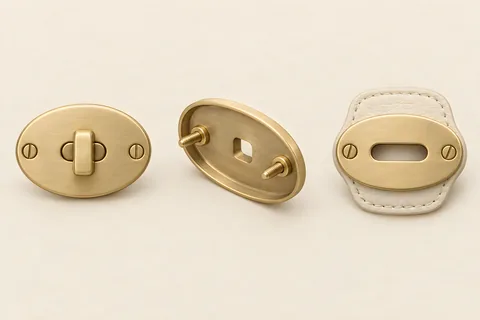
Guide
Buckle materials compared
Most metal buckles are made in one of five metals, and plastic fittings in one of two plastics.

Guide
Bag hardware names
Bag hardware is named by the job it does: closing the bag, joining a strap to it, setting the strap’s length, or reinforcing and finishing it.
Guide
Find buckles and hardware by photo
When you have the piece but not its name, start from a photograph.