01
How a rivet is made and set
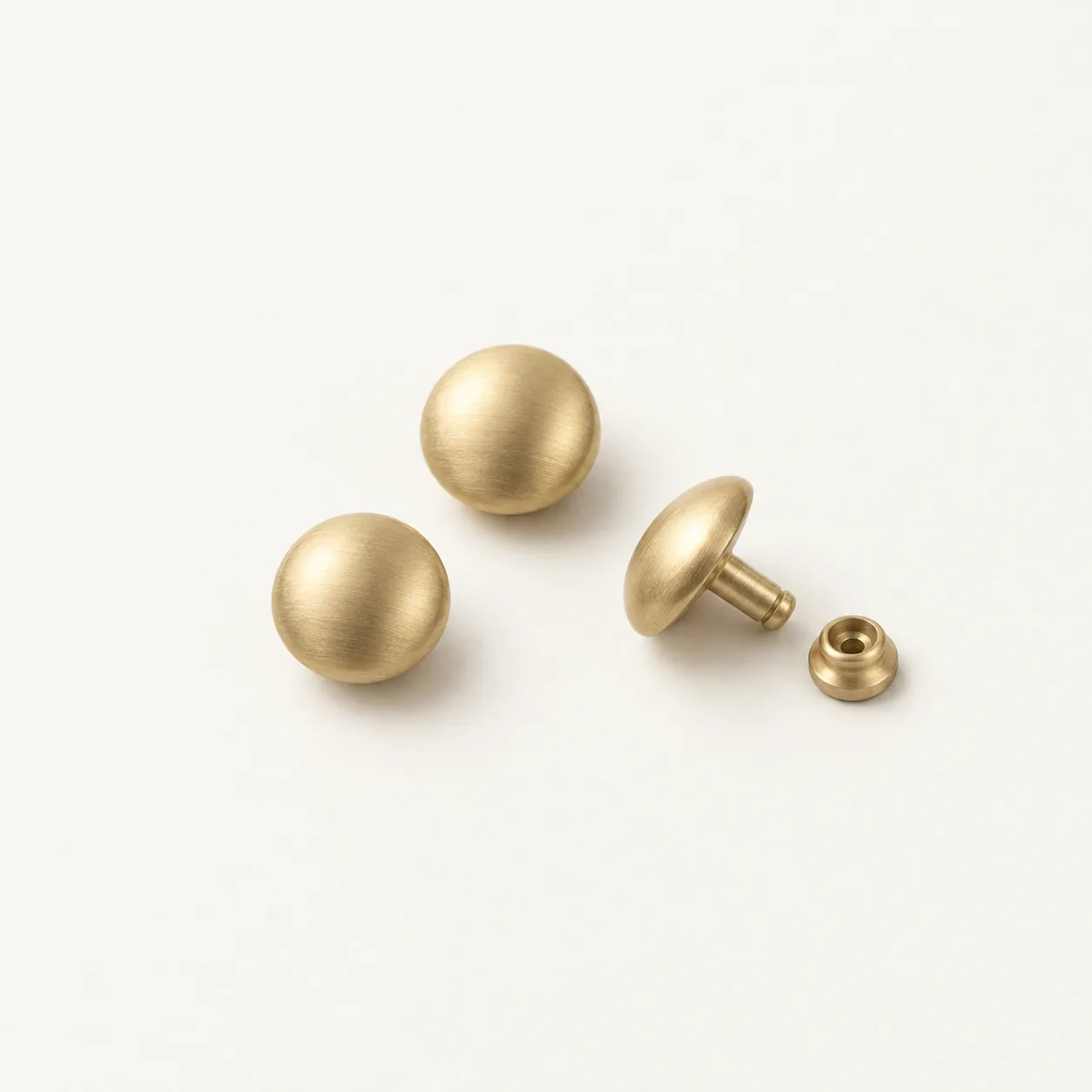
A rivet has two parts: a post, which passes through a punched hole, and a cap that closes over it from the other side. On a double cap rivet both halves carry a domed head, so the work looks finished on both faces; on a single cap rivet the back is flat.
Rivets are set with a setter and anvil, or on a press: the post flares inside the cap and locks the halves together, and a cupped setter and anvil keep the domes round. A tubular rivet is rolled over at the back instead, while a Chicago screw — a post and a screw that thread together — can be undone, which is how a belt takes an interchangeable buckle.
02
Decorative studs, spikes and jeans rivets
Decorative studs come domed, flat, pyramid- or cone-shaped, or as spikes, and fix in one of three ways: a rivet back, a screw back, or prongs pushed through the leather and folded flat behind it. Bag feet are a kind of stud too, set into the base of a bag so it stands clear of the floor. Signed in, you can filter the collection by shape and finish, or start from a photograph.
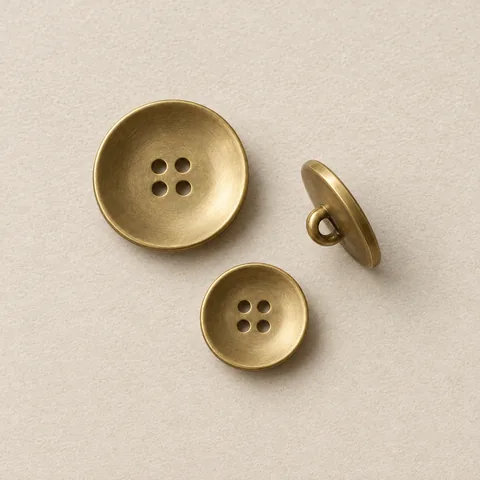
Jeans rivets — a cap and a burr pressed through the corners of a pocket — go back to a US patent of 20 May 1873. They are set by press, like the jeans buttons on the same garment.
03
Rivet sizes: cap and post
A rivet is ordered by two numbers, usually written cap × post: an 8 × 8 mm rivet has an 8 mm cap on an 8 mm post. The cap diameter sets the look; the post length is chosen for the combined thickness of the layers it joins.
Too short a post will not reach far enough into the cap to set; too long a post buckles instead of flaring. Measure the layers pressed together as they will be in the finished piece, and give that thickness with the order.
| Measurement | Taken | Decides |
|---|---|---|
| Cap diameter | Across the head | The look, and the size the rivet is named by |
| Post length | From under the cap to the end of the post | How thick a stack of layers it can join |
| Post diameter | Across the post | The size of hole to punch |
04
Materials and finishes
Leather rivets are commonly drawn or stamped from brass or steel: brass does not rust, though it darkens with age, while steel relies on its plating and can rust where that wears through. Studs with detailed heads are often die-cast in zinc alloy. Which material a given piece is made in is confirmed with your representative.
In the EU, rivets used in garments are named among the examples in the nickel-release restriction, and buyers selling there often ask for EN 1811 test results. Across the collection, pieces come plated in six colours: gold, silver, rose gold, gunmetal, black and antique bronze — how each looks and wears is in hardware finishes.
05
Ordering rivets and studs
Rayestar supplies companies — leather-goods makers, brands and wholesalers — rather than individuals. Open a trade account and one representative handles your samples, prices and orders.
- Find the rivet or stud by photo or SKU, and note its cap diameter.
- Give the thickness of the layers it joins, and choose the plating colour.
- Give the quantity; your representative confirms price, samples and lead time.
Questions
Questions buyers ask
- What is the difference between a rivet and a stud?
- The job. A rivet joins layers and holds them together; a stud is chosen for its head and may fix with prongs or a screw rather than a post. A double cap rivet often does both.
- What is a double cap rivet?
- A two-part rivet with a domed cap on each half, so both faces of the leather show a finished head. The post half passes through the hole and is set into the cap half with a cupped setter and anvil.
- What size rivets do I need for leather?
- Choose the cap diameter for the look, then a post length that suits the total thickness of the layers you are joining. Sizes are usually written cap × post, such as 8 × 8 mm.
- What is the difference between a rivet and an eyelet?
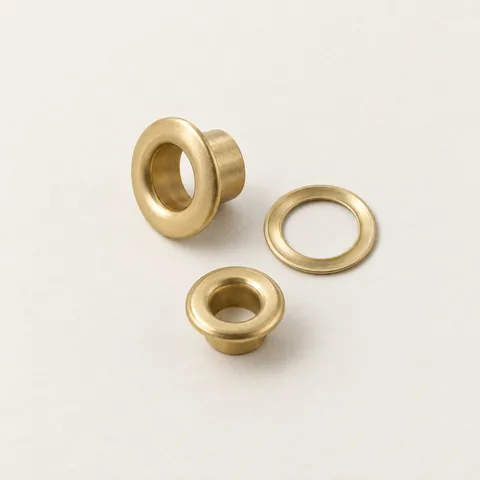
- A rivet closes a hole and joins the layers around it; an eyelet lines a hole and leaves it open for a lace, a cord or a buckle prong.
- What is a Chicago screw?
- A rivet that unscrews: a post with a threaded hole and a screw that closes it. Belts use it so a buckle can be changed without cutting stitches.
- Can companies buy rivets and studs in bulk?
- Yes. Rayestar supplies companies, not individuals: once your company details are reviewed, one representative handles samples, prices and quantities.
The illustrations show the type, not a specific catalogue piece. Size, material, finish and lead time are confirmed for each order by the representative who handles it.