01
How a belt tip fits
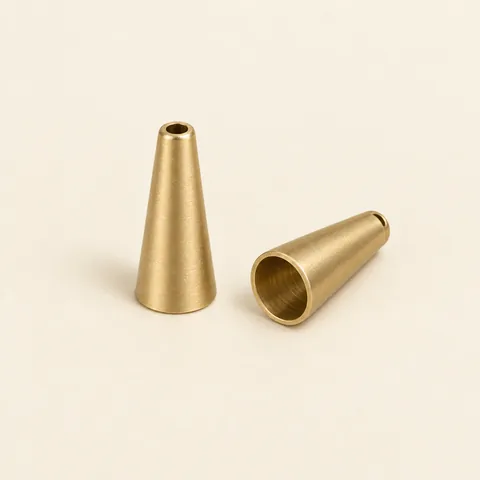
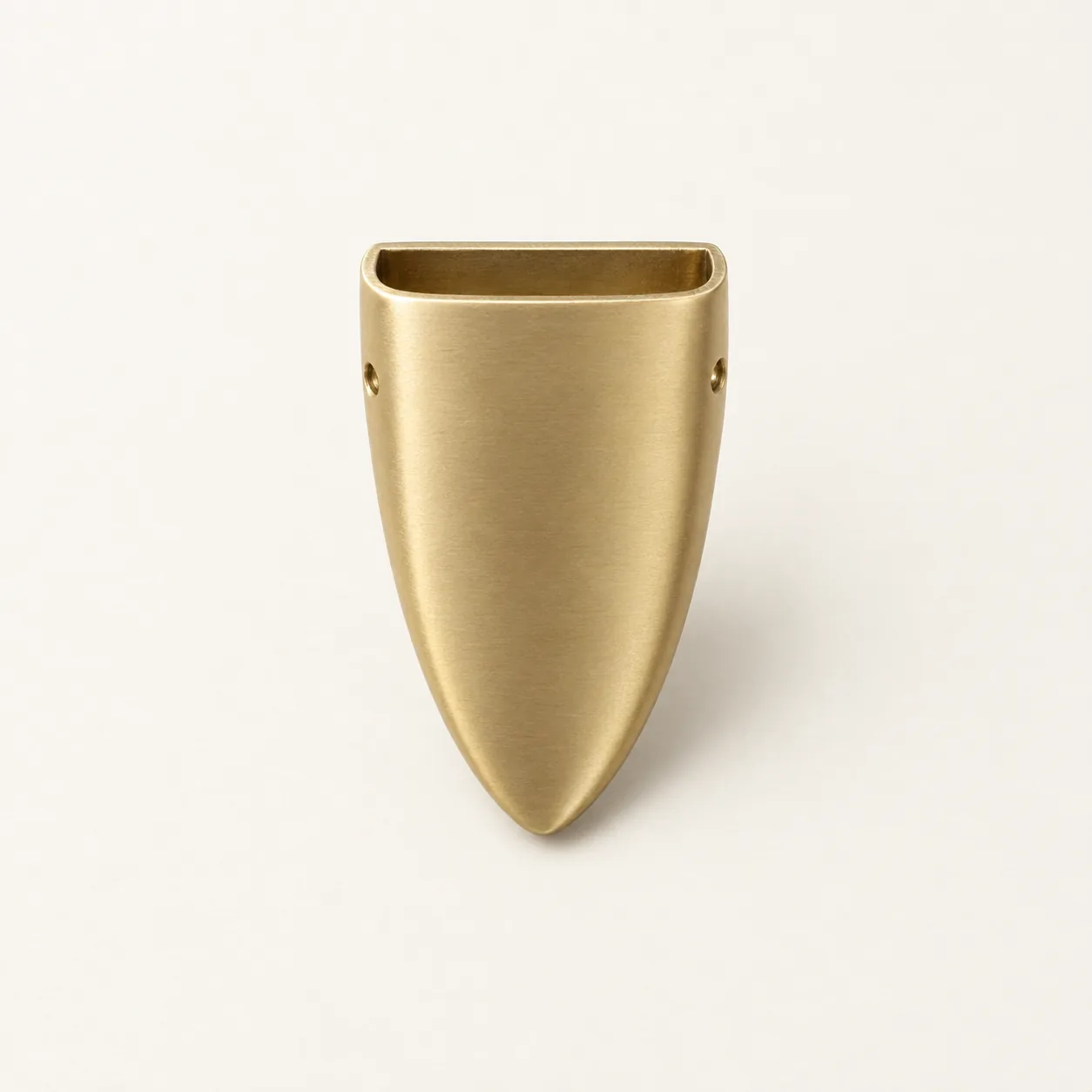
A belt tip is a shaped metal sleeve, open at one end, that slides over the end of the strap. It is fixed in one of three ways: one or two small screws through the strap, a rivet, or teeth inside the tip that are pressed into the leather or webbing.
The strap end has to fill the tip, so it is cut to the tip’s outline — pointed, rounded or square — before fitting. On the finished belt, the tip is the first part to pass through the buckle and the belt keeper.
02
Screw-on, riveted and clamp-on tips
Screw-on tips can be taken off and refitted, which suits belts cut to length after they are made; riveted and clamp-on tips are fixed for good. Webbing belts mostly take clamp-on tips; leather takes all three.
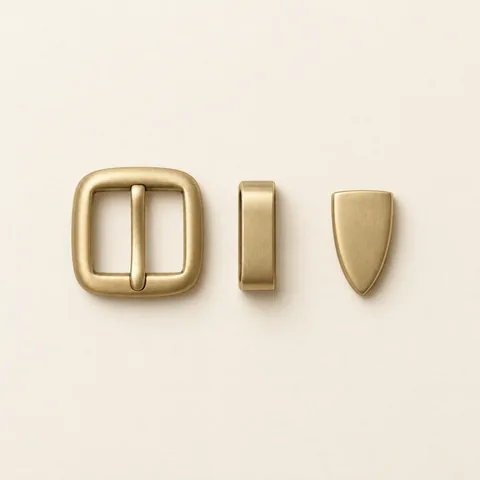
Shapes run from plain U-shaped and pointed tips to engraved western tips, often sold with a matching buckle and keeper as a belt buckle set. Signed in, you can filter the collection by shape, finish and measurements, or start from a photograph.
| Tip | Holds by | Can be refitted |
|---|---|---|
| Screw-on | One or two screws through the strap | Yes |
| Riveted | A rivet through tip and strap | No |
| Clamp-on | Teeth inside, pressed into the strap | Rarely |
03
Belt tip sizes
A tip is named by the strap width it takes: a 38 mm tip for a 38 mm strap, measured inside its opening. The opening’s height has to match the strap’s thickness — too tight and the strap will not go in, too loose and a clamp-on tip will not grip.
Where a strap narrows towards its end, as on a ranger belt, order the tip for the width at the end.
| Strap width | Nearest inch size | Usually for |
|---|---|---|
| 20 mm | 3/4 in (19 mm) | Ranger belt ends, bag straps |
| 25 mm | 1 in (25.4 mm) | Women’s belts, ranger belt ends |
| 32 mm | 1 1/4 in (31.75 mm) | Dress and webbing belts |
| 35 mm | 1 3/8 in | Men’s dress belts |
| 38 mm | 1 1/2 in (38.1 mm) | Casual, jeans and webbing belts |
| 40 mm | 1 9/16 in | Casual and work belts |
04
Belt tip materials and finishes
Belt tips are commonly stamped from brass or steel sheet, or cast in zinc alloy when the face carries a pattern; solid brass and stainless steel are chosen for belts meant to age or to be worn outdoors. The differences are set out in buckle materials compared.
Across the collection, pieces come plated in six colours: gold, silver, rose gold, gunmetal, black and antique bronze. A tip is normally ordered in its buckle’s colour, so both ends of the belt match.
05
Ordering belt tips
Rayestar supplies companies — belt makers, brands, wholesalers and importers — not individuals. Open a trade account and one representative handles your samples, prices and orders.
- Find the tip by photo or SKU, and note the strap width.
- Give the strap’s thickness and material, and the fixing you want: screw, rivet or clamp.
- Choose the plating colour and quantity; your representative confirms price, samples and lead time.
Questions
Questions buyers ask
- What is the metal tip on the end of a belt called?
- A belt tip, also called a belt end tip, strap end or tip cap. It caps the free end of the strap so it keeps its shape and threads cleanly through the buckle and keeper.
- How do you attach a belt tip?
- Cut the strap end to the tip’s outline and slide the tip on. Then tighten its screws, set a rivet through tip and strap, or press a clamp-on tip shut so its teeth grip.
- What size belt tip do I need?
- One named for the width of the strap at its end — a 38 mm tip for a 38 mm strap — with an opening that matches the strap’s thickness.
- Do belt tips work on webbing belts?
- Yes. Clamp-on tips with teeth inside grip woven webbing; screw-on and riveted tips are mostly used on leather.
- Can a tip be added to a belt that has none?
- Yes, if the end can be trimmed to the tip’s outline and the strap is the width and thickness the tip takes. A screw-on tip needs only a hole punched for each screw.
- Can businesses order belt tips in bulk?
- Yes, only as a company: register, have your business reviewed, and one representative handles samples, quantities and orders.
The illustrations show the type, not a specific catalogue piece. Size, material, finish and lead time are confirmed for each order by the representative who handles it.