01
Parts of an eyelet and a grommet
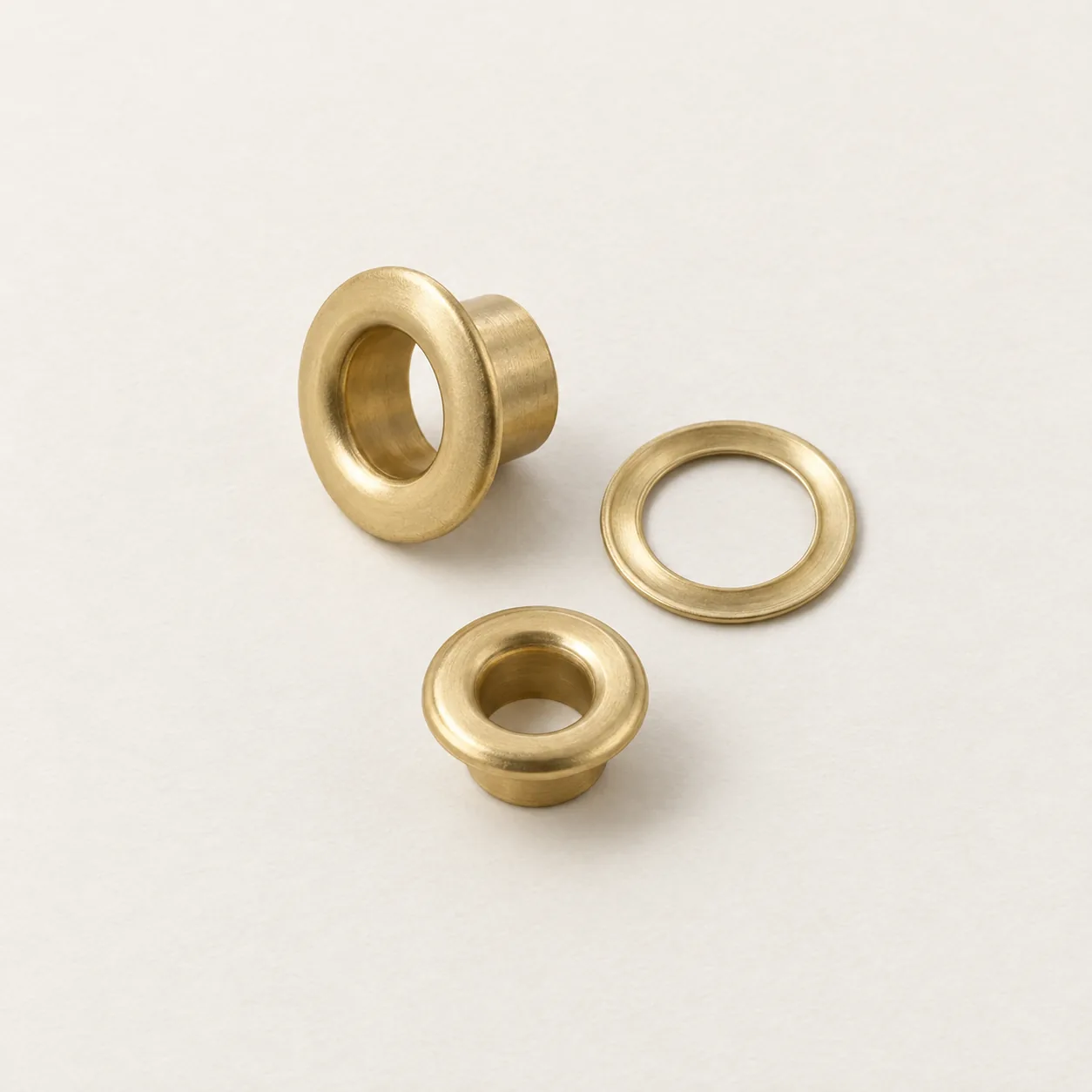
An eyelet has a flange — the rim that shows — and a barrel that passes through the hole and is rolled or split over on the back. A grommet adds a washer: the barrel is rolled onto it, clamping the material between flange and washer.
Both are set with a matched setter and anvil, or on a press fitted with dies for that size. The hole is punched first, to the barrel’s outside diameter, so the barrel fits snugly.
02
Eyelets, grommets and washers
Eyelets suit light and medium materials — shoe uppers, garments, belts and small leather goods. Grommets suit heavier and woven ones — canvas, webbing, bag bodies and banners — where the washer spreads the pull around the hole.
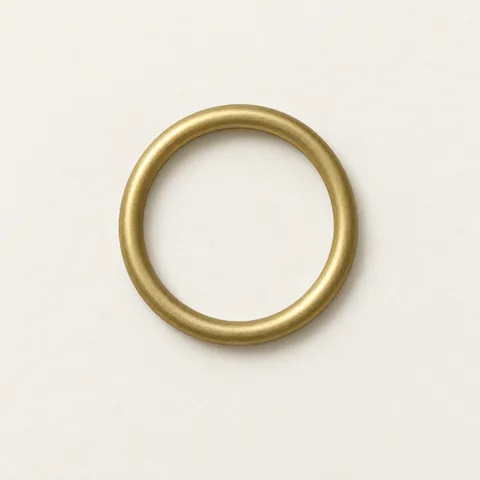
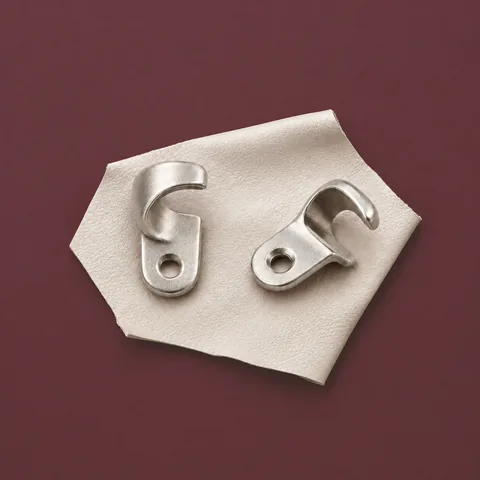
Plain washers sit flat; spur washers have teeth that bite into canvas and stop the grommet turning. Flanges come rolled, flat or decorative, which changes the look, not the hole. On boots, the top eyelets are often replaced by speed hooks, so the lace is wrapped on rather than threaded.
03
Grommet sizes and numbers
Eyelets and grommets are named by the hole they leave. Eyelets are usually given in millimetres of inside diameter; grommets are often given a number instead: a #0 leaves a hole of about 1/4 in (6.4 mm) and a #2 about 3/8 in (9.5 mm).
The barrel must also suit the thickness of the material, or it will not roll over cleanly: give that thickness with the order — for a belt or a bag, the leather and any lining together. Signed in, you can filter the collection by measurements, or start from a photograph.
| Number | Hole (inches) | Hole (millimetres) |
|---|---|---|
| #00 | 3/16 in | 4.8 mm |
| #0 | 1/4 in | 6.4 mm |
| #1 | 9/32 in | 7.1 mm |
| #2 | 3/8 in | 9.5 mm |
| #3 | 7/16 in | 11.1 mm |
| #4 | 1/2 in | 12.7 mm |
| #5 | 5/8 in | 15.9 mm |
04
Materials and finishes
Eyelets and grommets are drawn from metal strip, so the barrel wall is as thick as the strip. Brass is the classic choice because it does not rust; plated steel costs less but can rust where the plating wears, and aluminium saves weight. Which material a given piece is made in is confirmed with your representative.
Across the collection, pieces come plated in six colours: gold, silver, rose gold, gunmetal, black and antique bronze; how each looks and wears is in hardware finishes.
05
Ordering eyelets and grommets
Rayestar supplies companies — shoe, bag, belt and garment makers, brands and wholesalers — rather than individuals. Open a trade account and one representative handles your samples, prices and orders.
- Find the eyelet or grommet by photo or SKU, and note the hole it leaves.
- Give the thickness of the material it sets through, and choose the plating colour.
- Give the quantity; your representative confirms price, samples and lead time.
Questions
Questions buyers ask
- What is the difference between eyelets and grommets?
- An eyelet is one piece, rolled over on the back of the material; a grommet has a second piece, a washer, that the barrel is rolled onto. Grommets suit heavier materials such as canvas and webbing.
- What do grommet size numbers mean?
- They name the hole left after setting. In the common grommet numbering, a #00 leaves about 3/16 in (4.8 mm), a #0 about 1/4 in (6.4 mm) and a #5 about 5/8 in (15.9 mm).
- What size eyelet do I need?
- One whose hole takes what passes through it — a lace, a cord or a buckle prong — with a barrel suited to the material’s thickness. On a belt, the hole must take the buckle’s prong.
- How are eyelets and grommets set?
- Punch a hole to the barrel’s outside diameter, pass the barrel through from the front, and roll it over with a setter and anvil or a press with dies of the same size. A grommet’s washer goes on the back before the barrel is rolled.
- Speed hooks or eyelets on boots?
- Eyelets hold the lace in a closed hole; speed hooks are open, so a lace is wrapped round them in one movement. Many boots use eyelets lower down and speed hooks at the top.
- What is the difference between an eyelet and a rivet?
- An eyelet lines a hole and leaves it open; a rivet fills the hole and joins the layers around it.
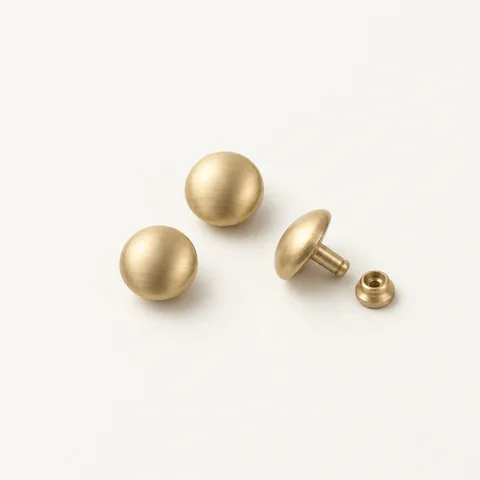
The illustrations show the type, not a specific catalogue piece. Size, material, finish and lead time are confirmed for each order by the representative who handles it.