01
Parts of a speed hook
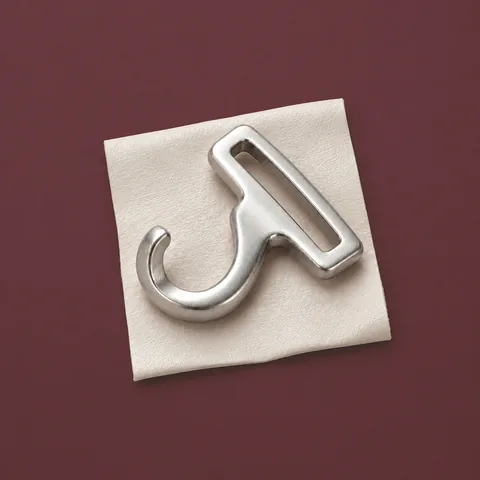
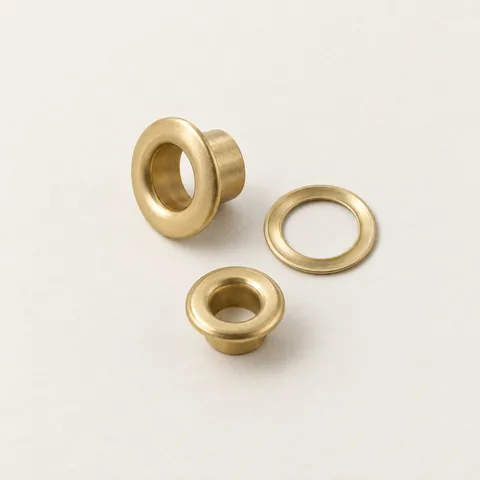
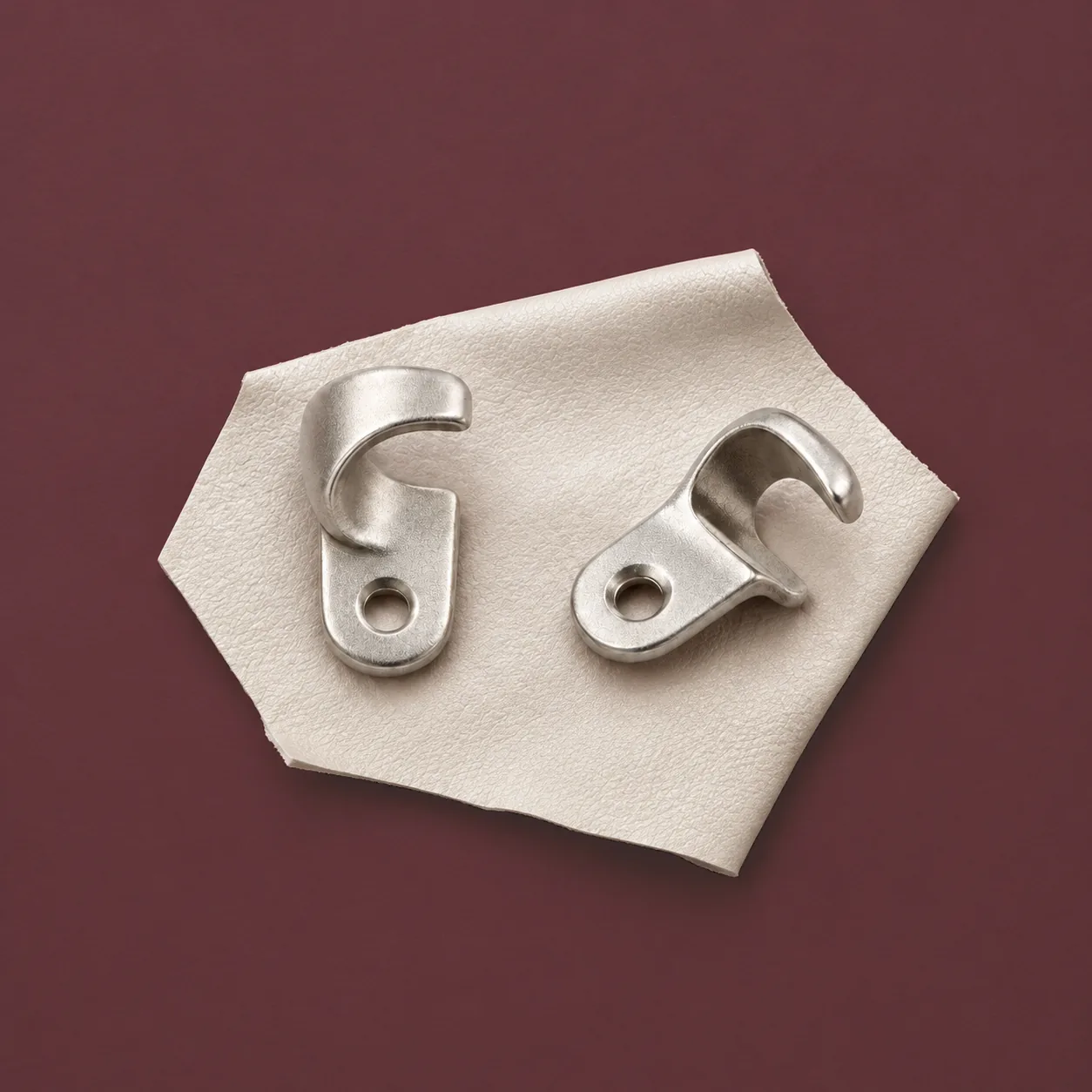
A speed hook is a curled hook on a flat base. The base is riveted through the upper — a post or tubular rivet passes through a punched hole and is rolled over behind, as an eyelet is — and the hook stands off the leather so the lace can pass behind it.
The lace rides on the inside of the hook, so that face must be smooth and rounded: a sharp edge left from casting or stamping saws through a lace. Two-hole hooks take two rivets and cannot turn on the upper; one-hole hooks take one.
02
Speed hooks, eyelets and locking hooks
On a tall boot, eyelets or D rings usually lace the foot, and two to five pairs of speed hooks take over above the ankle. Eyelets hold the lace captive and spread tension evenly; hooks lace and loosen the shaft in seconds, though a slack lace can lift off them.
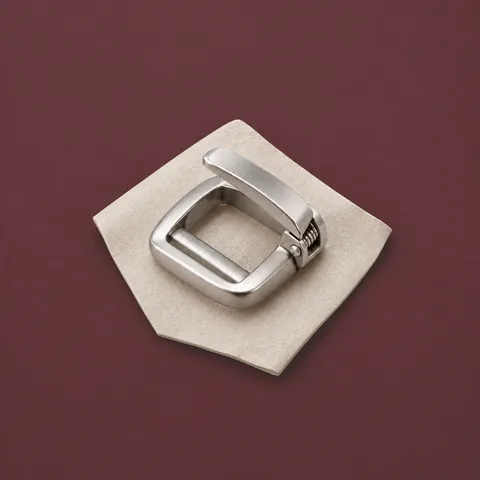
A locking hook, or lace lock, has a narrow jaw that pinches the lace, usually at the ankle bend, so the foot and the shaft can be laced to different tension. Plain open hooks are the classic on work and military boots; locking hooks are typical of hiking boots.
03
Speed hook sizes
A speed hook is chosen by the lace it takes: its throat must let the lace in without pinching it, unless it is a locking hook made to pinch. Listings quote hooks by length — around 18–20 mm is common — and by the rivet, which must suit the punched hole and every layer it passes through.
Keep size and finish identical across both boots and every row: a mismatched hook shows at once.
| Measurement | How to take it | What it must match |
|---|---|---|
| Length | From the base to the top of the hook | The spacing between rows |
| Throat | The gap between the hook and the upper | The lace: round or flat, and its thickness |
| Rivet hole | Across the hole in the base | The punch and the setting die |
| Rivet length | The post or barrel below the base | Upper, lining and backing together |
| Holes | One or two | Whether the hook may turn |
04
Materials and finishes
Speed hooks are stamped from brass or steel, die-cast in zinc alloy or turned from brass bar; some are moulded in nylon. Solid brass does not rust when the plating wears through, while steel and zinc depend on the plating where the lace rubs. Which material a given piece is made in is confirmed with your representative.
Across the collection, pieces come plated in six colours: gold, silver, rose gold, gunmetal, black and antique bronze. The lace rubs the same spot every day, so plating wears there first; hardware finishes compares how each colour wears.
05
Ordering speed hooks
Rayestar supplies companies — boot makers, brands and wholesalers — rather than individuals. Open a trade account and one representative handles your samples, prices and orders.
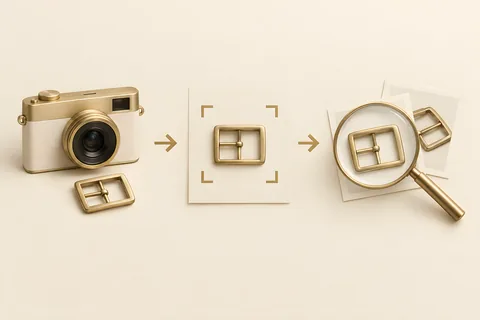
- Find the hook by photo or SKU, and note its length and rivet size.
- Choose the plating colour, and say whether you need plain or locking hooks.
- Give the quantity; your representative confirms price, samples and lead time.
Questions
Questions buyers ask
- What are speed hooks?
- Open metal hooks riveted to the upper of a lace-up boot, usually above the ankle. The lace is wrapped round them instead of threaded through, so the shaft laces and loosens quickly.
- Speed hooks vs eyelets: which is better?
- Each does a different job. Eyelets hold the lace captive and spread tension evenly; speed hooks are faster but can let a slack lace slip off. Most tall boots use both: eyelets on the foot, hooks on the shaft.
- How are speed hooks attached?
- Through a punched hole, with a rivet set by a press and die, the same way as an eyelet. Two-hole hooks take two rivets and do not turn.
- How many speed hooks does a boot need?
- Usually two to five pairs, from just above the ankle bend to the top of the shaft; the rows below stay as eyelets or D rings.
- What size speed hook do I need?
- One whose length suits the spacing of your rows, whose throat takes your lace, and whose rivet suits the thickness of the upper. Measure all three on an existing hook, or search by its photo.
- What is a locking speed hook?
- A hook with a narrow jaw that grips the lace, so the tension set below it holds while the shaft is laced looser or tighter. It usually sits at the ankle bend.
The illustrations show the type, not a specific catalogue piece. Size, material, finish and lead time are confirmed for each order by the representative who handles it.