Guide · 5 steps · updated 2026-11-21
Buckle materials compared
Most metal buckles are made in one of five metals, and plastic fittings in one of two plastics. Each casts, plates, weighs and ages differently, and a scale, a magnet and a hidden scratch tell most of them apart.
Step 01
The materials at a glance
The material decides how a buckle can be made. Zinc alloy is die-cast, which suits fine detail; brass is cast, stamped or machined; steel is stamped or bent from wire; plastic is moulded.
It also decides weight and wear. For the same shape, brass weighs about 30% more than zinc alloy and about three times as much as aluminium, and zinc alloy and steel rely on their plating against corrosion far more than brass or stainless steel do.
| Material | Weight | How it is made | How it ages | Usual finish |
|---|---|---|---|---|
| Zinc alloy | 6.6–6.8 g/cm³ | Die-cast (Zamak) | Corrodes white where plating wears through | Copper and nickel, then any colour |
| Brass | 8.5 g/cm³ | Cast, stamped or machined | Darkens to a patina; corrodes green | Bare, lacquered or plated |
| Stainless steel | 8.0 g/cm³ | Stamped, cast or machined (304, 316) | Resists rust; 316 resists salt better | Polished, brushed or PVD |
| Steel | About 7.85 g/cm³ | Stamped or bent from wire | Rusts red-brown where plating wears through | Plated or painted |
| Aluminium | 2.7 g/cm³ | Die-cast or machined | Protected by its own oxide film | Anodised or painted |
| Plastic | About 1.1–1.4 g/cm³ | Moulded in acetal (POM) or nylon | Does not corrode; nylon takes up moisture | Coloured in the mould |
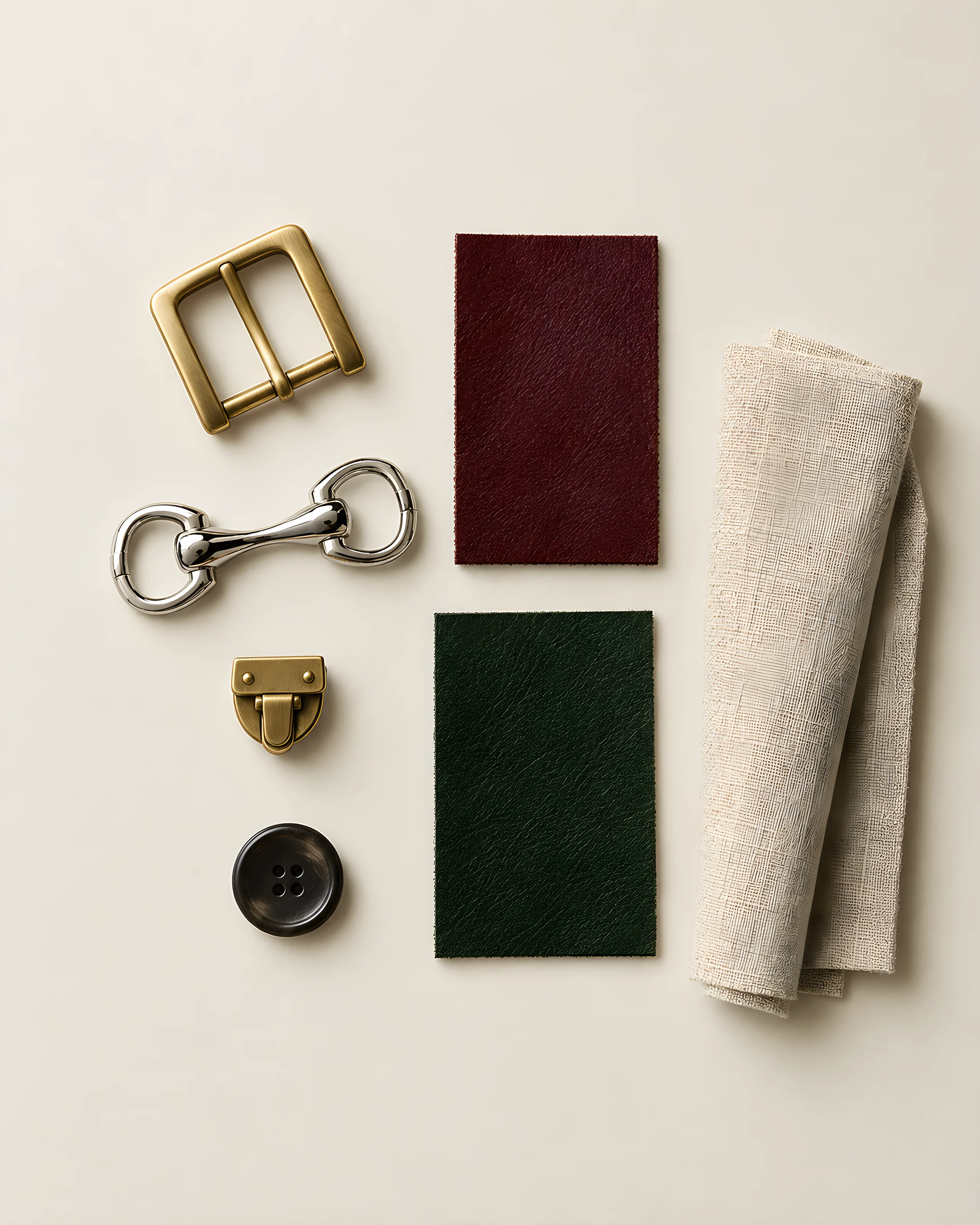
Colour shows the finish, not the metal under it: plated zinc, brass and steel can look the same.
Step 02
Is zinc alloy good for belt buckles?
For most fashion and dress buckles, yes. Zamak, the common zinc die-casting alloy, is zinc with about 4% aluminium and melts below 400 °C, so it casts quickly in hot-chamber machines and fills fine detail, which suits decorative buckles. It plates well over a first layer of copper; the colours are in hardware finishes.
Its limits are strength and its coat. Zinc is weaker than solid brass or stainless steel and suits low-stress parts, and where its plating wears through it corrodes to a white powder rather than rusting. The alloy contains no nickel — any nickel in a zinc buckle is in its plating — and the European ingot standard, EN 1774, caps its lead and cadmium at 0.003% each.
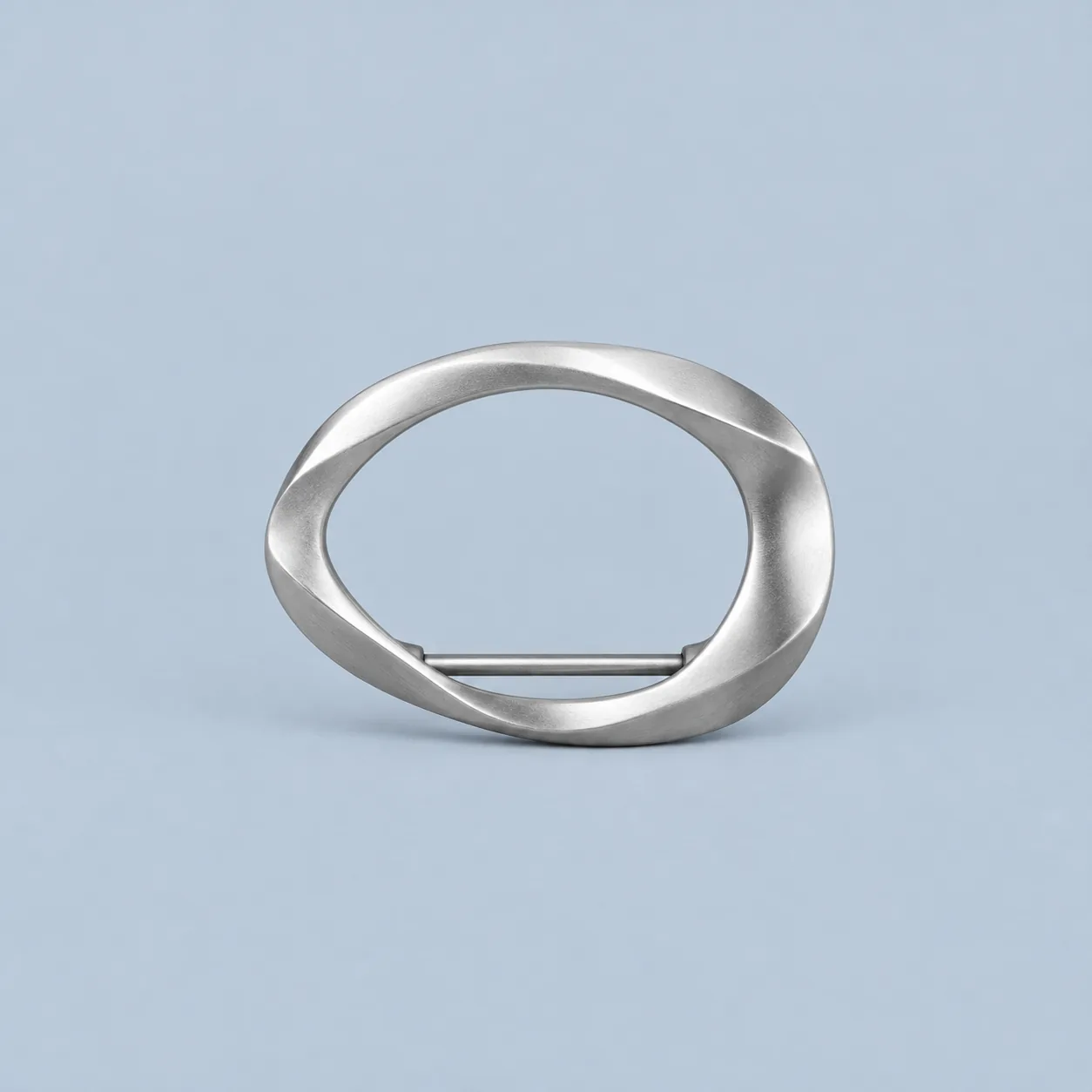
Cast detailDie casting fills fine, asymmetric shapes. 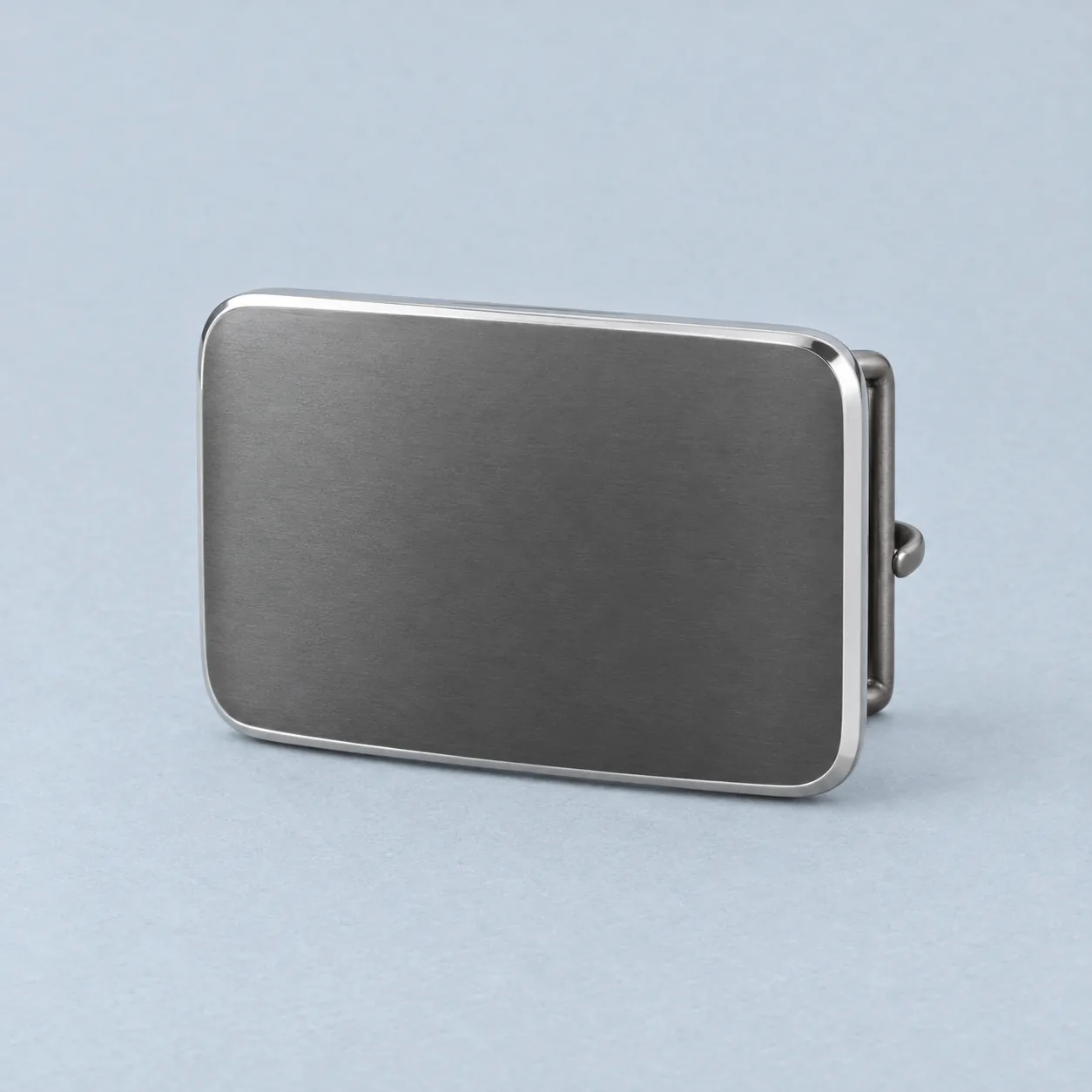
Plated facesCast smooth, then copper, nickel and colour.
Step 03
Brass, stainless steel, steel and aluminium
Brass — cartridge brass is about 70% copper and 30% zinc — is heavier and stronger than zinc alloy and cold-works well, which is why eyelets and grommets, rivets and snaps are drawn and stamped from it. Solid brass can be left bare to darken to a patina, while plated brass looks like plated zinc when new. Free-cutting brass for machined parts contains 2.5–3% lead, so check such parts against lead limits.
Stainless steel needs no plating against rust: 304, called 18/8, is about 18% chromium and 8% nickel, and 316 adds 2–3% molybdenum for better resistance to pitting in salty, chloride-rich conditions. Plain steel is magnetic and rusts red-brown where its plating is breached, so steel buckles and D rings are plated; aluminium weighs a third as much as steel and is protected by its own oxide film.
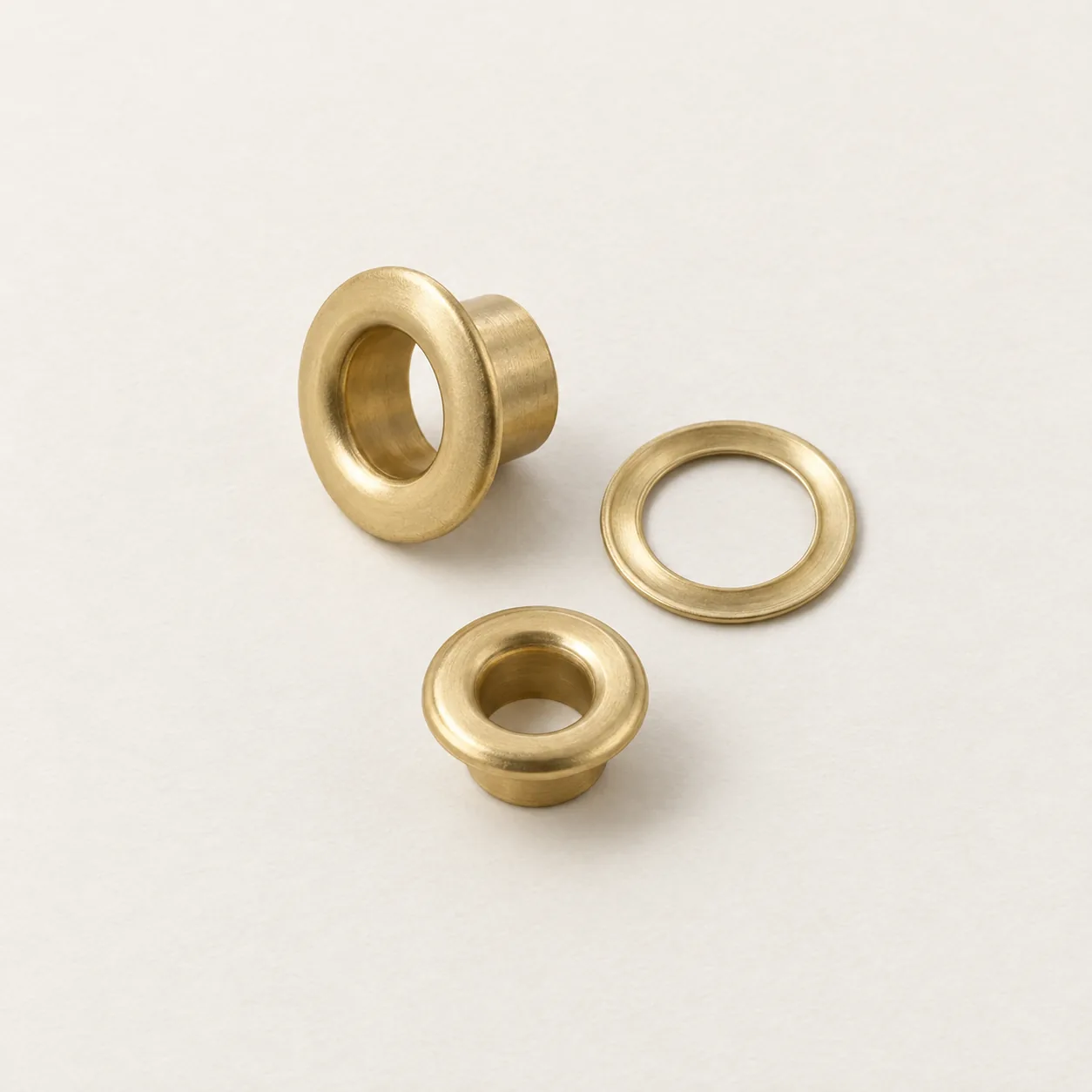
BrassEyelets are drawn from brass strip. 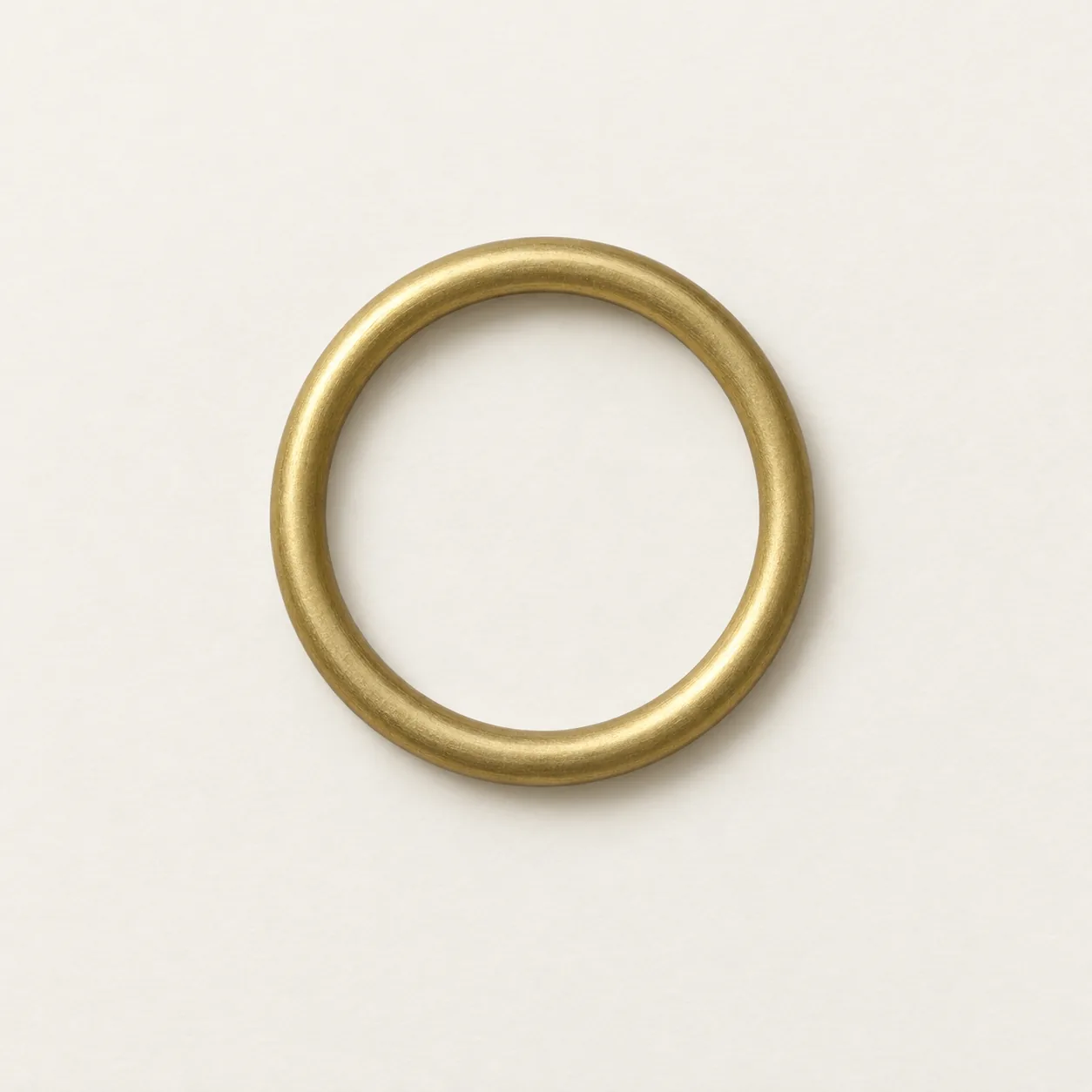
WireRings are bent from wire, then welded or left open.
Step 04
Plastic buckles: acetal or nylon
Plastic side release buckles and ladder locks are commonly moulded in acetal (POM). Nylon is the other common choice, but at saturation it holds about 8% moisture against about 0.8% for acetal, so its stiffness and size shift with humidity.
Plastic buckles are coloured in the mould rather than plated, weigh a fraction of a metal one and cannot corrode, which suits outdoor gear and luggage.
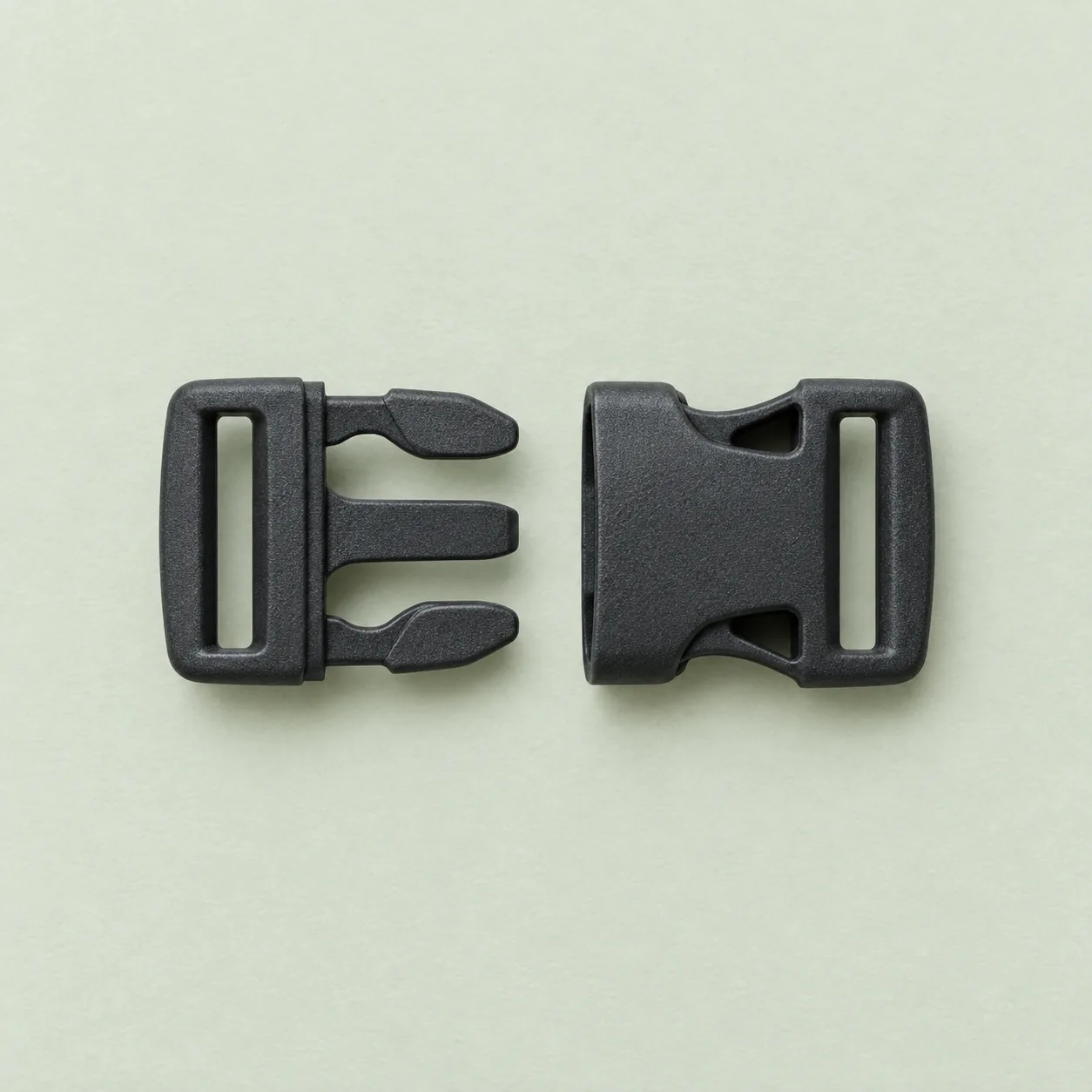
Acetal (POM)The usual plastic for side release buckles. 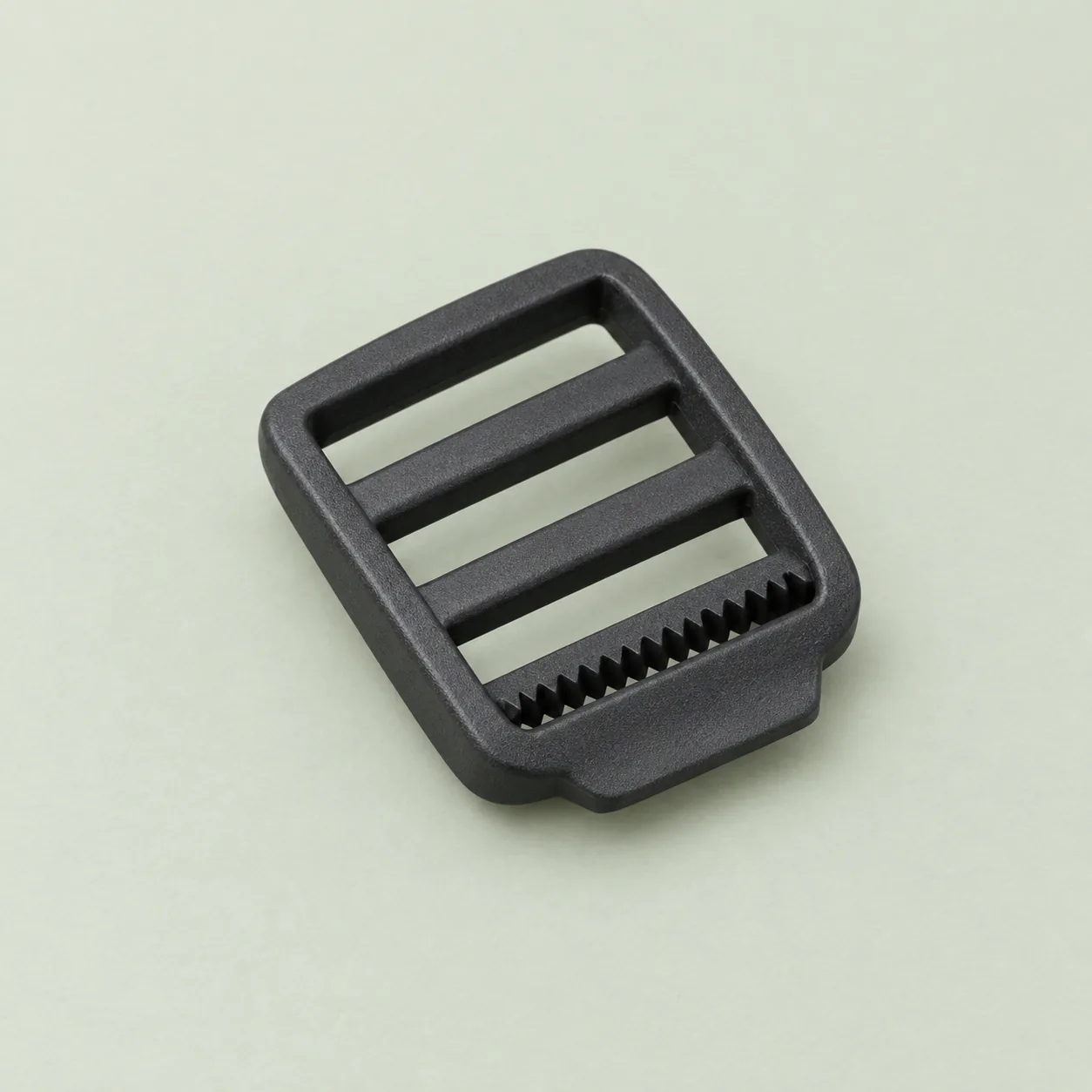
Acetal or nylonWebbing adjusters are moulded in either.
Step 05
How to tell buckle materials apart
Plated pieces look alike when new, so test rather than trust the colour. Four checks settle most cases without marking a visible face:
- Weigh it: for the same shape, brass is about 30% heavier than zinc alloy and three times aluminium.
- Try a magnet: steel and iron attract it; zinc alloy, brass and aluminium do not; 304 and 316 stainless barely do, a little more where they have been bent or formed.
- Scratch a hidden spot: yellow metal right through is brass; grey is zinc alloy or steel, often under a pink copper layer.
- Read any corrosion: white on zinc, red-brown on steel, green on brass and copper.
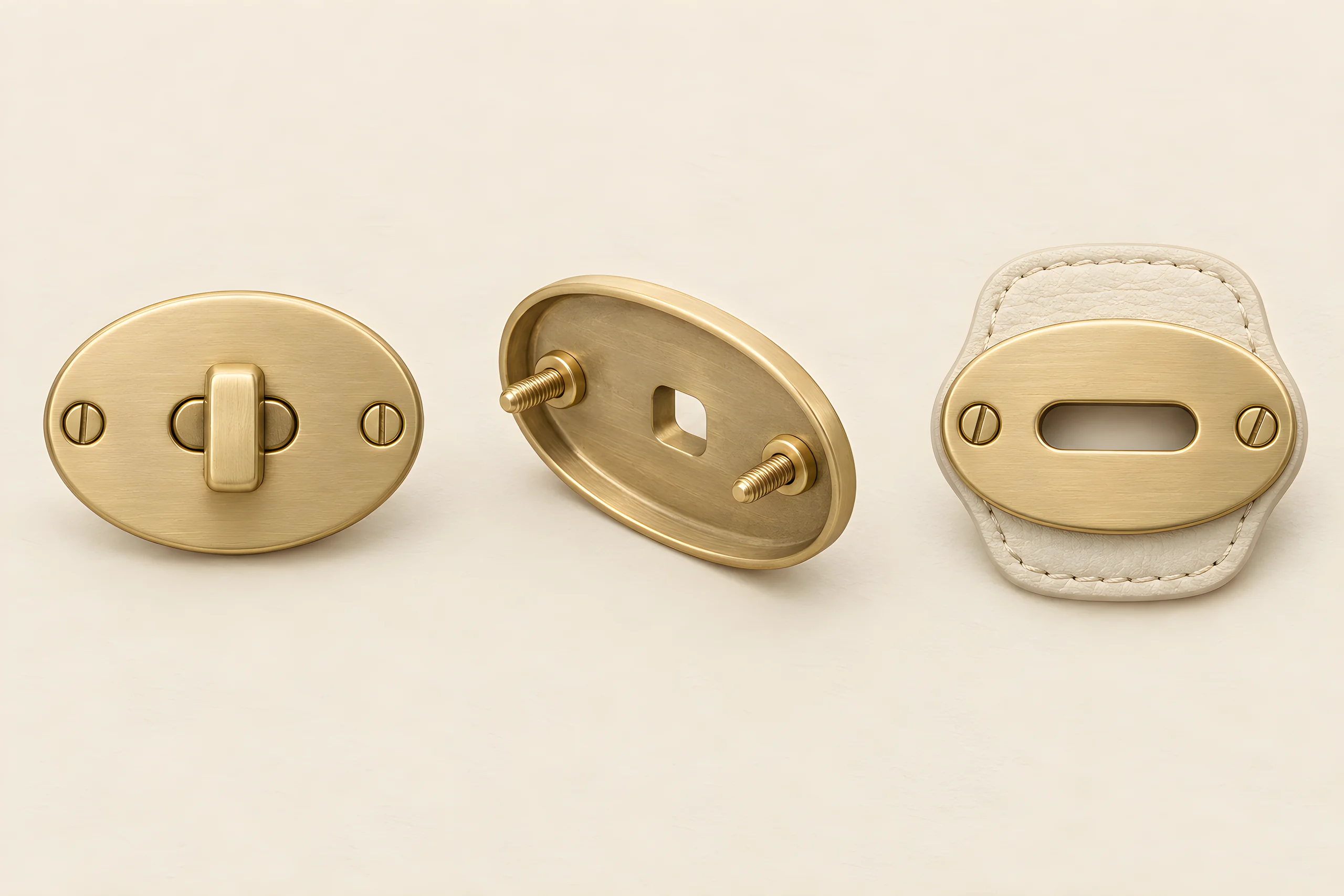
Check the back and the mounting points first: a scratch there, or wear at an edge, shows the base metal.
Questions
Questions buyers ask
- Is zinc alloy good for belt buckles?
- Yes, for most fashion and dress belts: it casts fine detail, plates well and feels solid in the hand. It is weaker than solid brass or stainless steel, so belts for hard wear are better served by those, and its look lasts as long as its plating.
- Does a zinc alloy buckle rust?
- Not in the usual sense: rust is the red oxide of iron, and zinc alloy is not an iron alloy. Where its plating wears through, zinc corrodes to a white powder instead; a steel buckle rusts red-brown in the same places.
- Can a zinc alloy buckle cause a nickel allergy?
- The alloy itself is zinc with about 4% aluminium and traces of magnesium and copper — no nickel. Its plating usually includes a nickel layer, so for pieces that touch the skin, ask for nickel-free plating or a nickel-release test report on the finished buckle.
- Is brass better than zinc alloy for buckles?
- Brass is stronger and about 30% heavier, and it can be left unplated to age to a patina; zinc alloy casts finer detail at a lower cost and relies on its plating. Plated brass and plated zinc look the same when new — weight and a hidden scratch tell them apart.
- 304 or 316 stainless steel: which is better for buckles?
- 304, also called 18/8, suits most everyday pieces. 316 adds 2–3% molybdenum and resists pitting better in salty, chloride-rich conditions such as sweat and sea air, though neither is fully proof against sea water.
- How can I tell if a buckle is solid brass?
- Weigh it against a zinc piece of the same size — brass is about 30% heavier — and check that a magnet does not pull it. A scratch on a hidden spot shows yellow metal on solid brass, and grey metal or pink copper on plated zinc.
This guide describes materials as the trade uses them; it does not say what any catalogue piece is made of. The material and finish of each piece are confirmed for each order by the representative who handles it.
Try it
Ready with a photo?
Sign in and run your first search. Public pages never show live stock or availability.
Next, probably
Guide
Hardware finishes and plating colours
A finish is the outer coat of a piece: plated metal, a vacuum-deposited film, paint or lacquer, sometimes darkened and polished back.
Guide
Types of belt buckles
A belt buckle is named by how it holds the strap: a prong through punched holes, jaws or a ratchet that grip the strap, or a hook or turn on the strap itself.
Reference
Pin buckles
A pin buckle — also called a prong buckle — holds a strap with a prong that passes through a punched hole.