01
How a ladder lock holds
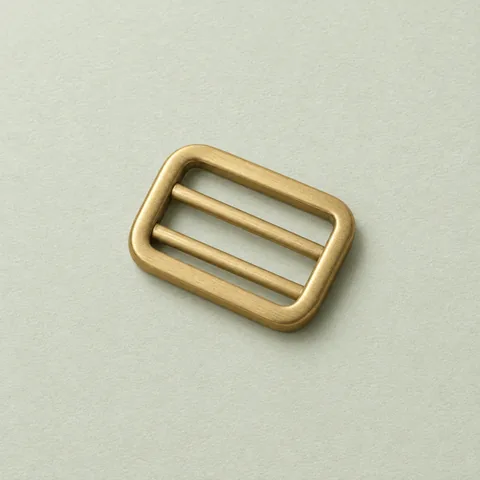
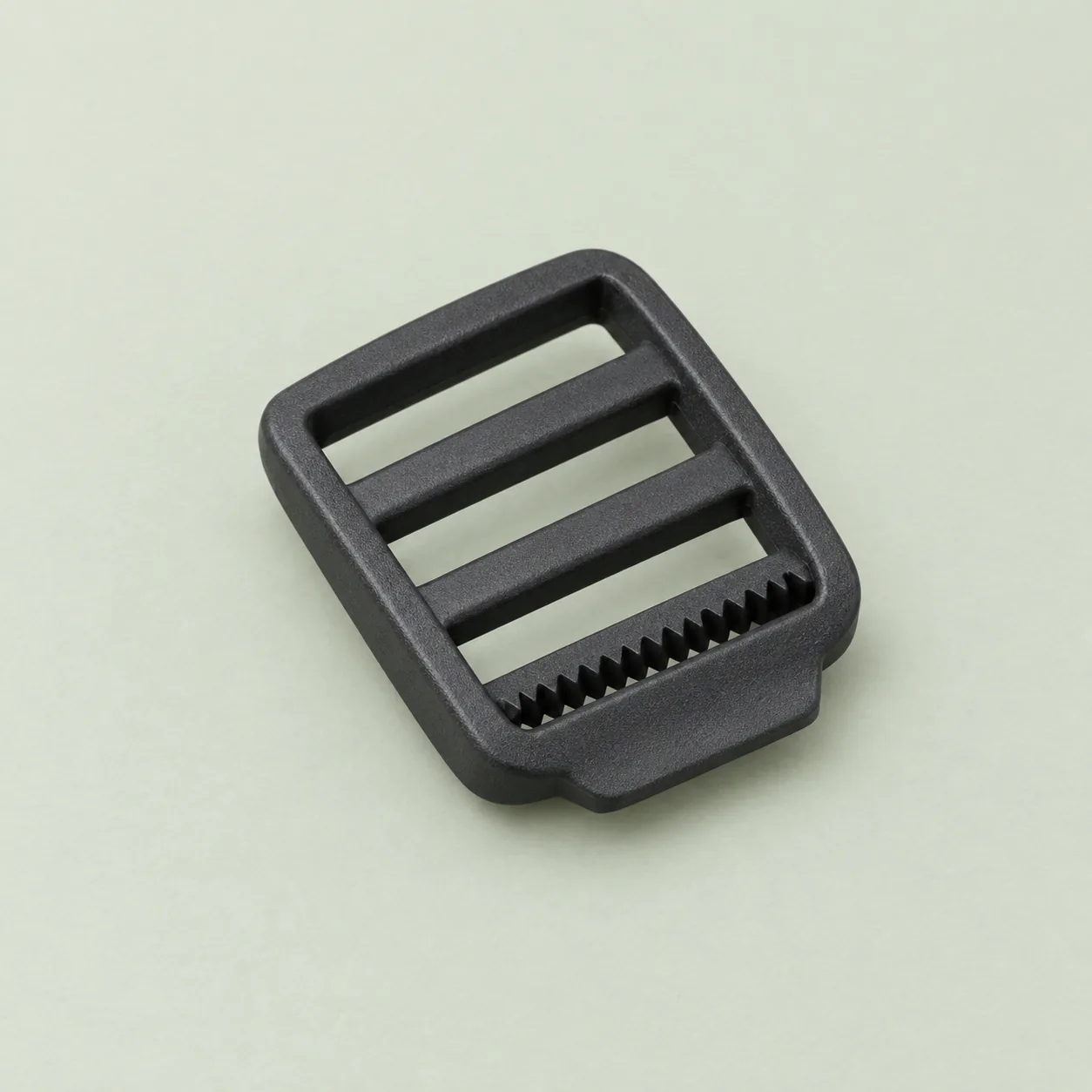
The fixed end of the webbing is sewn around one end bar. The running end comes back, threads up through the frame, over the toothed bar and down again; when the strap is loaded, the pull clamps the webbing between the teeth and the frame, so it cannot creep.
To tighten, pull the free tail; to loosen, lift the tab at the front edge, which tips the bar and frees the webbing. That one-handed action is why ladder locks sit on backpack shoulder straps and load lifters.
02
Types of ladder lock
Most ladder locks are moulded plastic, flat or curved to follow a strap round the shoulder. Metal ones — die-cast zinc alloy or formed steel — are plated to match a bag’s other hardware. The locking bar is usually toothed so the webbing cannot creep.
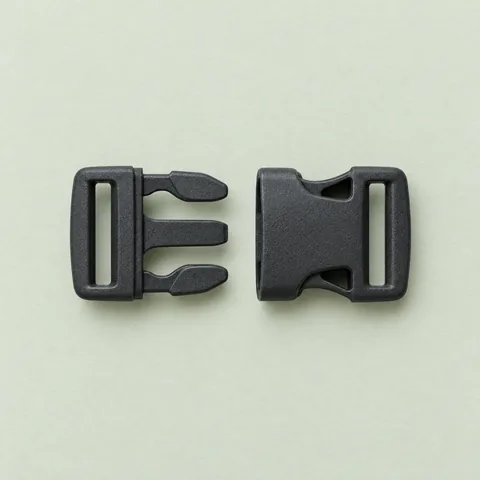
Open-sided and removable-bar versions slip onto a strap that is already sewn, so a worn buckle can be replaced without unpicking the stitching. On packs, ladder locks often work with side release buckles: one opens the strap, the other sets its length.
03
Ladder lock sizes
A ladder lock is named by the webbing width it takes, not by its outside width: a 25 mm ladder lock is for 25 mm (1 in) webbing. Match the webbing’s thickness as well — thin, slippery webbing can creep through, and very thick webbing may not thread.
| Webbing width | Nearest inch size | Usually for |
|---|---|---|
| 20 mm | 3/4 in (19.05 mm) | Small packs and compression straps |
| 25 mm | 1 in (25.4 mm) | Backpack shoulder straps and load lifters |
| 32 mm | 1 1/4 in (31.75 mm) | Wider bag and shoulder straps |
| 38 mm | 1 1/2 in (38.1 mm) | Heavy shoulder straps and hip belts |
| 50 mm | 2 in (50.8 mm) | Hip belts and luggage straps |
04
Materials and finishes
Plastic ladder locks are commonly acetal (POM), which holds its shape in damp conditions better than nylon; metal ones are cast or formed, then plated. Bag and outdoor ladder locks set strap length — they are not rated for lifting, climbing or restraint, which need certified hardware.
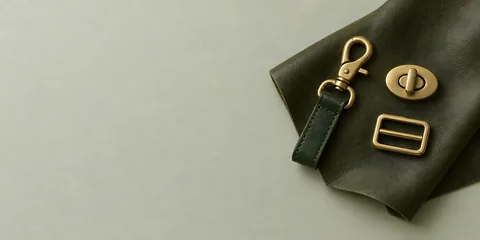
Across the collection, pieces come plated in six colours: gold, silver, rose gold, gunmetal, black and antique bronze. How each one looks and wears is in hardware finishes.
05
Ordering ladder locks
Rayestar supplies companies — bag and outdoor-gear makers, brands and wholesalers — rather than individuals. Open a trade account and one representative handles your samples, prices and orders.
- Find the ladder lock by photo or SKU, and note the webbing width it takes.
- Say how thick the webbing is and whether the strap is already sewn, and choose the finish.
- Give the quantity; your representative confirms price, samples and lead time.
Questions
Questions buyers ask
- How do you thread a ladder lock buckle?
- Sew the fixed end of the webbing around one end bar. Bring the running end up through the frame from underneath, over the toothed bar and back down, then pull the tail to tighten.
- What is the difference between a ladder lock and a tri-glide?
- A tri-glide, or strap slider, holds by friction and is adjusted by hand. A ladder lock locks under tension and releases when its tab is lifted, so it can be tightened with one pull.
- What size ladder lock do I need?
- The size of your webbing: 25 mm webbing takes a 25 mm ladder lock. Measure the webbing itself, not the outside of the old buckle.
- Can a ladder lock be replaced without unpicking the strap?
- Yes, with an open-sided or removable-bar ladder lock, which slips onto the sewn loop. A standard one-piece ladder lock has to be sewn in.
- Are ladder locks sold to companies in bulk?
- Yes. Rayestar supplies bag and outdoor-gear makers, brands and wholesalers, not individuals: register, have your company reviewed, and your representative handles samples and orders.
The illustrations show the type, not a specific catalogue piece. Size, material, finish and lead time are confirmed for each order by the representative who handles it.