01
How a strap slider works
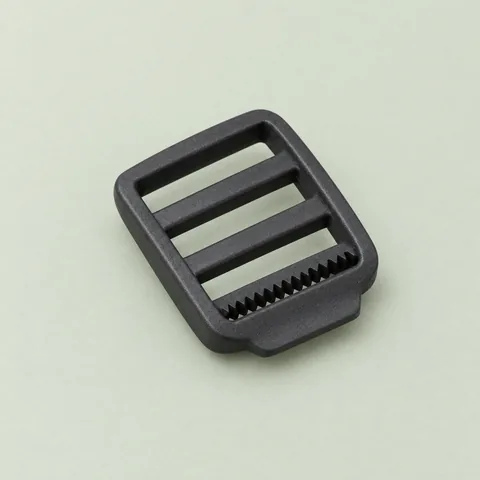
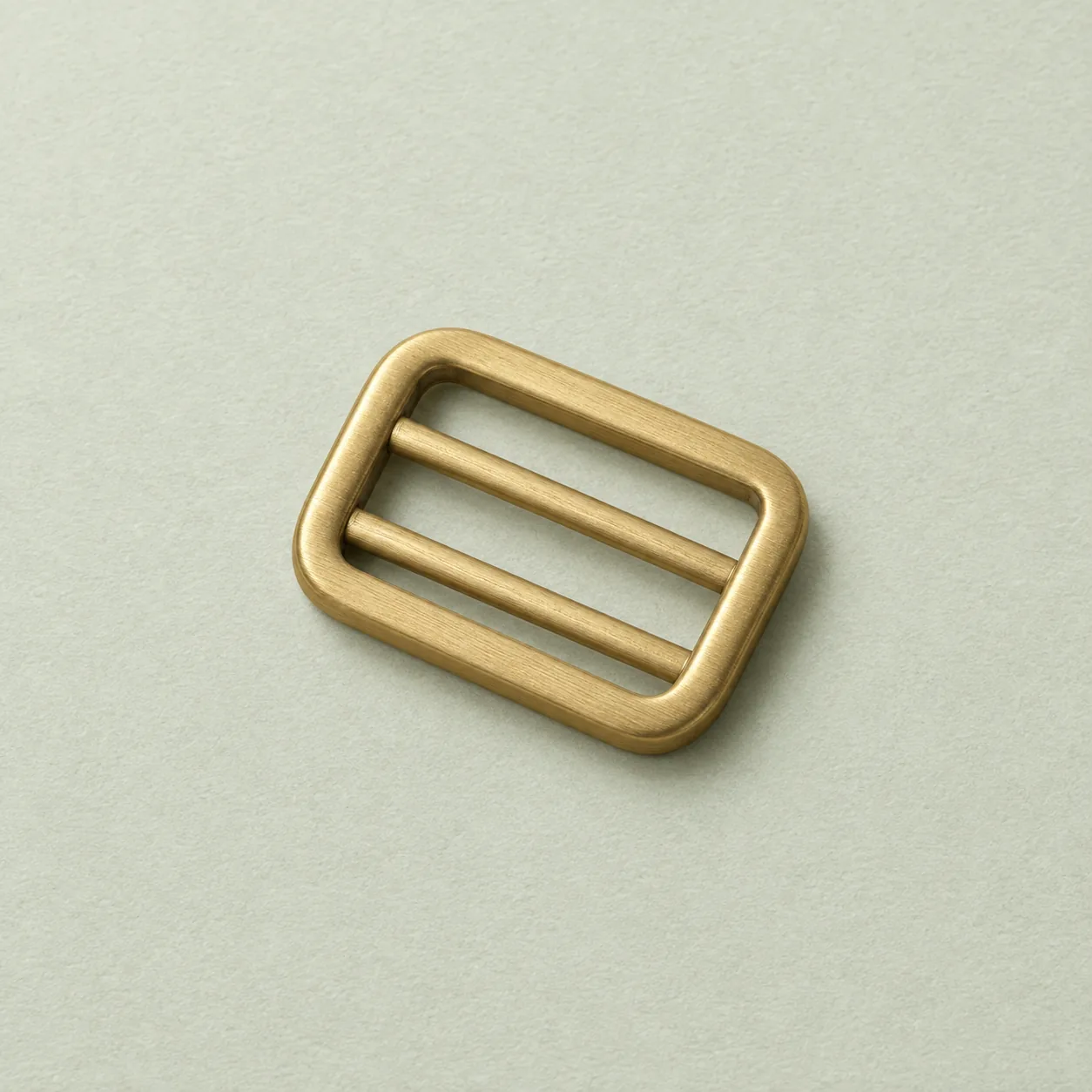
The classic slider is a frame crossed by a centre bar — three bars in all, as the name tri-glide suggests. One end of the strap is sewn around the centre bar; the running end passes up through one slot, over the bar and down through the other, so the strap presses on itself and holds wherever it is set.
Some sliders carry two inner bars, as illustrated. On some wire sliders the centre bar wraps round the frame and slides along it, wedging the strap tighter as it is pulled. Unlike a center bar buckle, a slider has no prong, so the strap needs no punched holes and can stop at any length.
02
Types of strap slider
Wire sliders are bent from steel wire, usually welded at the joint: light and plain, they suit webbing and fabric straps. Die-cast sliders take flat, rounded or decorative profiles, so they can match the buckles and hooks on the same bag. Moulded plastic sliders are the usual choice on backpack and outdoor webbing.
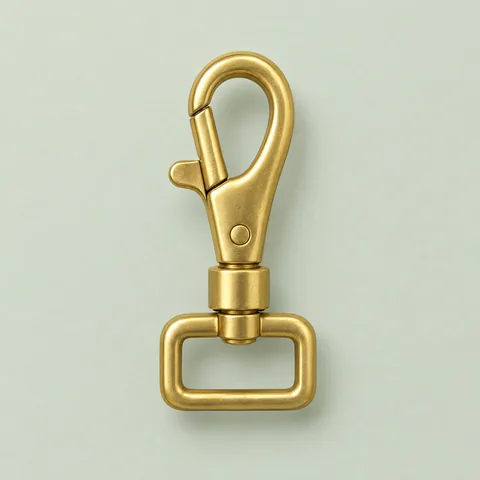
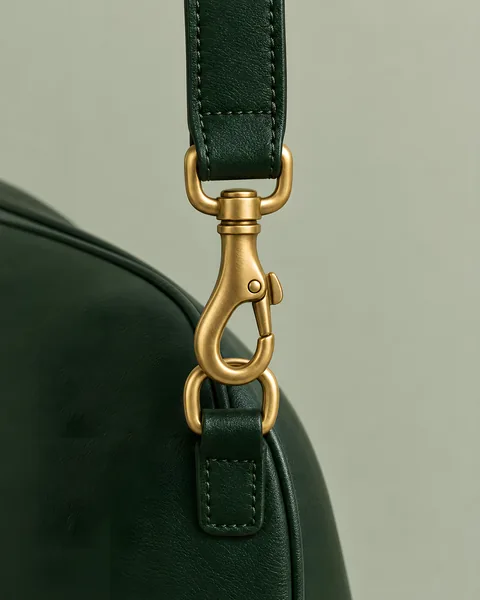
A detachable shoulder strap is usually a snap hook at each end with a slider between them: the strap is sewn to the slider, runs through one hook’s eye and back through the slider, so moving the slider changes the drop. Where a strap must lock under load and tighten with one pull, a ladder lock buckle is used instead.
03
Strap slider sizes
A slider is named by the strap width it takes, measured inside the frame: a 25 mm slider is for a 25 mm strap. Check the inside height as well — each slot carries two thicknesses of strap, so leather needs a taller opening than thin webbing.
Inch sizes are close to metric, not equal: 3/4 in is 19.05 mm and 1 in is 25.4 mm, so say which system your strap is cut in.
| Strap width | Nearest inch size | Usually for |
|---|---|---|
| 13 mm | 1/2 in (12.7 mm) | Fine garment straps, mini bags |
| 20 mm | 3/4 in (19.05 mm) | Slim crossbody straps |
| 25 mm | 1 in (25.4 mm) | Shoulder and crossbody straps |
| 32 mm | 1 1/4 in (31.75 mm) | Tote and messenger straps |
| 38 mm | 1 1/2 in (38.1 mm) | Wide shoulder and backpack straps |
| 50 mm | 2 in (50.8 mm) | Luggage and duffel straps |
04
Materials and finishes
Metal sliders are commonly formed from steel wire or die-cast in zinc alloy; stainless steel resists rust on outdoor gear, and plastic sliders — usually acetal (POM) — are light and need no plating. Metal sliders are plated with the rest of a bag’s hardware, so one finish can run from hook to slider to ring.
Across the collection, pieces come plated in six colours: gold, silver, rose gold, gunmetal, black and antique bronze. How each one looks and wears is in hardware finishes.
05
Ordering strap sliders
Rayestar supplies companies — bag and garment makers, brands and wholesalers — rather than individuals. Open a trade account and one representative handles your samples, prices and orders.
- Find the slider by photo or SKU, and note the strap width it takes.
- Say what the strap is made of and how thick it is, and choose the plating colour.
- Give the quantity; your representative confirms price, samples and lead time.
Questions
Questions buyers ask
- What is the difference between a strap slider and a ladder lock?
- A slider holds by friction and is adjusted by working the strap through it by hand. A ladder lock clamps webbing on a toothed bar as the strap pulls, so it tightens with one pull on the tail and lets go when its tab is lifted.
- How do you thread a tri-glide?
- Sew one end of the strap around the centre bar. Take the other end through the ring or hook, up through one slot, over the centre bar and down through the other, then pull to set the length.
- What size strap slider do I need?
- The size of your strap: a 25 mm (1 in) strap takes a 25 mm slider, measured inside the frame. Then check that each slot clears two thicknesses of the strap.
- Is a slide belt buckle the same as a strap slider?
- No. “Slide belt buckle” usually means a ratchet belt, whose buckle grips a toothed track on the back of the strap — see automatic belt buckles. A strap slider has no ratchet: it adjusts bag and garment straps by friction.
- Can I buy strap sliders in bulk?
- Yes, as a company. Bag and garment makers, brands and wholesalers register, have their company details reviewed, and order through one representative.
The illustrations show the type, not a specific catalogue piece. Size, material, finish and lead time are confirmed for each order by the representative who handles it.