Guide · 5 steps · updated 2026-11-21
Bag hardware names
Bag hardware is named by the job it does: closing the bag, joining a strap to it, setting the strap’s length, or reinforcing and finishing it. The same piece often goes by two or three names, depending on the supplier.
Step 01
Bag hardware names at a glance
Every bag makes the same few connections, so the names repeat across handbags, backpacks and luggage. Each fitting on a strap is also named by the strap width it takes: a 25 mm snap hook, slider and D ring all suit a 25 mm strap.
| Name | Also called | Where it goes |
|---|---|---|
| Turn lock | Twist lock, turn-lock clasp | Front of the bag, with its plate in the flap |
| Push lock | Push-button lock | Front of the bag; opens with a press |
| Magnetic snap | Magnetic clasp | Under a flap, or inside the opening |
| D ring | Dee ring | In a tab on the body, for a strap to clip onto |
| O ring | Round ring | Between strap and hook, where it must swing |
| Strap anchor | Bag bridge, strap connector, handle holder | Screwed or riveted to the side or top of the body |
| Snap hook | Swivel snap, trigger snap, bolt snap | On each end of a detachable strap |
| Strap slider | Tri-glide, strap adjuster | On the strap, setting its length |
| Ladder lock | Ladder lock buckle | On the webbing straps of backpacks and luggage |
| Side release buckle | Quick-release buckle | Joining two strap ends, or closing a flap |
| Rivet | Double-cap rivet, stud | Through strap ends, handles and stress points |
| Bag feet | Purse feet, base studs | On the base, keeping it off the floor |
| Eyelet | Grommet | Lining a hole for a drawstring or a ring |
| Zipper pull | Zip puller, pull tab | Hanging from the zip’s slider |
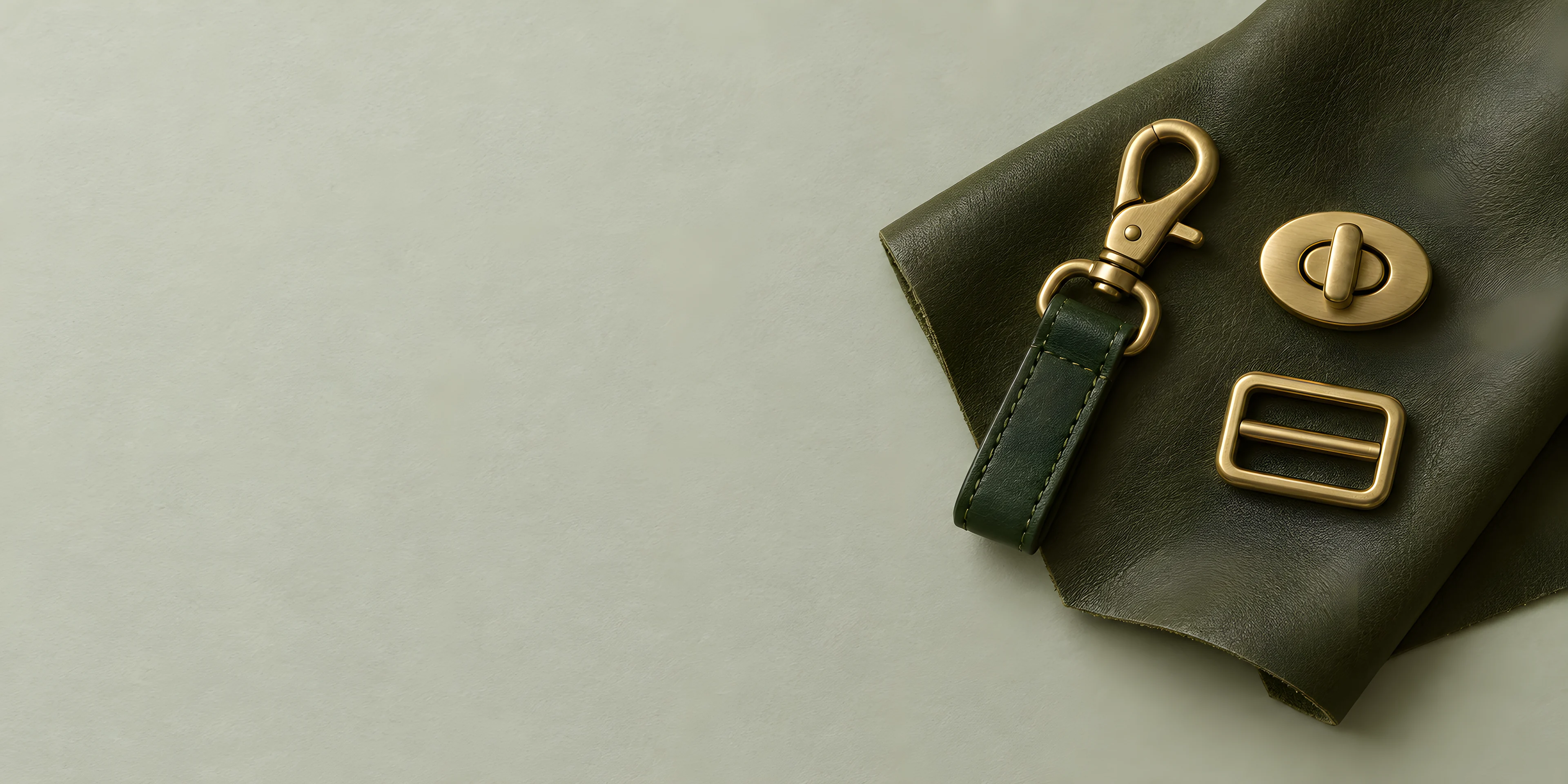
- Snap hook
- Turn lock
- Strap slider
Three of the four jobs on one bag: a hook that clips the strap on, a lock that closes the flap, a slider that sets the length.
Step 02
Closures: turn locks, push locks and magnetic snaps
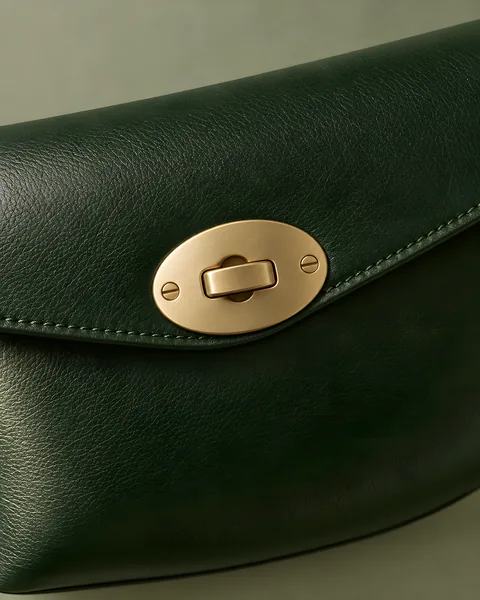
A turn lock — also called a twist lock — has a bar on the bag’s front that passes through a slotted plate in the flap and turns to hold it. Its prongs go through the leather and a backing washer and are bent flat, the same fixing used by magnetic snaps and many bag feet.
A push lock releases with a press instead of a turn, and a magnetic snap closes a flap out of sight. When you ask for a closure, photograph both halves — the lock and its plate, or both sides of a snap — because each half is fitted separately.
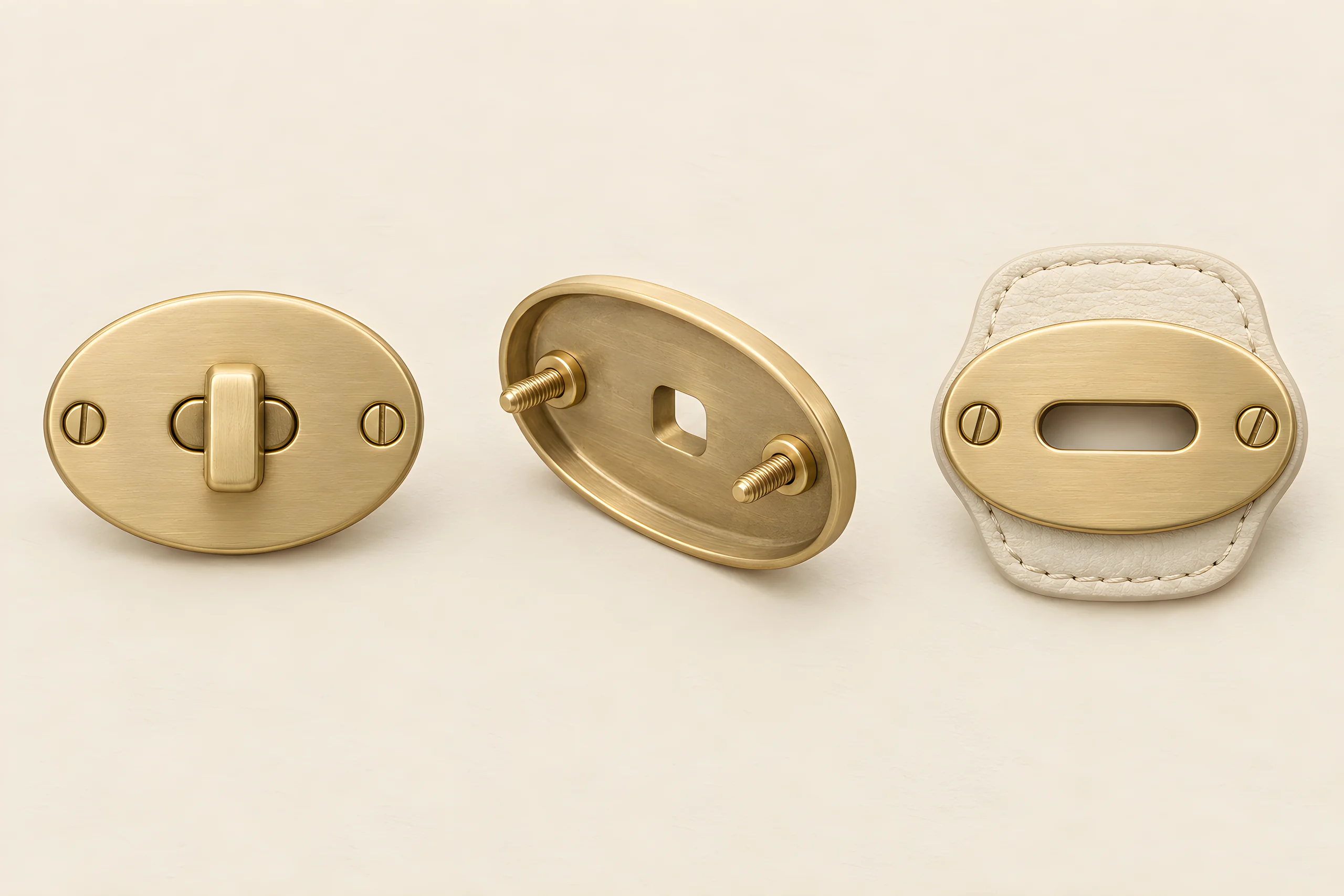
- Front
- Mounting side
- Mating plate
A turn lock in three views: the turning front, the prongs that fix it through the bag, and the slotted plate set into the flap.
Step 03
Strap connections: rings, anchors and snap hooks
D rings and O rings are the fixed points a strap loops through or clips onto: a D ring’s straight side sits flat in a tab on the bag, while an O ring turns freely. D rings and rectangle rings are named by their inside width, which should equal the strap width; O rings by inside diameter and wire thickness.
Strap anchors — also sold as bag bridges, strap connectors or handle holders — are screwed or riveted to the body to give a strap its fixing point. Swivel snap hooks clip the strap on and off: a sprung gate opens onto the ring, and a swivel eye keeps the strap from twisting.
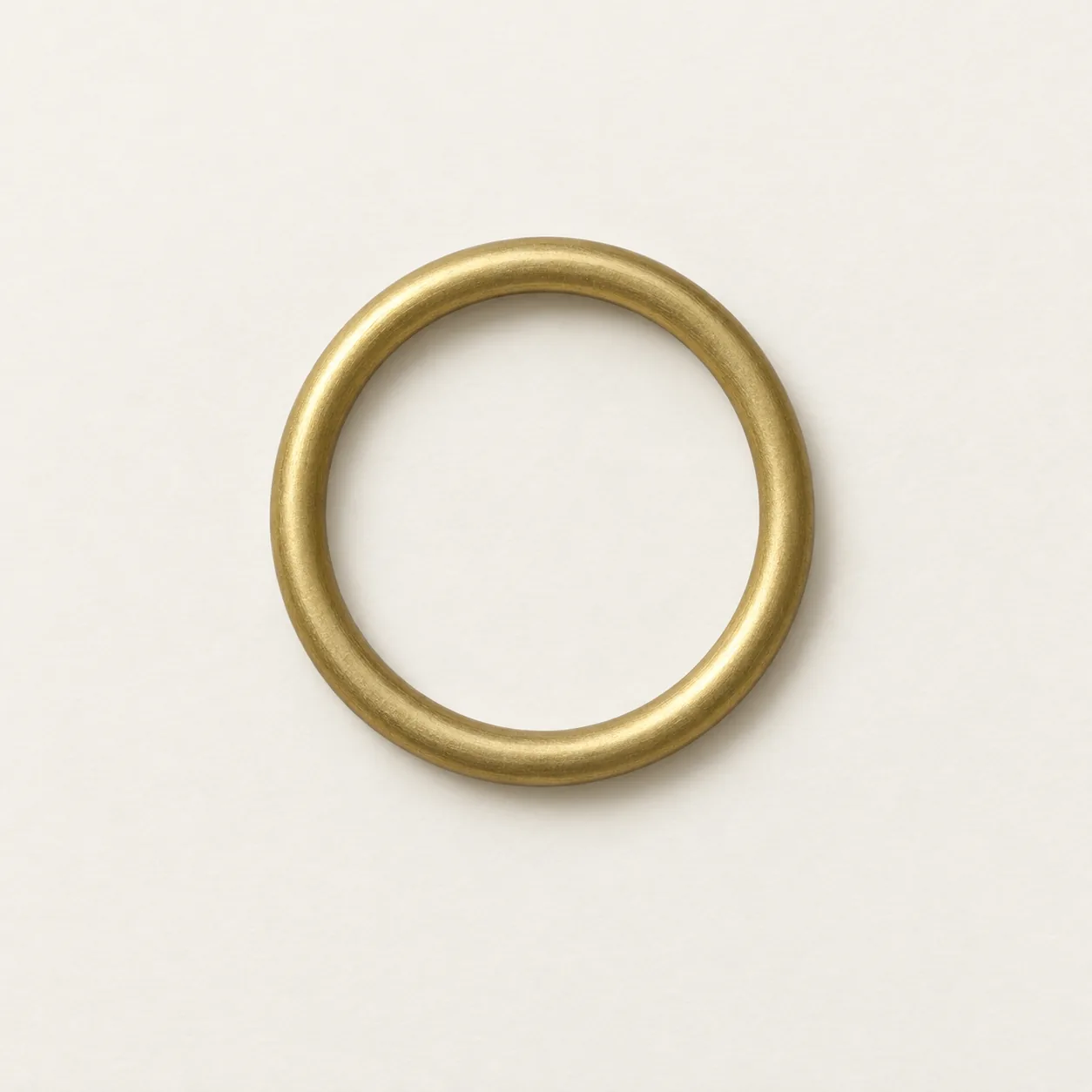
O ringA round connector; a D ring has one straight side. 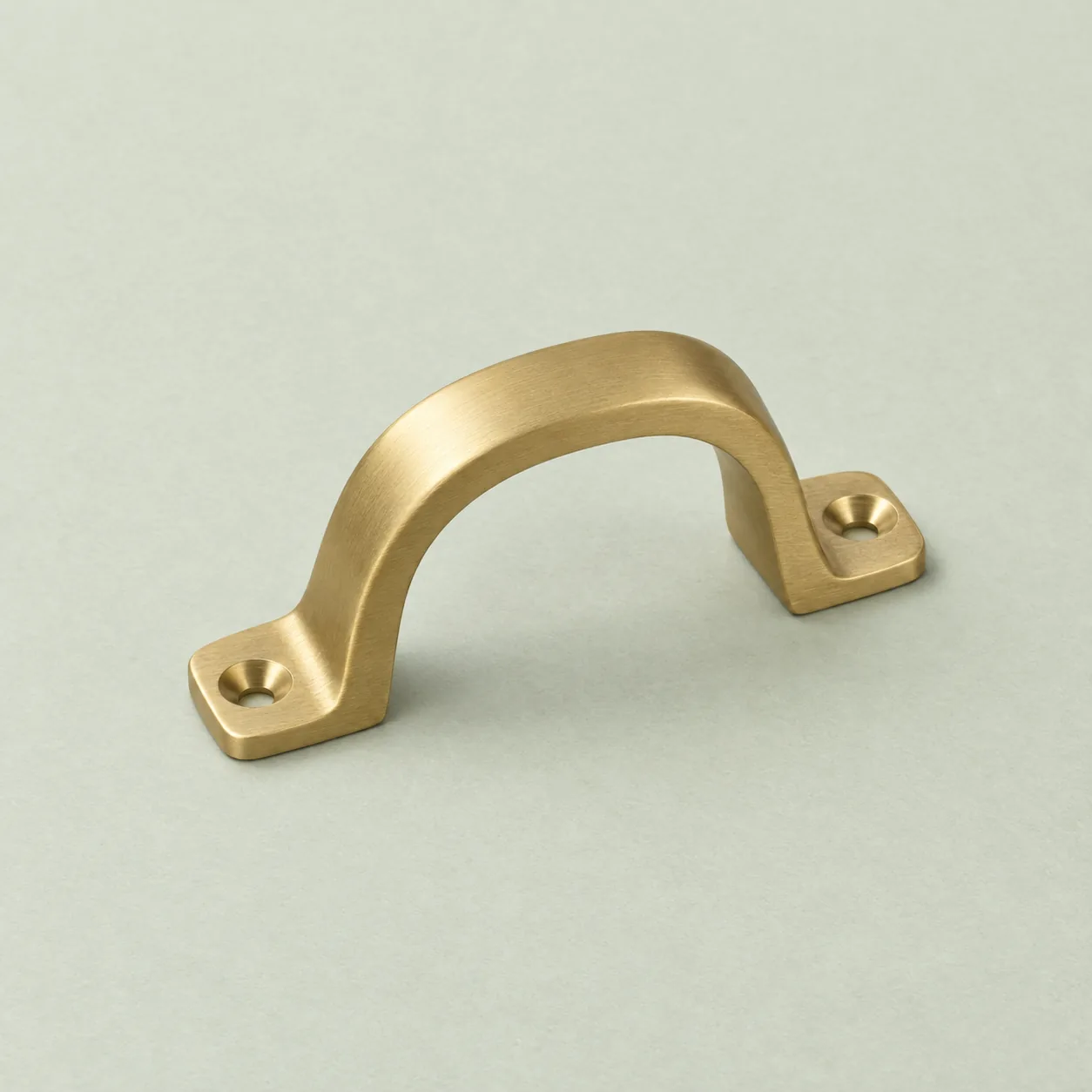
Strap anchorA bridge screwed to the body through its feet. 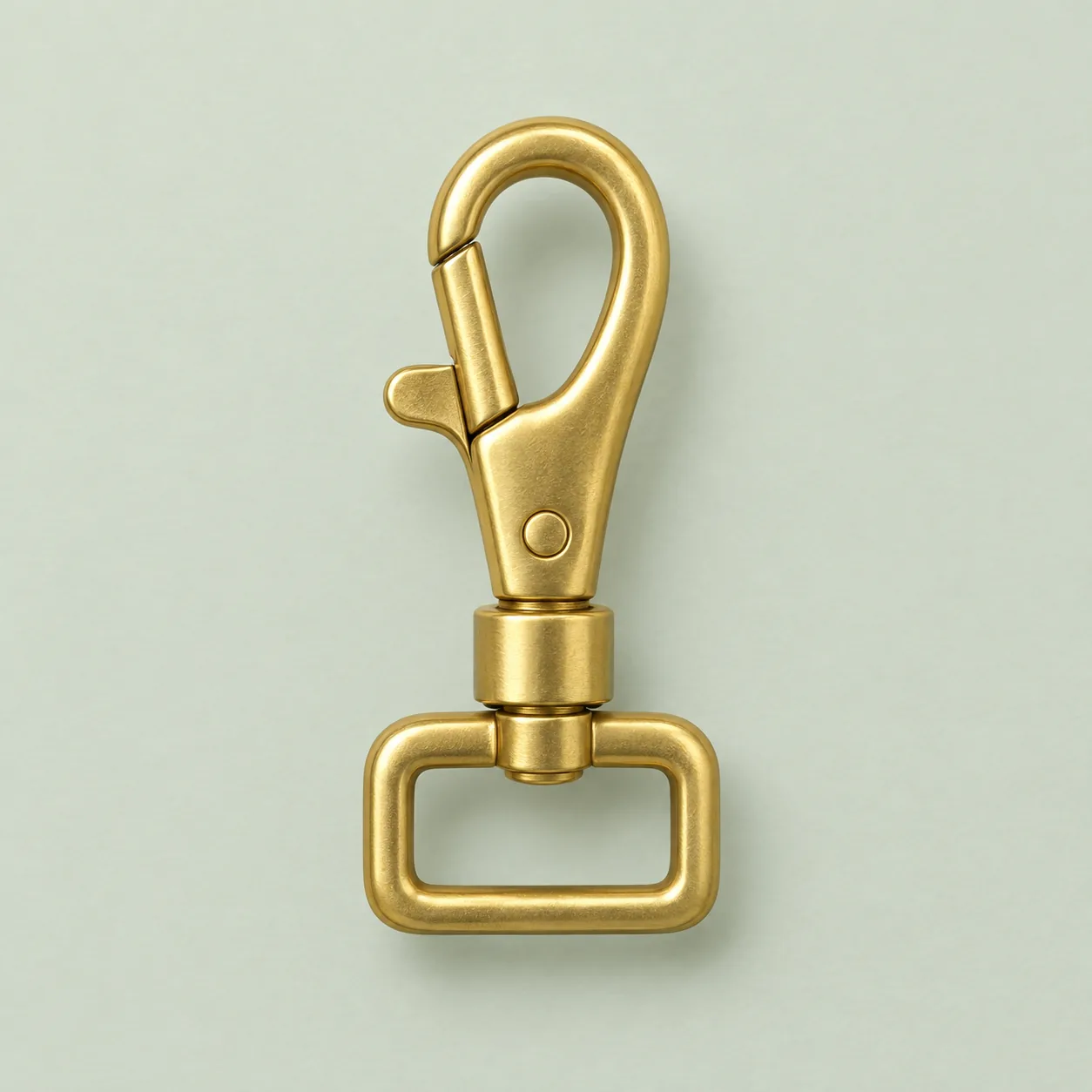
Swivel snap hookA sprung gate, and an eye that turns.
Step 04
Adjusters: sliders, ladder locks and side release buckles
A strap slider — a tri-glide or strap adjuster — is a frame with a centre bar that holds a doubled strap by friction; paired with a ring or a snap hook, it makes a shoulder strap adjustable. A ladder lock grips webbing against a bar instead: pull the free end to tighten, lift the edge to loosen.
A side release buckle joins two strap ends or closes a flap: the male half’s two sprung prongs click into the female housing and release with a squeeze. Plastic ones are commonly moulded in acetal (POM), which absorbs far less moisture than nylon.
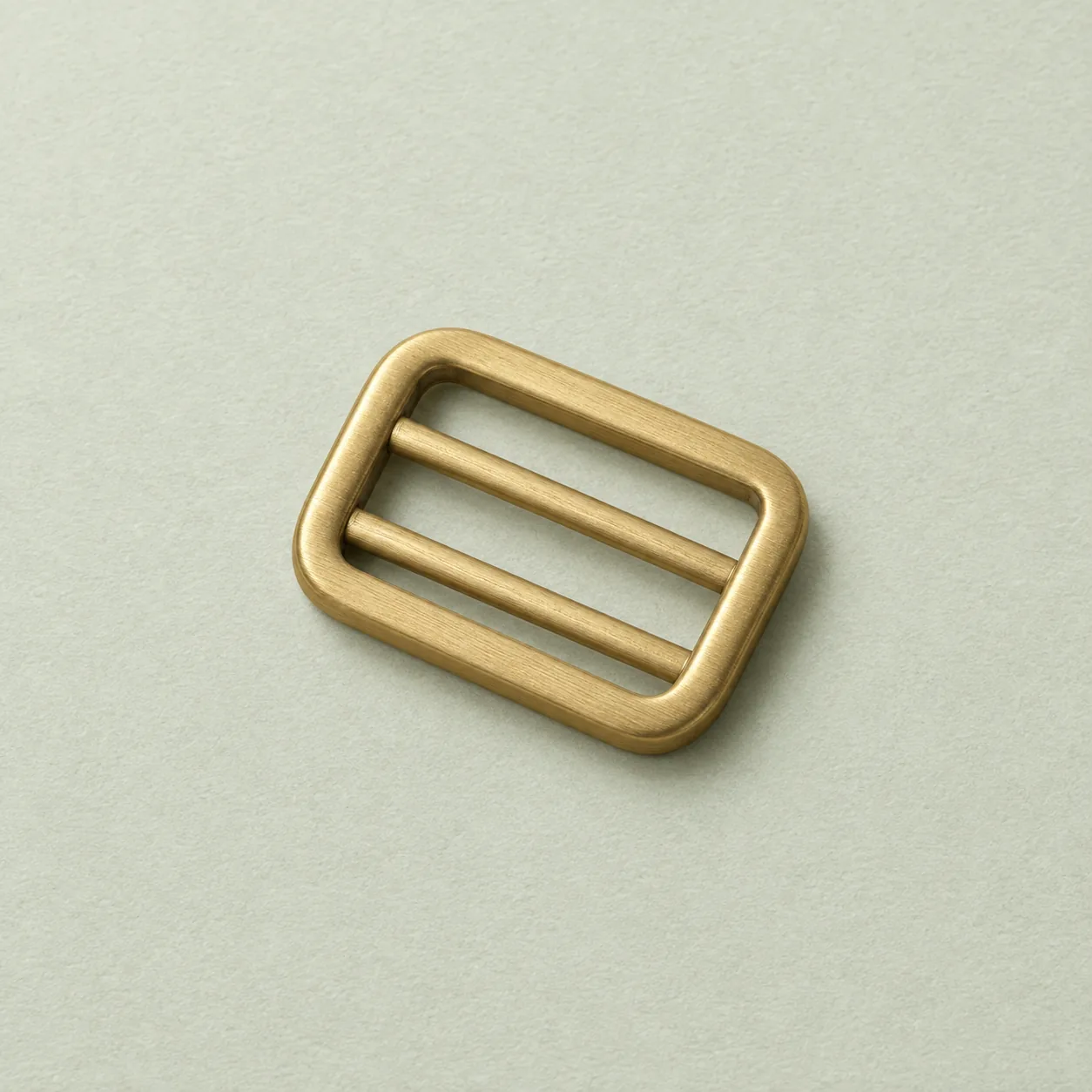
Strap sliderHolds a doubled strap by friction round its bar. 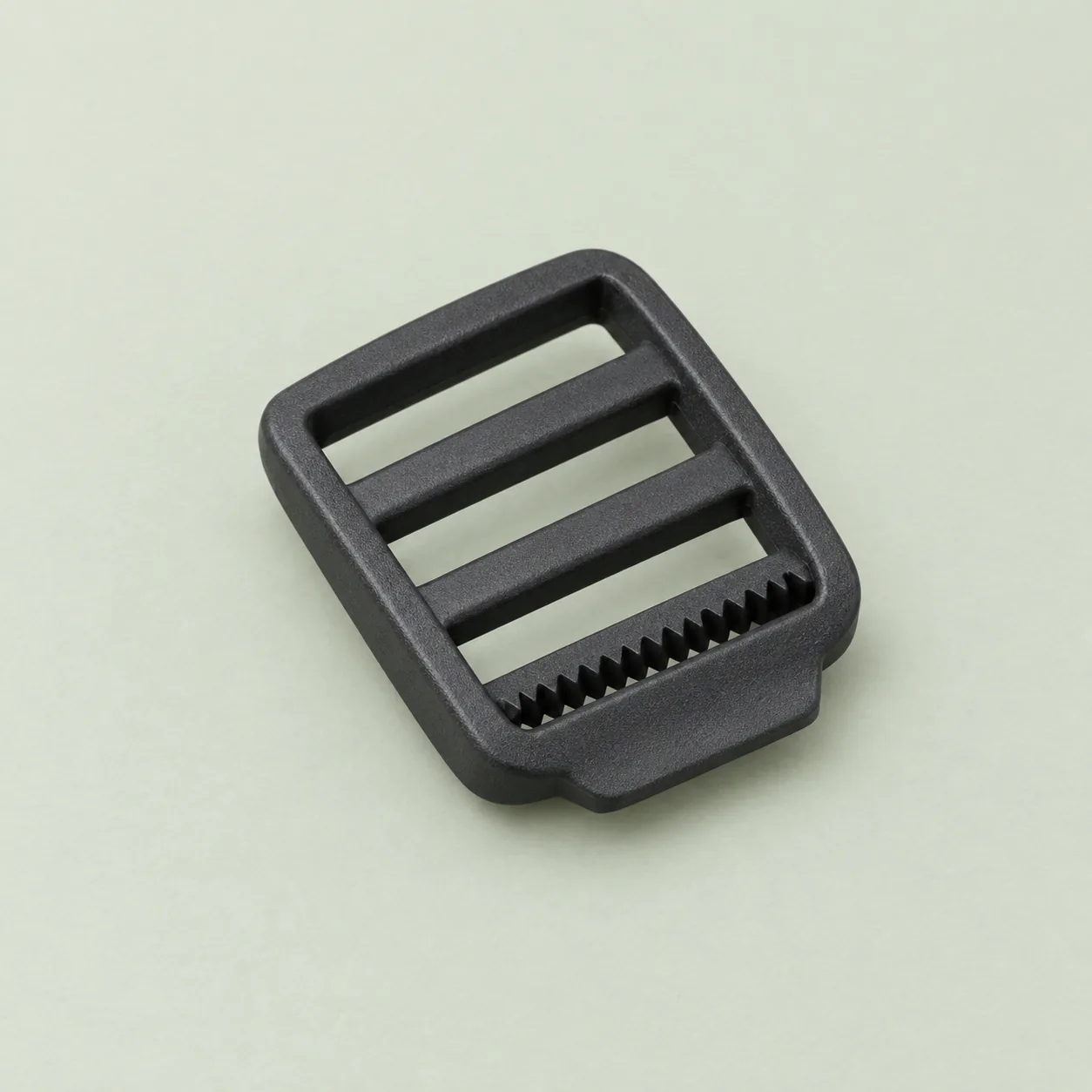
Ladder lockPull the free end to tighten; lift the edge to loosen. 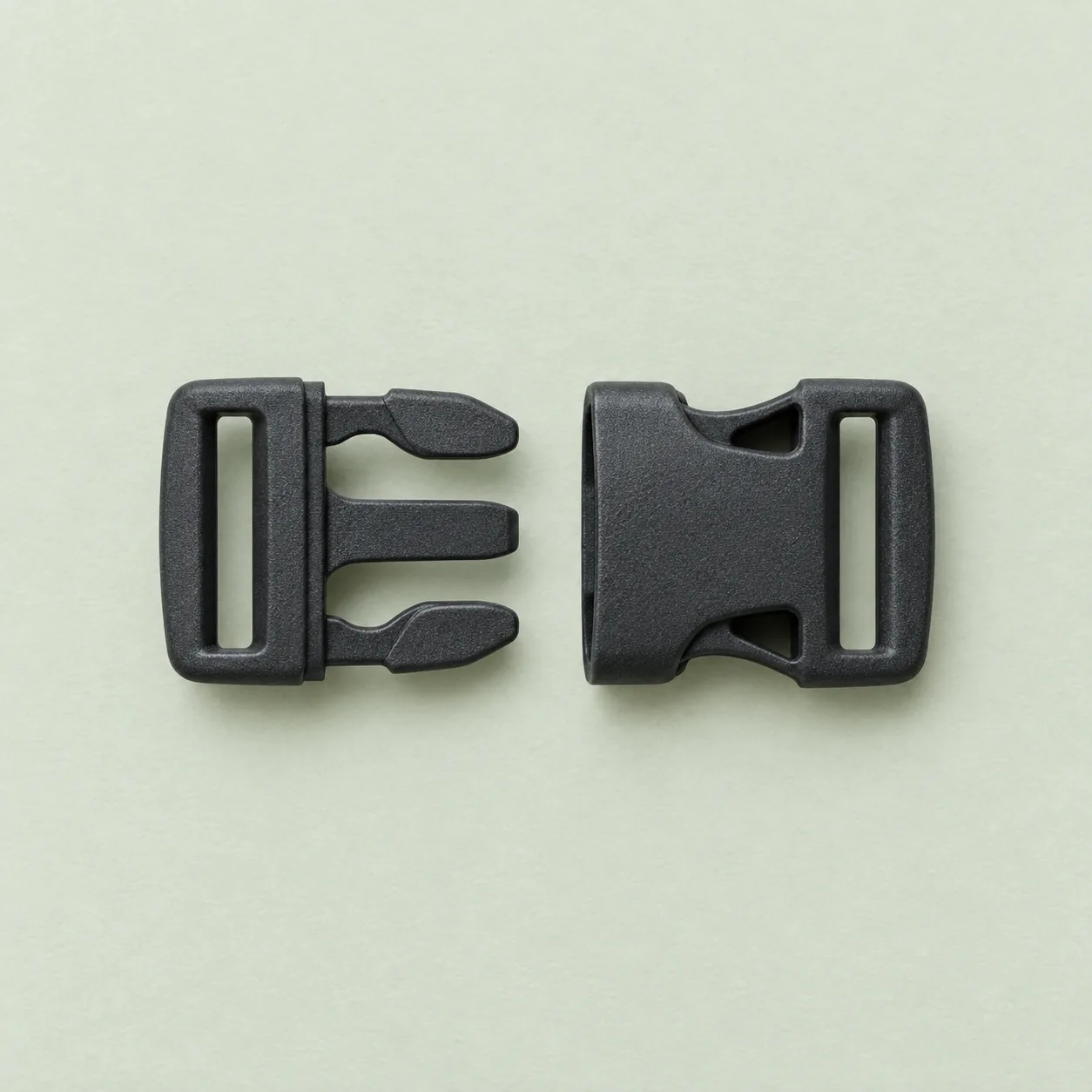
Side release buckleTwo sprung prongs click into a housing.
Step 05
Reinforcing and finishing: rivets, feet, eyelets and pulls
Rivets and studs fix strap ends and handles and reinforce stress points: a post and a cap press together through the leather. Bag feet — small domed studs on the base — keep the bottom off the floor, fixed by prongs or a screw.
Eyelets and grommets line a hole for a drawstring or a ring and are sized by the hole they leave. Zipper pulls hang from the zip’s slider and give it something to grip, usually in the same finish as the rest of the bag’s hardware.
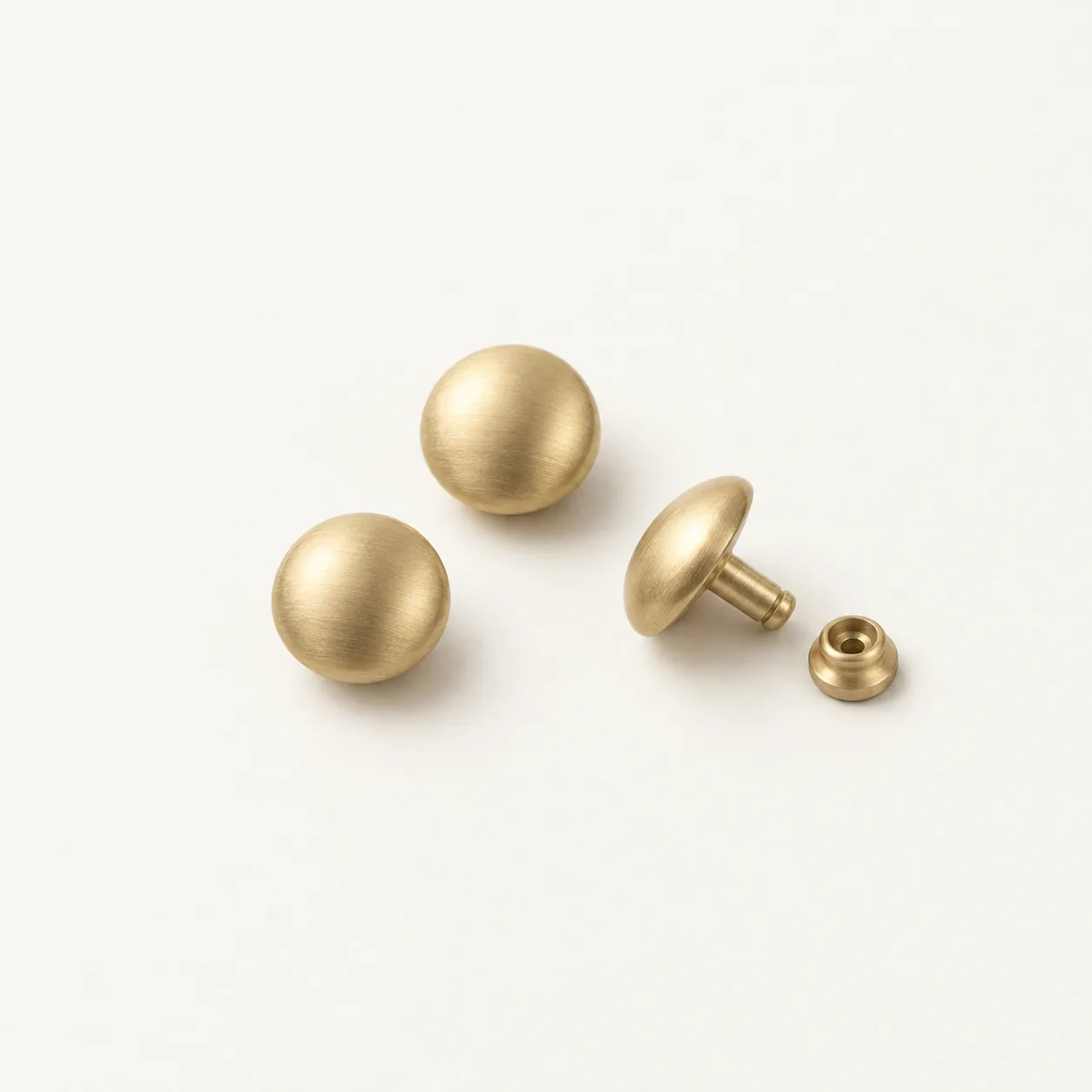
Rivets and studsA post and a cap pressed together through the leather. 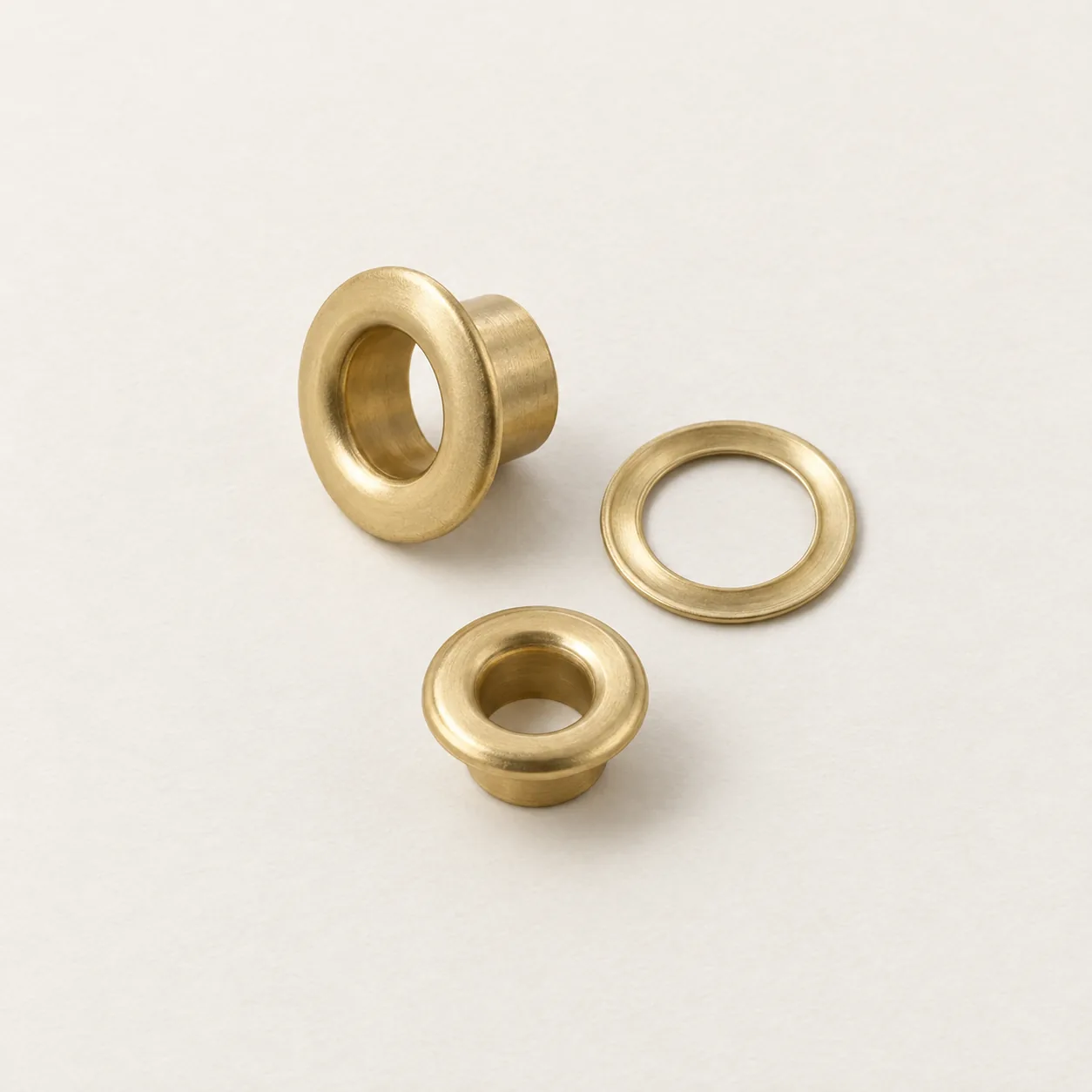
EyeletsA rolled rim, set with a washer, lines a hole. 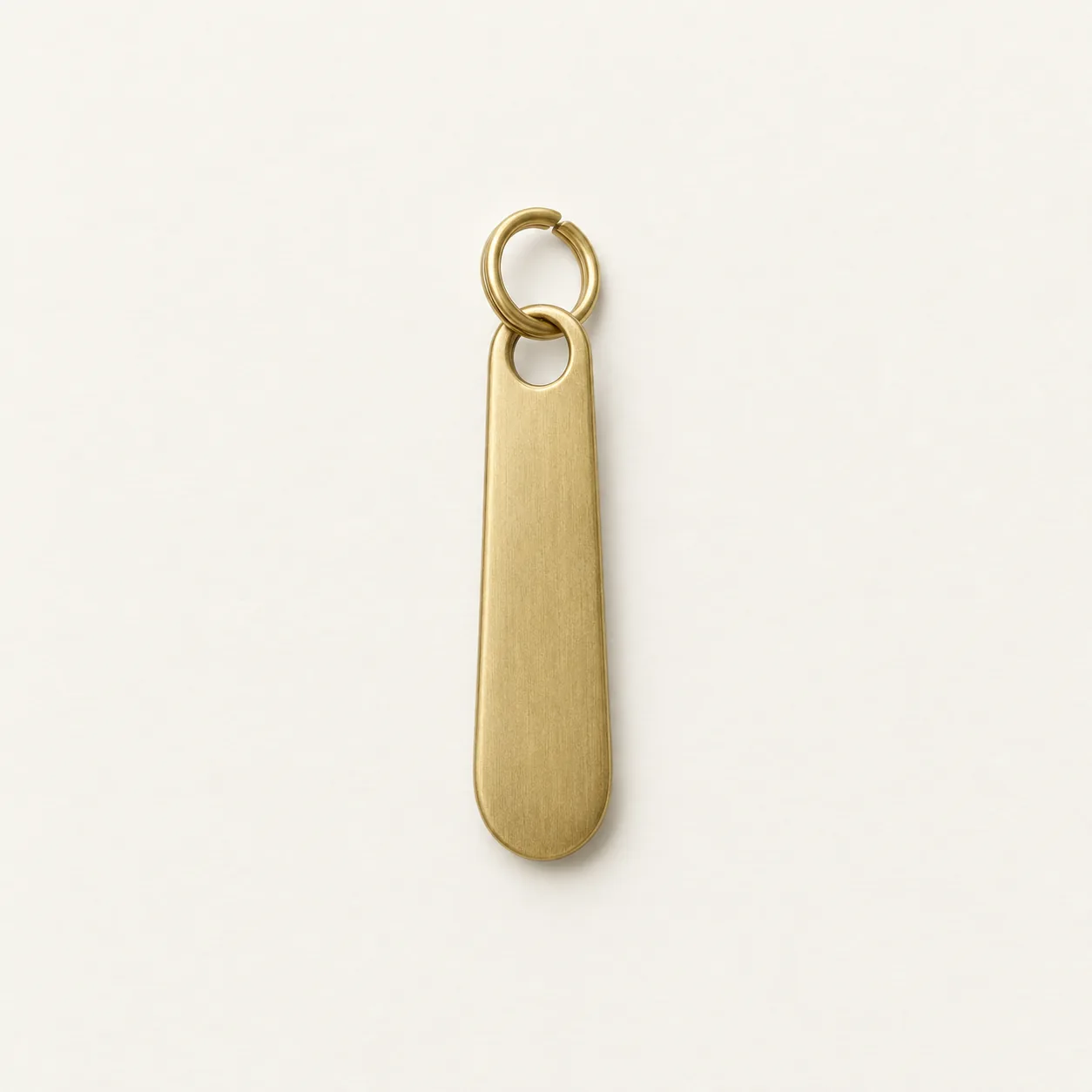
Zipper pullHangs from the slider, to open the zip.
Questions
Questions buyers ask
- What is the metal ring on a bag strap called?
- Usually a D ring: its straight side sits in a tab on the bag, and the strap’s snap hook clips onto the curve. A round one is an O ring, a square one a rectangle ring.
- What is the clasp on the front of a handbag called?
- Most often a turn lock, also called a twist lock: a bar that turns through a slotted plate on the flap. A push lock opens with a press, and a magnetic snap closes a flap from underneath.
- What are the metal feet on the bottom of a bag called?
- Bag feet, or purse feet: small domed studs fitted to the base by prongs or a screw, so the bottom never sits on the floor.
- What is the difference between a strap slider and a ladder lock?
- A strap slider holds a doubled strap by friction round its centre bar, so it stays where it is set; a ladder lock grips webbing against a bar and tightens with a pull on the free end. Both are named by the strap width they take.
- What is the difference between a swivel snap hook and a trigger snap?
- Both clip onto a ring. A swivel snap hook opens with a sprung gate and has an eye that turns; a trigger snap opens with a lever, and a bolt snap with a sliding bolt. All are sized by the strap width their eye takes.
- How do I match hardware across one bag?
- Order every piece by the strap width it takes, then in one plating colour: hooks, rings, anchors and sliders are normally specified together. Colour names vary between suppliers, so approve a physical sample — see hardware finishes.
Names vary between suppliers and between languages, so say what a piece does as well as what it is called. The illustrations show each type, not a specific catalogue piece.
Try it
Ready with a photo?
Sign in and run your first search. Public pages never show live stock or availability.
Next, probably
Reference
Swivel snap hooks
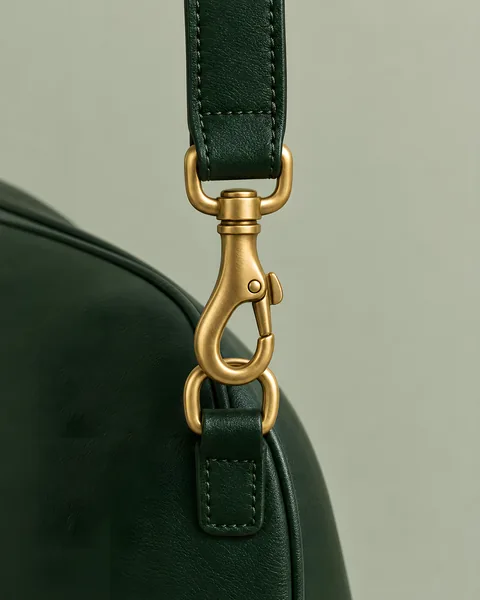
A swivel snap hook — also called a swivel snap, trigger snap or swivel clasp — clips a strap onto a ring with a sprung gate, and its eye turns so the strap does not twist.
Reference
Bag clasps and turn locks
A bag clasp is the closure on the front of a bag, made in two parts that engage — most often a turn lock (twist lock), a push lock or a magnetic snap.
Guide
Hardware finishes and plating colours
A finish is the outer coat of a piece: plated metal, a vacuum-deposited film, paint or lacquer, sometimes darkened and polished back.