01
How a quick-release buckle works
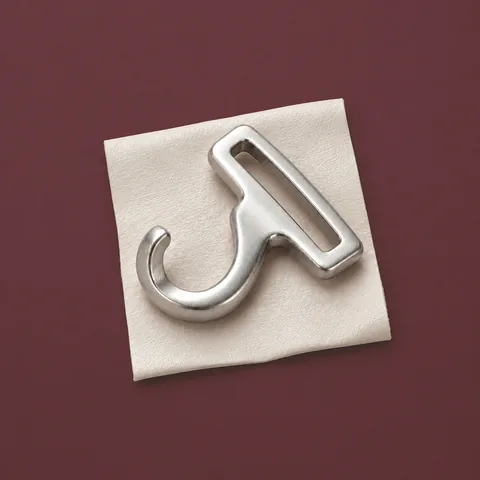
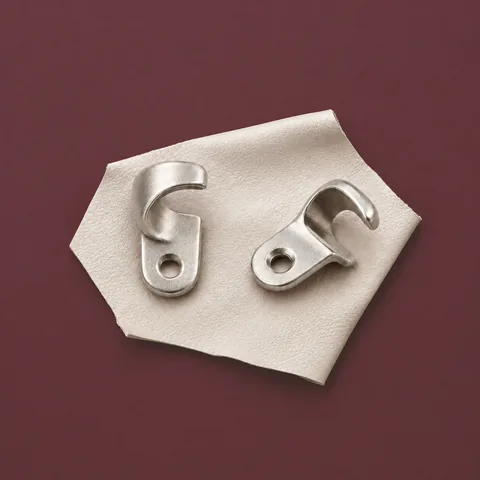
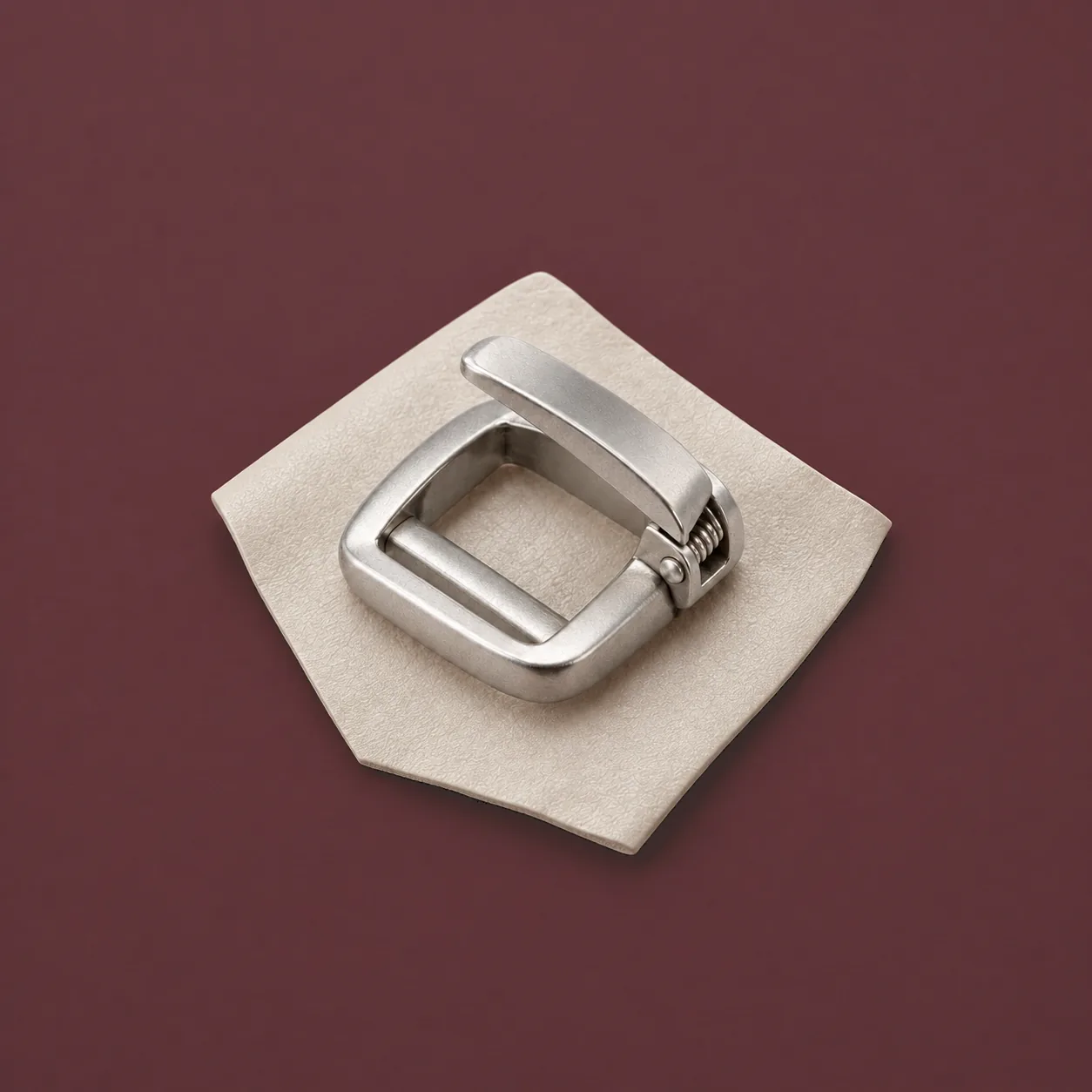
Two designs share the name. In a clamp buckle the strap passes under a sprung lever whose edge or teeth press it against the base: lift the lever and the strap slides, so it closes at any length with no holes punched. In a latch buckle a hook on one strap enters a slot or frame on the other, and a lever folds down to lock it.
Either kind is riveted or stitched to the shoe through holes in its base plate, and a steel spring — a leaf or a coil — returns the lever. The catalogue files them as spring buckles.
02
Clamp and latch buckles
Clamp buckles suit straps that are adjusted at every wearing; latch buckles close a strap at a set length in one movement, the same idea as the lever buckles on ski boots. Some close on a toothed ladder or a row of notches, so the strap can be set at more than one length.
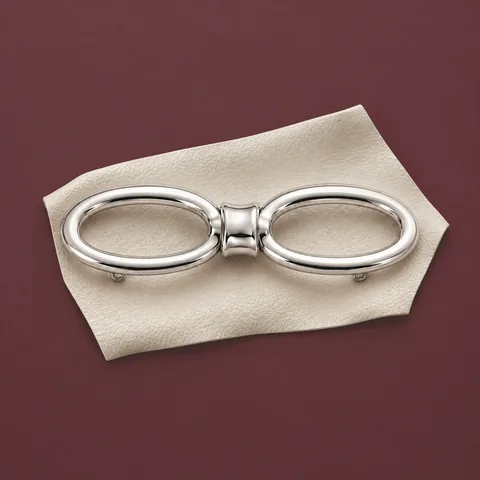
Faces run from a plain plate to a cast design set with rhinestones. For straps that hook on rather than clamp, see sandal buckles.
03
Quick-release buckle sizes
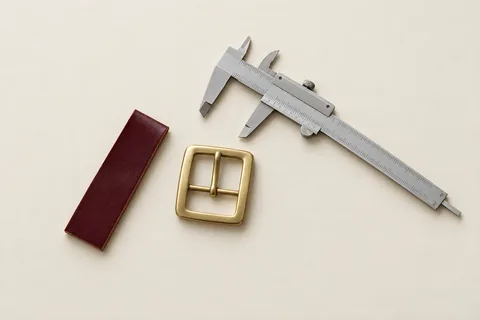
A quick-release buckle is named by the strap width it takes: a 15 mm buckle for a 15 mm strap. Measure the inside of the slot or the clamp’s opening, not the face; a clamp must also suit the strap’s thickness — too thin and the lever cannot grip, too thick and it will not close.
Check the lever’s height when closed and the arc it sweeps when opened, so it clears the upper and the other foot. The rivet-hole spacing on the base sets where the holes go in the strap.
- Measure the strap’s width and thickness where the buckle will close.
- Measure the buckle’s slot or clamp opening, and its rivet-hole spacing.
- Hold the buckle against the shoe, closed and open, to check its clearance.
04
Materials and finishes
The face and base are usually die-cast in zinc alloy or stamped from steel or brass, with the spring as a separate steel part. Ask how the spring is protected from rust, and whether the design has been through an open-and-close cycle test. Which material a given piece is made in is confirmed with your representative.
Across the collection, pieces come plated in six colours: gold, silver, rose gold, gunmetal, black and antique bronze; hardware finishes covers how each wears. On children’s shoes, ask for lead test results: in the US, accessible parts of children’s products may contain no more than 100 ppm lead.
05
Ordering quick-release shoe buckles
Rayestar supplies companies — shoe makers, brands and wholesalers — rather than individuals. Open a trade account and one representative handles your samples, prices and orders.
- Find the buckle by photo or SKU, and note the strap width it takes.
- Choose the plating colour, and say whether you need clamp or latch action.
- Give the quantity; your representative confirms price, samples and lead time.
Questions
Questions buyers ask
- What is a quick-release shoe buckle?
- A buckle that holds a shoe strap under a sprung lever and opens when the lever is lifted: no prong to unbuckle and no hole to find.
- How do you open a spring buckle on a shoe?
- Lift the free end of the lever with a thumbnail. The spring lets go of the strap, or the latch releases its hook; pressing the lever down closes it again.
- What size quick-release buckle fits a 20 mm strap?
- A 20 mm buckle, since they are named by the strap width they take. Check the strap’s thickness too: a clamp grips only the range it was made for.
- Clamp or latch: which quick-release buckle should I choose?
- A clamp adjusts to any length without holes, which suits straps that change with socks or swelling; a latch closes at one set length in one movement and stays put. Both open under the thumb.
- Is a quick-release shoe buckle the same as a side release buckle?
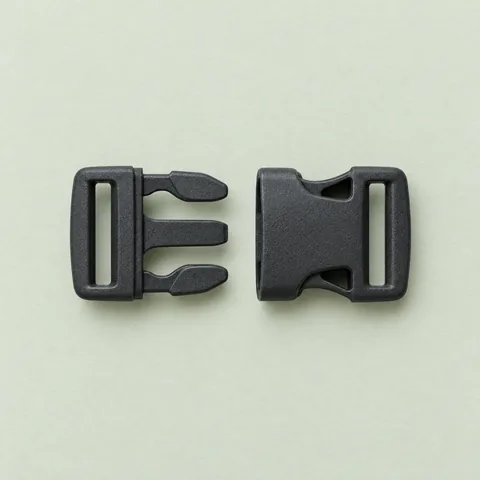
- No. A side release buckle is two halves that click together and part when the sides are squeezed — the usual closure on webbing. A quick-release shoe buckle opens by a lever.
- Is a spring buckle the same as a spring clasp?
- No. A spring clasp is the sprung ring that closes jewellery and key rings; a spring buckle on a shoe holds a flat strap under a lever.
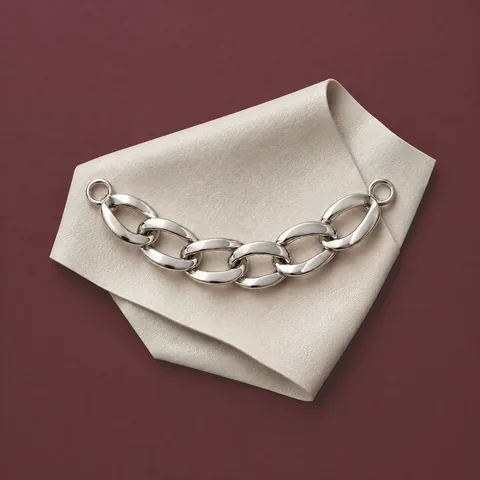
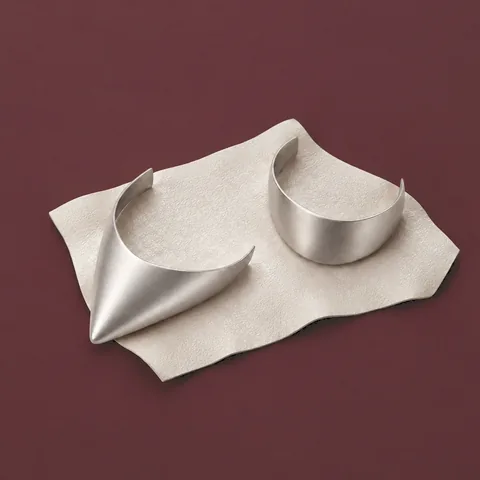
The illustrations show the type, not a specific catalogue piece. Size, material, finish and lead time are confirmed for each order by the representative who handles it.