01
How a cord end attaches
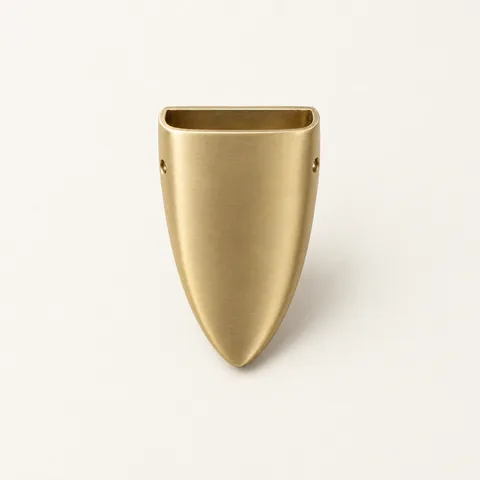
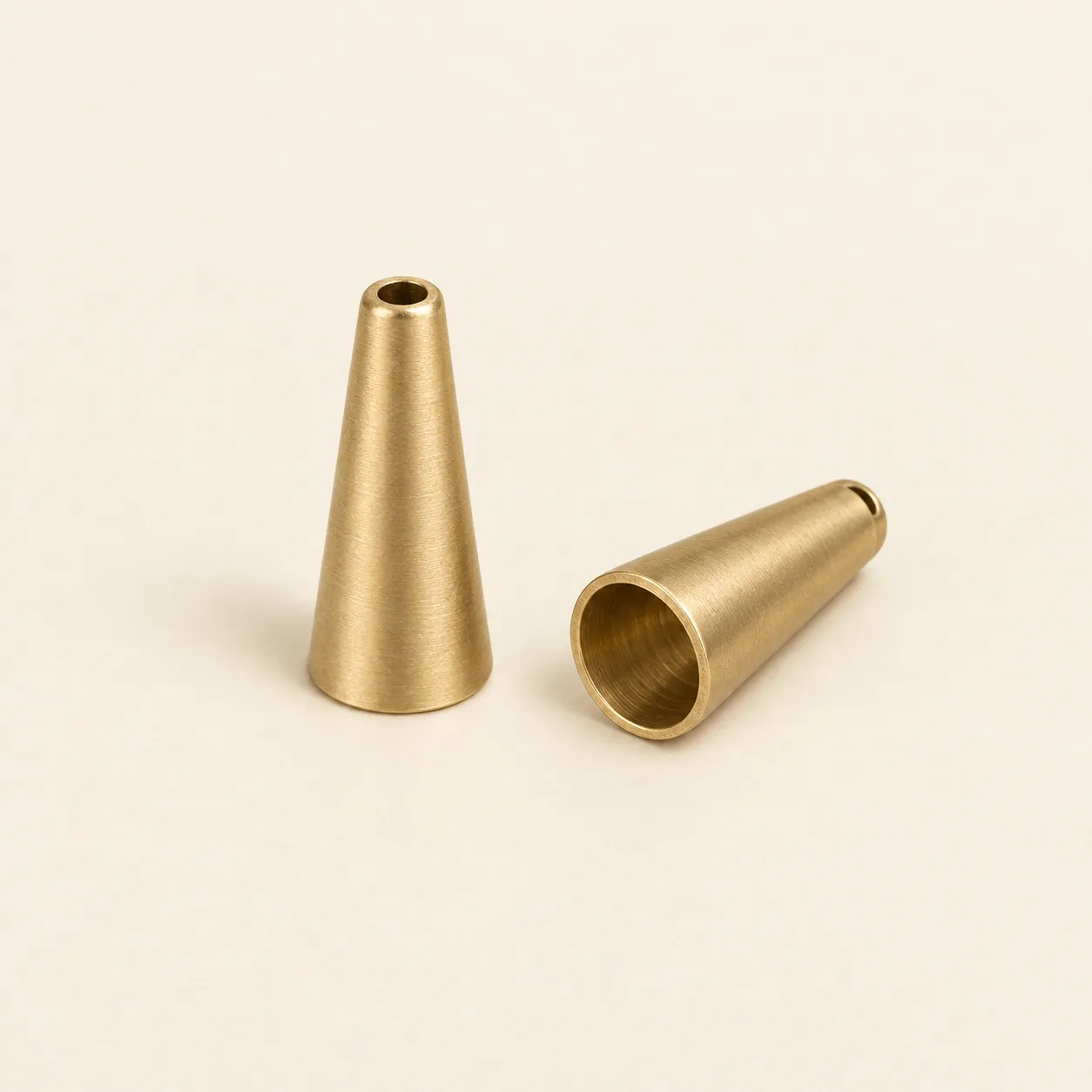
A cord end is a hollow cap or sleeve fitted over the tip of a cord. It is fixed in one of four ways: crimped, so the metal grips the cord; glued; clamped by a small screw; or knotted — the cord passes through a hole at the tip, and a knot in its end sits hidden inside the bell.
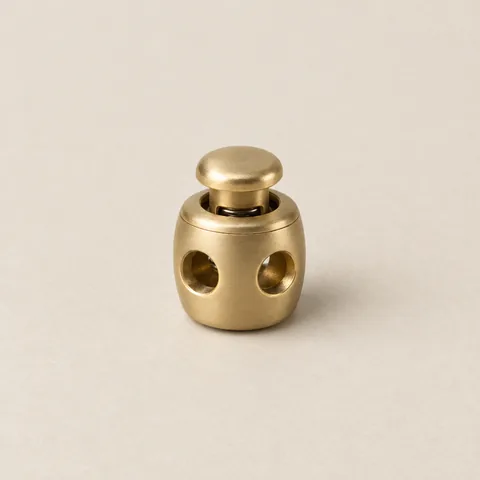
Because it is wider than the cord, a cord end also works as a stop: it keeps a drawstring from being pulled back inside its channel, and keeps a cord lock from sliding off the end.
02
Bells, cones, crimp ends and aglets
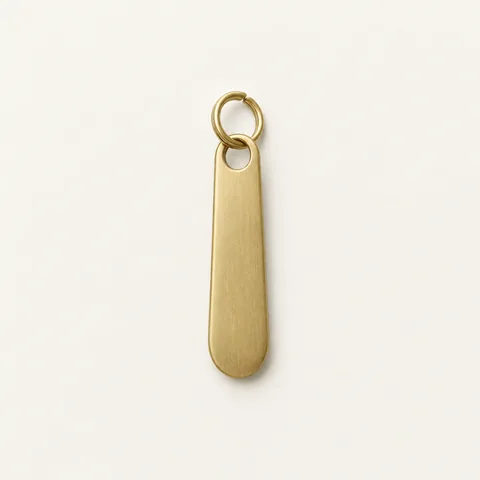
Bell and cone ends are the usual finish on hoodie and bag drawstrings; tube and barrel ends are straight-sided; crimp ends are a flat or ribbed sleeve pressed onto the cord. End caps with a loop carry a ring, which is how a short length of cord becomes a zipper pull or a lanyard.
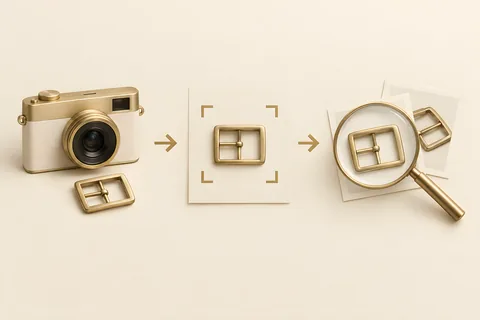
An aglet is the slim tube on the tip of a shoelace or a thin drawcord, crimped tight so the cord threads easily through eyelets; metal aglets replace plastic ones where the tip is meant to be seen. Signed in, you can filter the collection by shape, finish and measurements, or start from a photograph.
03
Cord end sizes
A cord end is named by the cord it takes — a 5 mm cord end for a 5 mm cord — which is the inside diameter of its opening. Flat cords and tapes are measured across their width and thickness instead.
Measure the cord itself, not the hole it runs through, and measure the cord you will use: braided, elastic and waxed cords sold as the same size can differ in thickness.
| Cord diameter | Nearest inch size |
|---|---|
| 3 mm | 1/8 in (3.2 mm) |
| 4 mm | 5/32 in (4.0 mm) |
| 5 mm | 3/16 in (4.8 mm) |
| 6 mm | 1/4 in (6.4 mm) |
| 8 mm | 5/16 in (7.9 mm) |
04
Materials and finishes
Metal cord ends are commonly turned from brass bar, die-cast in zinc alloy or made in aluminium where weight matters; plastic ones are moulded. Free-cutting brass, the usual stock for turned parts, contains 2.5–3% lead, so turned brass parts need checking against lead limits. Which material a given piece is made in is confirmed with your representative.
Across the collection, pieces come plated in six colours: gold, silver, rose gold, gunmetal, black and antique bronze. A cord end on a garment goes through every wash, so ask how a finish stands up to laundering — hardware finishes compares them.
05
Ordering cord ends
Rayestar supplies companies — garment and bag makers, brands and wholesalers — rather than individuals. Open a trade account and one representative handles your samples, prices and orders.
- Find the cord end by photo or SKU, and note the cord diameter it takes.
- Say how it will be fixed — crimped, glued, screwed or knotted — and choose the plating colour.
- Give the quantity; your representative confirms price, samples and lead time.
Questions
Questions buyers ask
- What is the end of a cord called?
- A cord end, or cord end cap. On a shoelace or a thin drawcord the slim crimped tube is an aglet, and a bell-shaped end that hides a knot is often sold as a bell stopper.
- What size cord end do I need?
- One whose opening matches the cord’s diameter: a 5 mm cord end for 5 mm cord. Measure the cord itself, and give both width and thickness for a flat cord.
- How do you attach a cord end?
- It depends on the type: a crimp end is pressed onto the cord with pliers or a press, a glue-in end is filled with adhesive before the cord goes in, a screw end is tightened onto the cord, and a bell end hides a knot tied in the cord.
- What is the difference between a cord end and a cord lock?
- A cord end is fixed to the tip of a cord and stays put; a cord lock slides along the cord and grips it wherever it is let go. Drawstrings often carry both, the end stopping the lock from sliding off.
- Can metal cord ends go on children’s clothing?
- Check the rules first: drawstrings on children’s clothing are regulated in the EU and the US, including what may be fitted to their free ends. Ask too for lead test results — in the US, accessible parts of children’s products may contain no more than 100 ppm lead.
- Do you supply cord ends to individuals?
- No. Rayestar supplies companies — garment and bag makers, brands and wholesalers — and one representative handles each account’s samples, prices and orders.
The illustrations show the type, not a specific catalogue piece. Size, material, finish and lead time are confirmed for each order by the representative who handles it.