01
Where a keeper sits
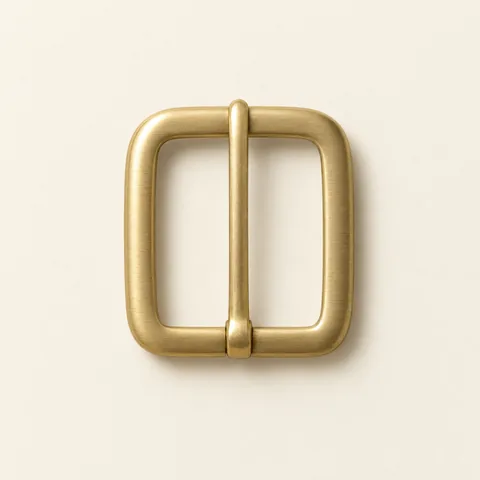
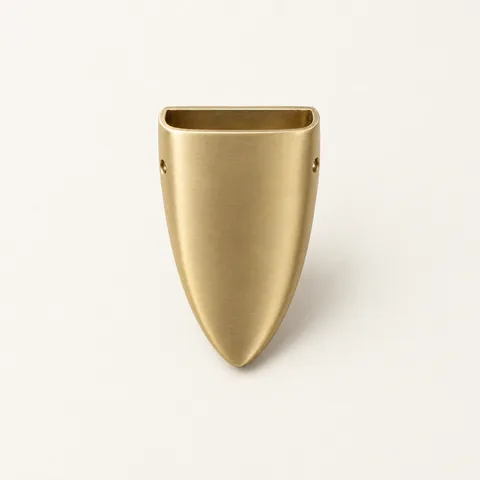
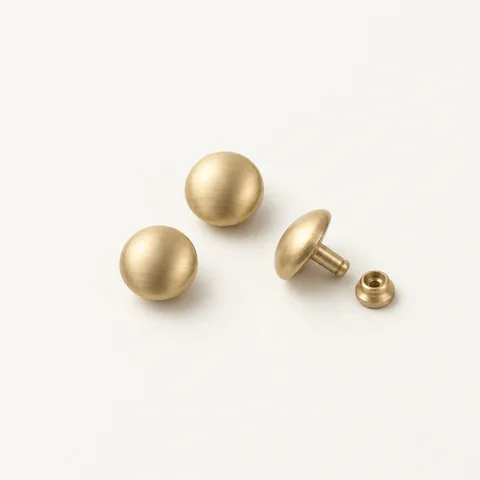
On most belts the keeper sits on the folded end of the strap just behind the buckle, held between the buckle and the stitching, snaps or screws that close the fold. When the belt is fastened, the tip passes through it and lies flat.
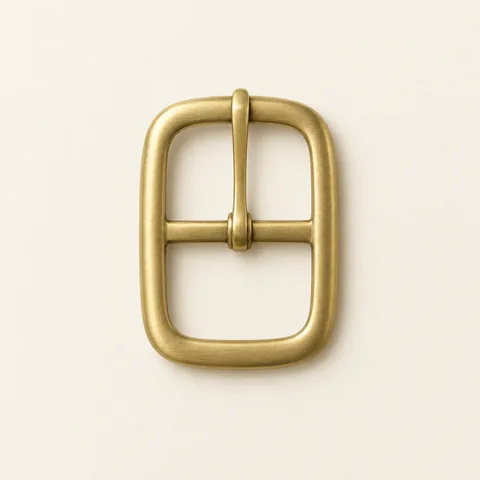
A center bar buckle can do without one, because its frame holds the strap end; a heel-bar pin buckle needs it.
02
Fixed and floating keepers
A fixed keeper stays on the fold behind the buckle. A floating keeper slides along the single strap, so it can be moved to wherever the tip ends; some belts carry one of each.
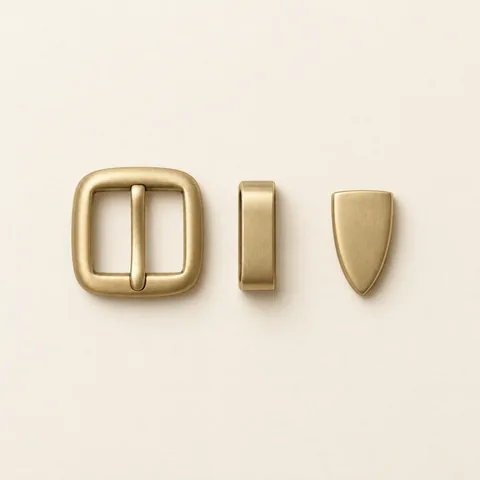
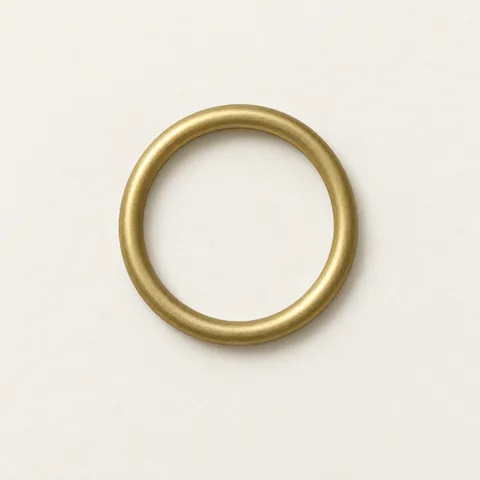
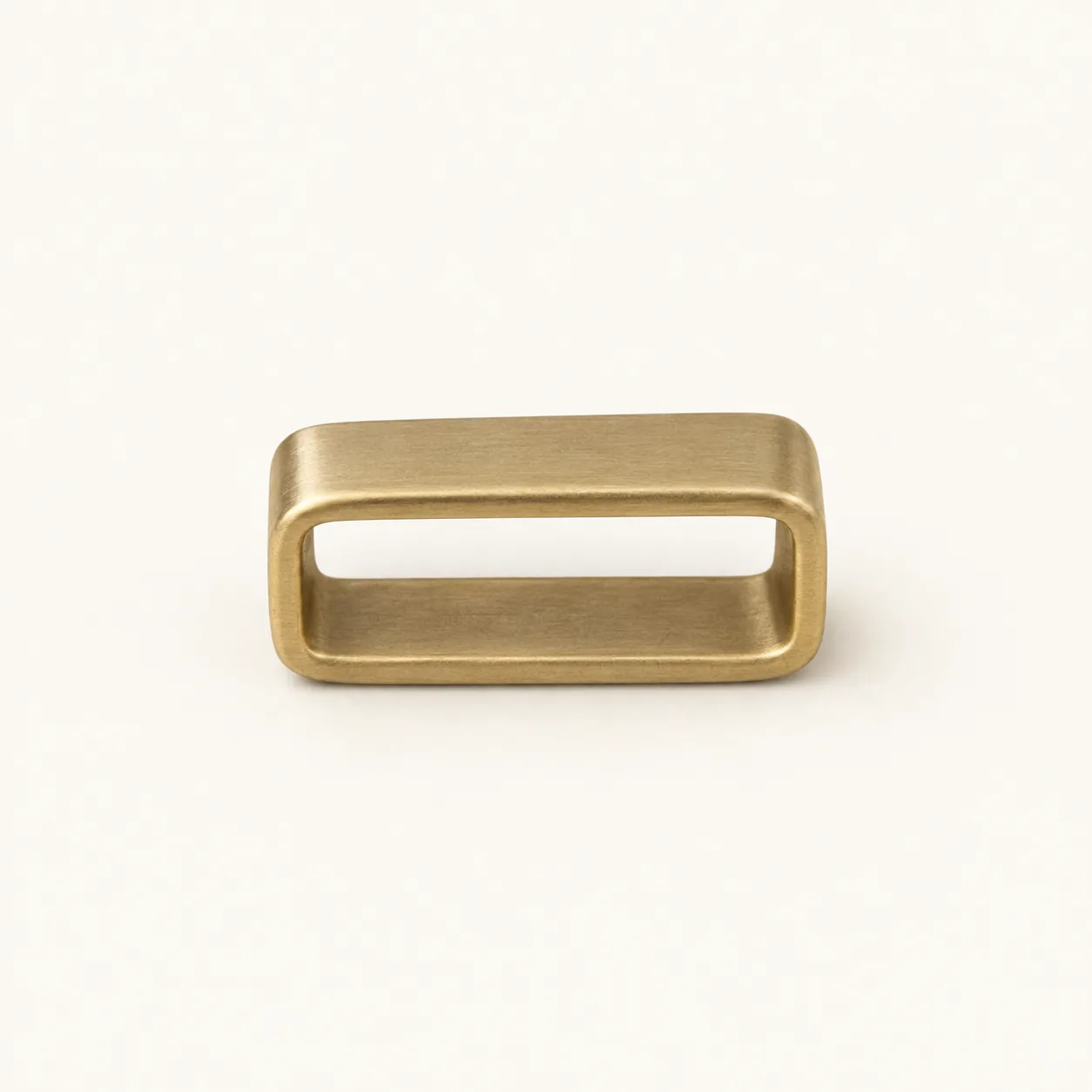
Metal keepers come as rectangle, oval and square loops — plain, engraved, cast in relief or faced with leather — and are often made to match a buckle and tip as a belt buckle set. Signed in, you can filter the collection by shape, finish and measurements, or start from a photograph.
03
Belt keeper sizes
A keeper is named by the strap width it takes, like the buckle in front of it: a 38 mm keeper for a 38 mm belt. Its inner height decides whether it fits, because it must clear every layer inside it — three strap thicknesses on the fold behind a buckle, two for a floating keeper.
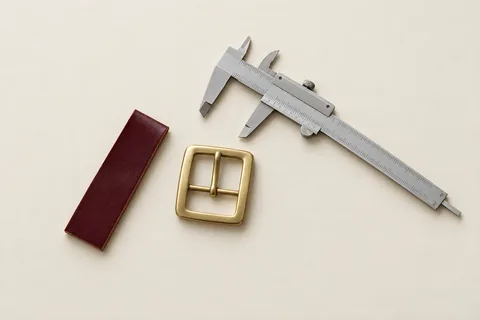
Measure the strap’s thickness before choosing: a 4 mm belt needs an inner height of at least 12 mm on the fold, and 8 mm for a floating keeper.
| Strap thickness | Keeper on the fold | Floating keeper |
|---|---|---|
| 3 mm | 9 mm | 6 mm |
| 3.5 mm | 10.5 mm | 7 mm |
| 4 mm | 12 mm | 8 mm |
| 4.5 mm | 13.5 mm | 9 mm |
| 5 mm | 15 mm | 10 mm |
04
Keeper materials and finishes
Metal keepers are commonly cast in zinc alloy or brass, or formed from brass or steel strip; stainless steel suits belts worn outdoors. Zinc alloy takes fine detail but is softer than brass, so a cast keeper should not be bent open to fit.
Across the collection, pieces come plated in six colours: gold, silver, rose gold, gunmetal, black and antique bronze. A keeper is normally ordered in the same colour as its buckle and tip.
05
Ordering belt keepers
Rayestar supplies companies — belt makers, brands, wholesalers and importers — not individuals. Open a trade account and one representative handles your samples, prices and orders; in the catalogue, keepers are listed under Loops.
- Find the keeper by photo or SKU, and note the strap width.
- Give the strap thickness, and say whether the keeper sits on the fold or floats.
- Choose the plating colour and quantity; your representative confirms price, samples and lead time.
Questions
Questions buyers ask
- What does a belt keeper do?
- It holds the end of the belt flat once it has passed through the buckle, so the tip does not flap or curl away from the strap.
- What size belt keeper do I need?
- One named for the belt’s width — a 35 mm keeper for a 35 mm belt — with an inner height that clears the layers inside it: three strap thicknesses on the fold behind the buckle, two if it floats.
- How many belt keepers does a belt need?
- One is usual, held on the fold behind the buckle. Ranger belts carry two, and a belt with a center bar buckle can go without.
- What is the difference between a fixed and a floating keeper?
- A fixed keeper stays where the strap is folded behind the buckle; a floating keeper slides along the strap to wherever the tip ends.
- Should a belt keeper be metal or leather?
- A metal keeper matches the buckle and tip in finish and keeps its shape; a leather keeper matches the strap and gives a little, which helps on thick leather.
- Can I order belt keepers in bulk?
- Yes, as a company: once your business is registered and reviewed, one representative handles samples, quantities and orders.
The illustrations show the type, not a specific catalogue piece. Size, material, finish and lead time are confirmed for each order by the representative who handles it.