01
How double D rings hold
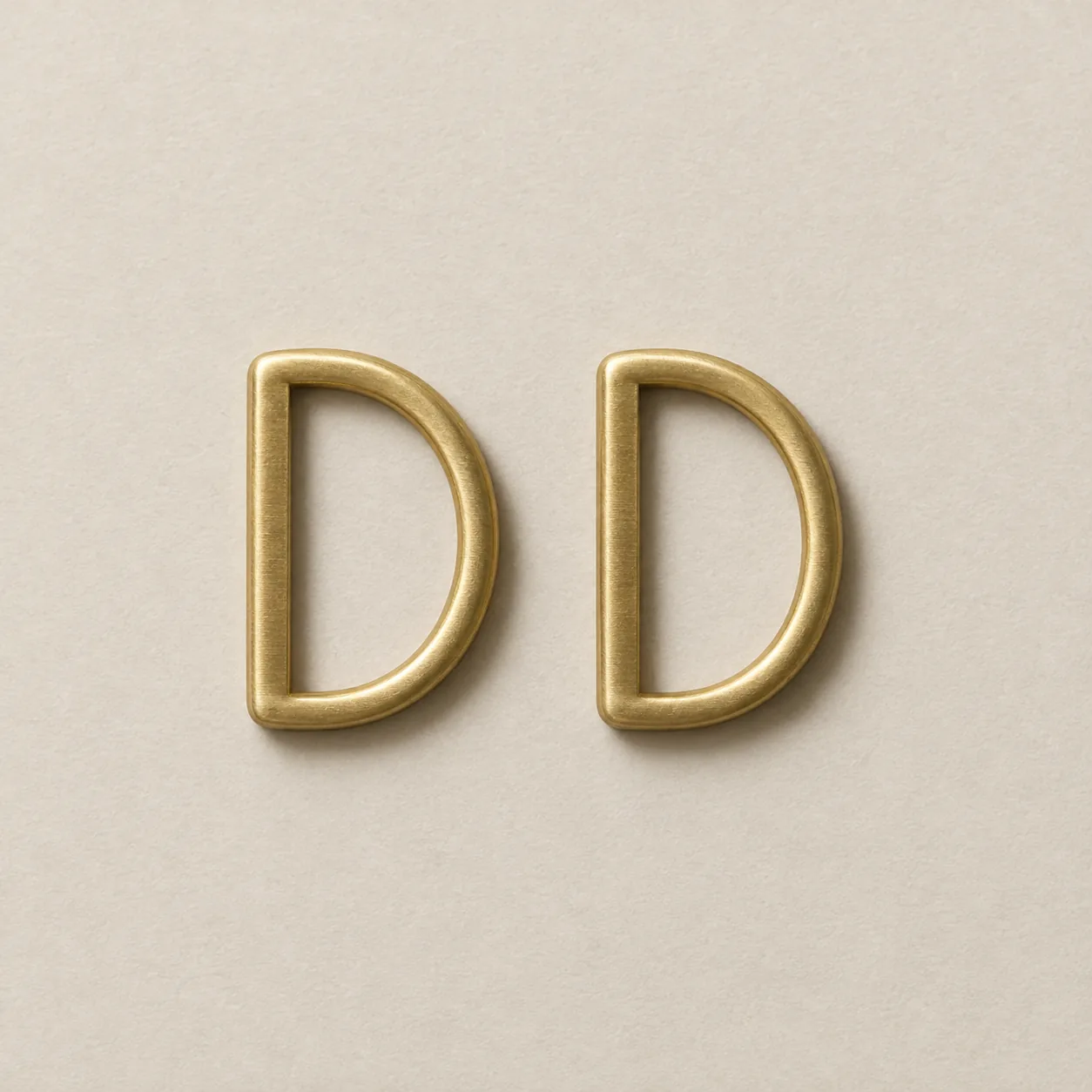
The two rings sit side by side, their straight sides together, in a fold of the strap that is stitched or riveted closed. The free end goes through both rings, then turns back over the top ring and through the lower ring only, so it runs between the two.
When the belt is pulled, the rings pinch the strap between them; to loosen it, lift the top ring. There are no holes, so the belt adjusts to any length.
02
Shapes and the straps they suit
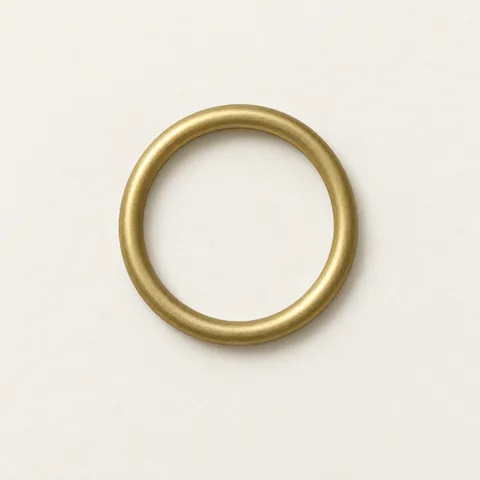
The classic pair is two D rings bent from round wire and welded; flat or cast rings give a broader face, and the same fastening is made with two O rings or two rectangle rings for a different look. Single rings and their uses are under D rings and O rings.
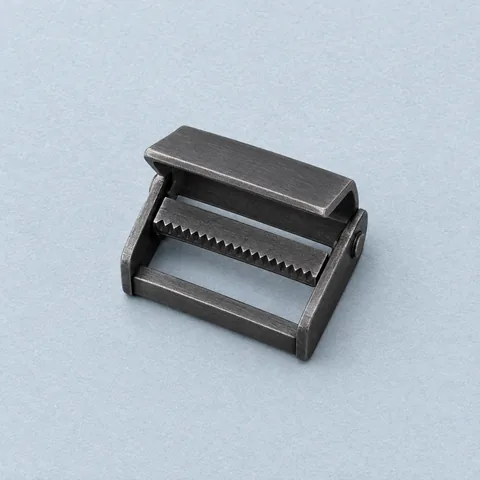
Double D rings suit thin, supple straps — cotton webbing, canvas, nylon, fabric and soft thin leather. Stiff or thick leather cannot bend tightly enough round the rings to grip; web belts that close with a clamp or a slide instead are under webbing belt buckles. Signed in, you can filter the collection by shape, finish and measurements, or start from a photograph.
03
Double D ring sizes
Double D rings are named by the inside width of their straight side, which equals the strap width: a 32 mm pair for a 32 mm belt. Web belts commonly run 25, 32 and 38 mm (1, 1 1/4 and 1 1/2 in); narrower pairs close dress belts and bag straps.
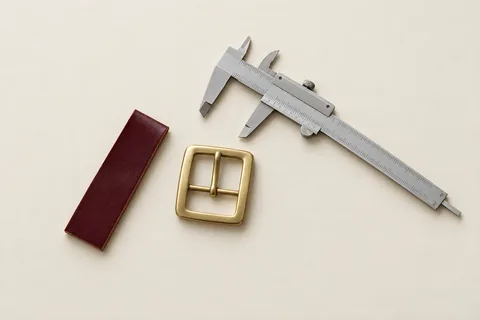
Check the inside depth too: the ring the end passes back through holds two thicknesses of strap, so a thick strap needs deeper rings than a thin one of the same width. Measure the strap as you would for a buckle — see how to measure a belt buckle.
| Strap width | Nearest inch size | Usually for |
|---|---|---|
| 20 mm | 3/4 in (19 mm) | Fabric dress belts, bag straps |
| 25 mm | 1 in (25.4 mm) | Narrow web and fabric belts |
| 32 mm | 1 1/4 in (31.75 mm) | Web and canvas belts |
| 38 mm | 1 1/2 in (38.1 mm) | Wide canvas and casual belts |
04
Double D ring materials and finishes
Welded steel wire is common for web-belt rings, with brass wire or stainless steel where a ring must not rust, and cast zinc alloy where the face is shaped or patterned. Across the collection, pieces come plated in six colours: gold, silver, rose gold, gunmetal, black and antique bronze.
Helmet chin straps close the same way, but their rings belong to a certified helmet; fashion and garment rings are not rated for safety use.
05
Ordering double D rings
Rayestar supplies companies — belt, bag and clothing makers, brands, wholesalers and importers — not individuals. Open a trade account and one representative handles your samples, prices and orders; in the catalogue, the pairs are listed as Double D Buckles.
- Find the pair by photo or SKU, and note the strap width.
- Give the strap’s material and thickness, so the rings’ depth suits it.
- Choose the plating colour and quantity; your representative confirms price, samples and lead time.
Questions
Questions buyers ask
- How do you thread a double D ring belt?
- Pass the end through both rings, then bring it back over the top ring and through the lower ring only. Pull the end to tighten; lift the top ring to loosen.
- What size double D rings do I need?
- A pair named for the strap width — 32 mm rings for a 32 mm belt — deep enough inside for two thicknesses of the strap, since the end passes back through one ring.
- Do double D rings work on leather belts?
- On thin, supple leather, yes. The grip comes from the strap bending tightly round the rings, so stiff or thick leather slips; webbing, canvas and fabric hold more surely.
- What are the pros and cons of double D rings?
- No holes, so the belt sets to any length, and no moving parts to wear out. On the other side, thick or slippery straps can loosen, and the end has to be long enough to pass back through the rings.
- Can double D rings be used on helmet straps?
- Not these. Helmet chin-strap rings are part of a certified helmet and come with it; fashion and garment rings are not rated for safety use.
- Can we order double D rings in bulk?
- Yes, as a company. Register and have your business reviewed; your representative then handles samples, quantities and orders.
The illustrations show the type, not a specific catalogue piece. Size, material, finish and lead time are confirmed for each order by the representative who handles it.