01
How the two halves lock
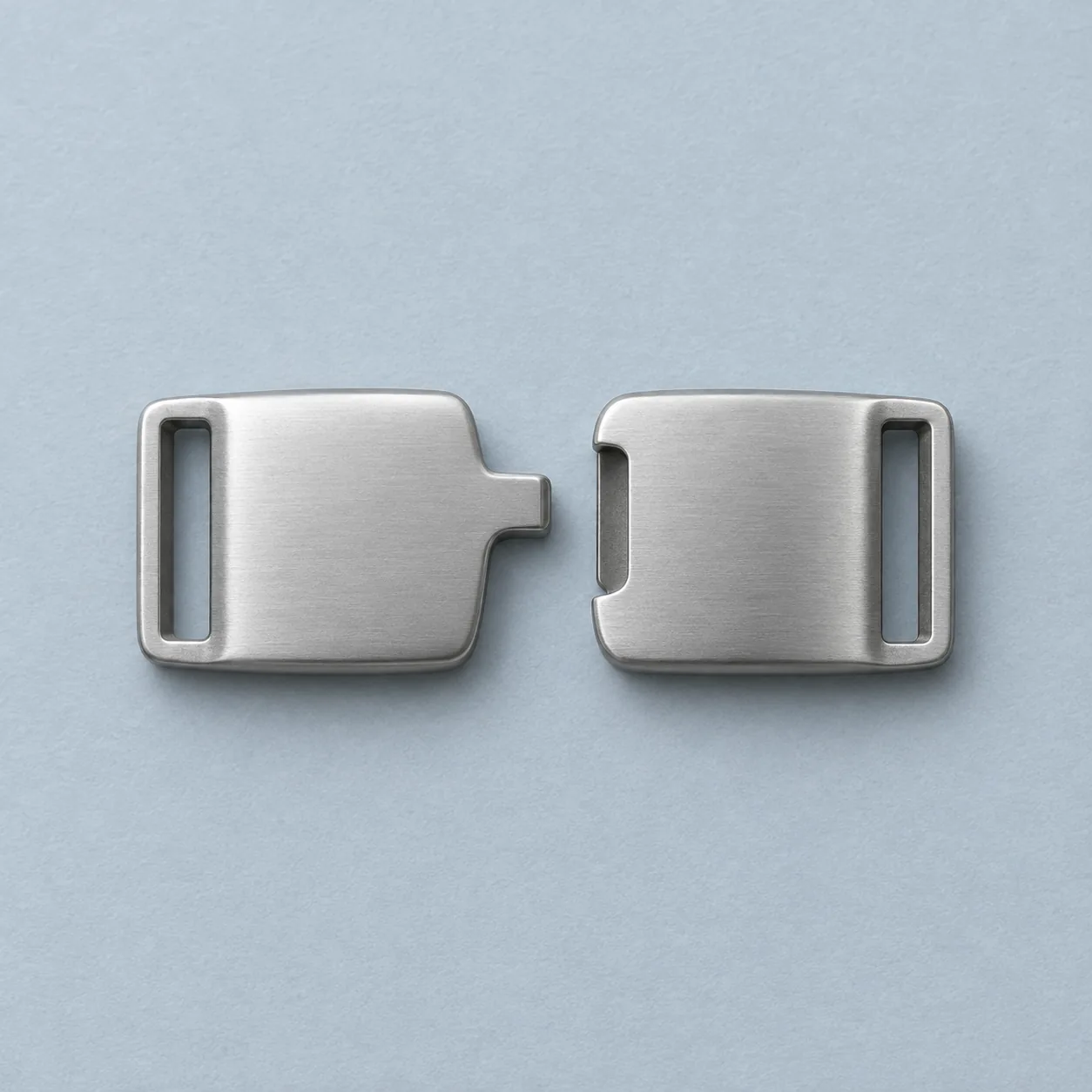
Each half has a bar on its outer side, round which the strap folds and is stitched, riveted or screwed. On the inner side, one half carries a hook, tongue or bar and the other the slot, frame or ring it engages; closed, the two read as one design.
With no prong and no holes, the belt’s length is set when the halves are fitted. That is why interlocking buckles go on stretch belts, on belts made to a measured length, and on straps adjusted by a slider behind one half.
02
Hook, tongue and toggle types
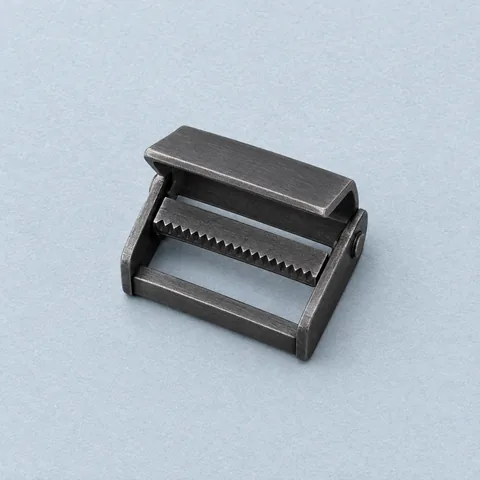
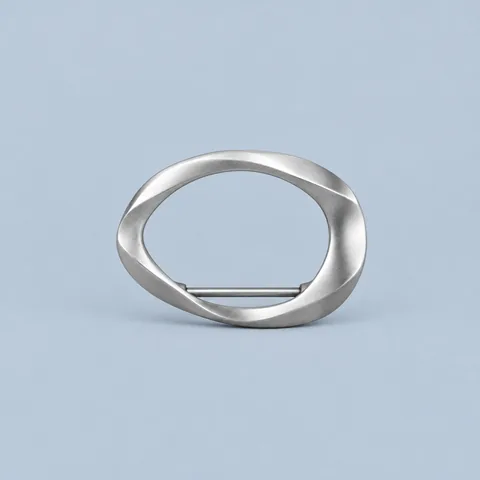
On a hook-and-slot buckle one half hooks over a bar or into a slot on the other, and the strap’s tension keeps it closed. Tongue designs slide a flat tongue into the other half’s frame; ring-and-bar toggles pass a short bar through a ring and turn it across. The catalogue files the whole category as toggle clasps.
Many are cast as one motif split in two — a circle, a knot, a leaf — so the halves are ordered and fitted as a pair. Two-part closures that click together and release when squeezed are side release buckles, a different family.
03
Interlocking buckle sizes
Each half is named by the strap width it takes, and both halves take the same width. Measure the closed buckle too: its length sits between the strap ends, so it counts towards the belt’s finished length.
For measuring a strap opening, see how to measure a belt buckle.
| Strap width | Nearest inch size | Usually for |
|---|---|---|
| 20 mm | 3/4 in (19 mm) | Skinny belts and dress sashes |
| 25 mm | 1 in (25.4 mm) | Women’s belts |
| 30 mm | 1 3/16 in | Narrow belts |
| 38 mm | 1 1/2 in (38.1 mm) | Standard belts |
| 50 mm | 2 in (50.8 mm) | Wide waist and stretch belts |
04
Materials and finishes
Most interlocking buckles for fashion belts are die-cast in zinc alloy and plated. The hook and slot take the pull and rub each time the belt is closed, so check on a sample that the halves meet squarely and without play.
Across the collection, pieces come plated in six colours: gold, silver, rose gold, gunmetal, black and antique bronze.
05
Ordering interlocking belt buckles
Rayestar supplies companies — belt and garment makers, brands, wholesalers and importers — not individuals. Open a trade account and one representative handles samples, prices and orders.
- Find the design by photo or SKU, and note the strap width each half takes.
- Order the halves as pairs, and say whether the strap is leather, fabric or elastic.
- Choose the plating colour and quantity; your representative confirms price, samples and lead time.
Questions
Questions buyers ask
- What is an interlocking belt buckle?
- A buckle in two halves, one fixed to each end of the strap, that hook or slot together at the front. It has no prong, so the belt has no holes.
- How do you attach an interlocking buckle to a belt?
- Fold each end of the strap through the bar of its half and stitch, rivet or screw it closed. Fit both halves the right way up, and check the closed length before fixing the second.
- How do you adjust a belt with an interlocking buckle?
- Not at the buckle: the length is fixed by where the halves sit. Stretch straps give, and some belts add a slider behind one half.
- Is an interlocking buckle the same as a toggle clasp?
- A ring-and-bar toggle is one kind of interlocking buckle, and the catalogue lists this category as toggle clasps. In jewellery the same name means a much smaller necklace clasp.
- Which belts use interlocking buckles?
- Mostly women’s fashion and stretch belts, coat belts and dress sashes, where the front is on show and fine adjustment matters less. Buckles chosen first for their shape are under decorative buckles.
- Can businesses order interlocking buckles in quantity?
- Yes. Rayestar supplies belt and garment makers, brands, wholesalers and importers; one representative per account handles samples, quantities and orders.
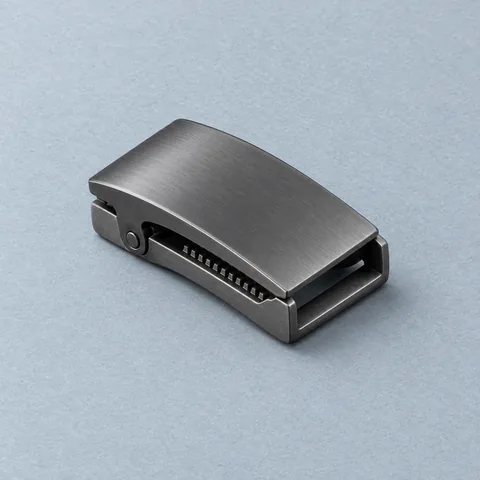
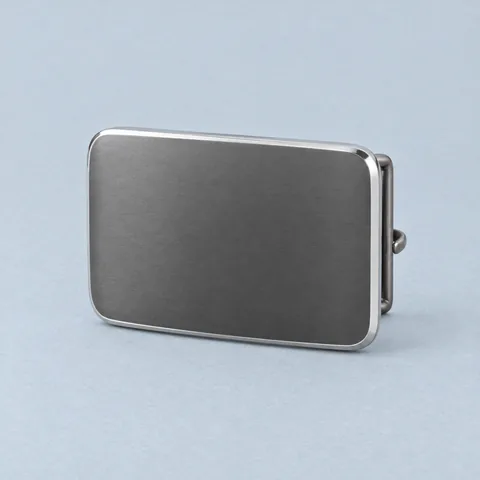
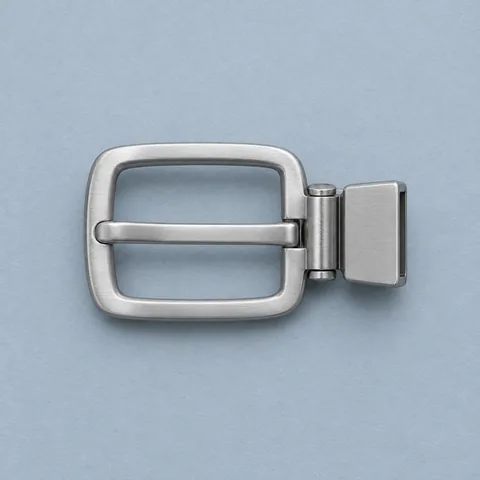
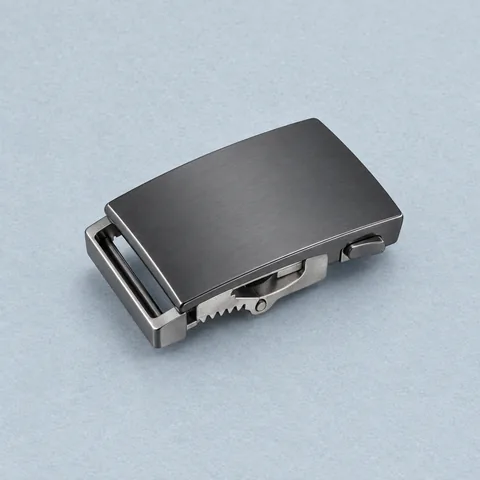
The illustrations show the type, not a specific catalogue piece. Size, material, finish and lead time are confirmed for each order by the representative who handles it.